
FluffyWA

Positive training · Adult adoption first

Greyhound Training and Adult Adoption Manual

Puppy Stages Clearly Labelled

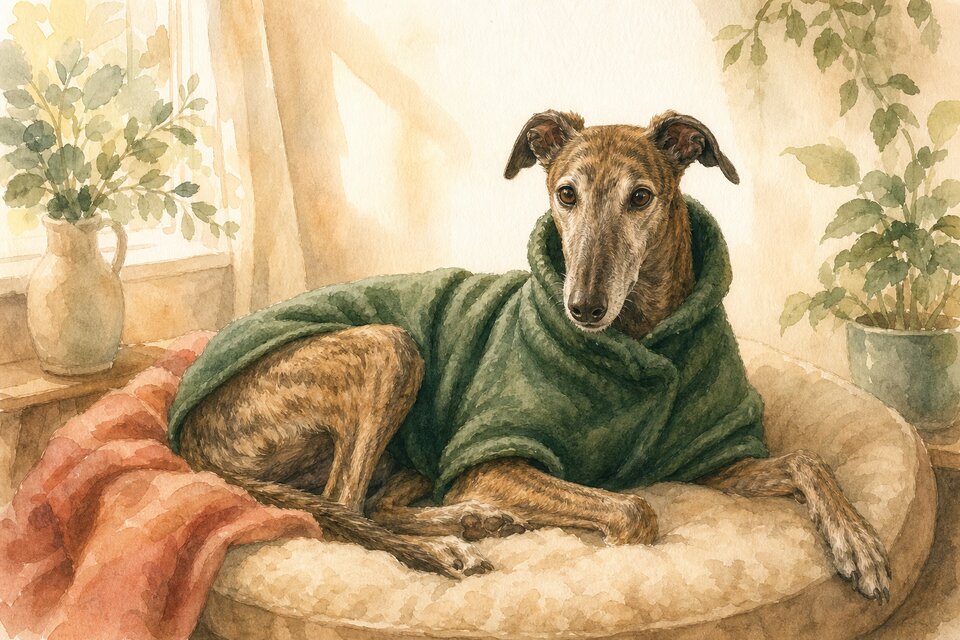
Adult Greyhound: warmth, soft bedding and low-pressure routines support comfortable settling.

29 chapters · English / 中文

Watercolour illustration of an adult brindle Greyhound wearing a dark green fleece coat while curled on a cushioned bed indoors
Adult Greyhound: warmth, soft bedding and low-pressure routines support comfortable settling.

Breed profile

Training group
Sighthounds
Origin
An ancient sighthound developed for visual pursuit; in Australia, many Greyhounds enter homes through retired racing-dog adoption.
Shoulder height
68–76 cm
Weight
25–40 kg
Coat
Extremely short coat with low body fat
Coat care
Build calm consent for gentle coat, body, paw and nail checks. Provide soft bedding and introduce any cold-weather clothing through voluntary, low-pressure handling.
Drive keywords
Visual lock-on · High-speed pursuit · Short-burst movement
Handling practice
Use gentle, low-pressure whole-body, coat, paw and nail handling: one brief touch, marker, reward and release before avoidance begins. · For a newly adopted adult, generalise handling separately across the actual home, vehicle and care settings; familiarity in one setting does not prove familiarity in another.

General reference range only; individual dogs vary considerably.

Predictability lowers arousal

The first week: daily rhythm

For a newly adopted adult Greyhound, replace the puppy timetable with a low-stimulation first 72 hours after arrival. Keep one quiet home base, use three predictable on-lead toilet anchors plus brief needs-led trips, protect sleep and postpone visitors, neighbourhood exploration and handling tests.

First 72 hours for an adult rehome
TimeWhat happens
Arrival and first hourManaged entry
Lead directly from the vehicle to the toilet point, then the quiet base; show water and soft bedding without a house tour.
Morning, days 1–3Toilet anchor one
Walk on lead to the same quiet toilet point, reward completion, then return home without extending the trip.
Midday, days 1–3Toilet anchor two
Repeat the short on-lead toilet route in suitable weather; otherwise use the safest closest managed option and return to rest.
Evening, days 1–3Toilet anchor three
Use the same lead route and quiet cue sequence, then settle indoors rather than adding a walk or greeting.
Between anchorsNeeds-led toilet and rest
Add brief on-lead toilet trips whenever needed, but keep them functional; offer food, water and uninterrupted sleep in the quiet base.
All first 72 hoursLow-stimulation home base
No visitors, dog introductions, neighbourhood tour or forced handling. Observe eating, sleep, movement, toileting and recovery without testing the dog.
NightProtected sleep
Keep the bed quiet and separated from traffic. To approach, say the dog's name from a distance and wait for full waking.

Training with FluffyWA

Day school, board & train and private sessions are quoted after a chat, and boarding or daycare can be booked online with live prices.