
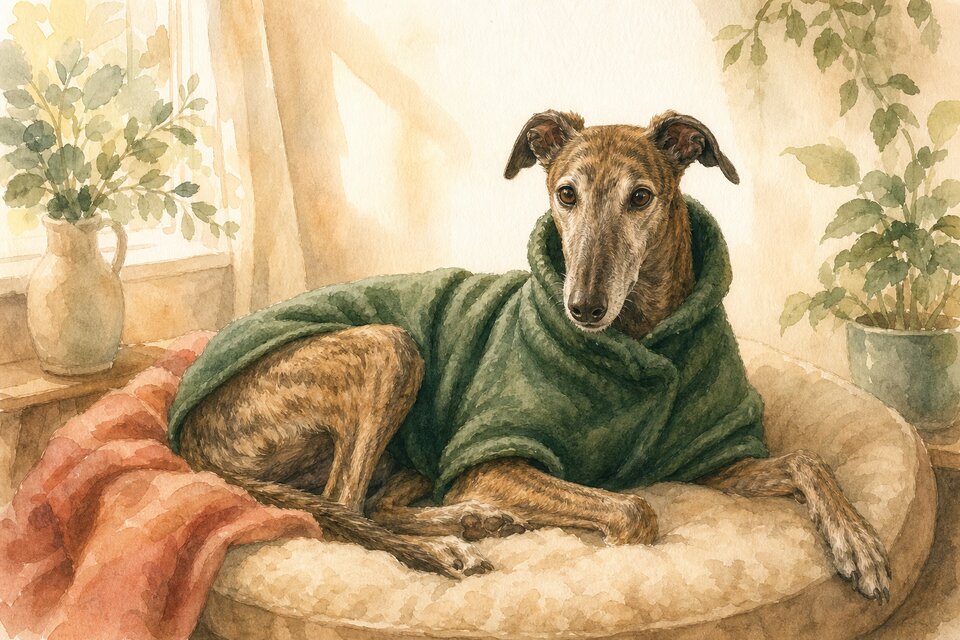
Greyhound prevention combines an arrival-based learning clock with permanent physical management. Teach unfamiliar home life gently, protect sleep and soft rest, and assume visual pursuit can outrun a cue. Secure separation and qualified assessment replace owner-run tests around cats or small animals.
Prevention card 01
Adult adoption is forced into a puppy-age clock
Why it happens
Most adopted Greyhounds in Australia are adult retired racing dogs, so biological puppy age does not describe their household-learning starting point.
Early signals
The plan advances because the dog is an adult even while glass, flooring, stairs, mirrors or brief absence still produces freezing or avoidance.
Prevent it now
Restart the manual's 8–16-week timeline as the first 16 weeks after arrival and advance each household skill by observed comfort.
If it has started
Return to the first successful step for one home feature, restore choice and stop combining unfamiliar tasks.
When to get professional help
Seek qualified reward-based help if the dog remains unable to move, eat, rest or recover in a carefully simplified setup; sudden changes also need veterinary assessment.
Prevention card 02
Visual launch in an unfenced area
Why it happens
Chase is extremely strengthened, and launch after visual lock-on may occur with almost no warning or usable recall.
Early signals
The mouth closes, gaze fixes, weight shifts forward, ordinary rewards lose value or the dog scans for movement beyond the boundary.
Prevent it now
Keep the dog on lead or a safely handled long line outside secure fencing, scan routes and reward disengagement before fixation intensifies.
If it has started
Do not test recall again. Restore physical control, increase distance and change the route or visual access before the next outing.
When to get professional help
Get qualified reward-based help after any management breach, chase or inability to disengage at workable distance.
Prevention card 03
Home features trigger freezing or avoidance
Why it happens
A retired racing dog may have no prior learning history with glass doors, stairs, household floors, mirrors or ordinary alone time.
Early signals
Stopping at a surface change, refusing a doorway, scrambling on flooring, staring at a reflection, shadowing constantly or freezing when guided.
Prevent it now
Introduce one feature at a time with non-slip footing, distance, food placement and a clear retreat; build alone time separately from other novel tasks.
If it has started
Stop pulling or flooding, add an easier route and reinforce any voluntary look, weight shift or step before ending.
When to get professional help
Seek qualified behaviour help if fear prevents daily movement, rest or short necessary separations; sudden mobility or behaviour changes need veterinary assessment.
Prevention card 04
Owner-run cat or small-animal testing
Why it happens
A single calm moment does not predict safety, while movement can trigger an immediate visual chase.
Early signals
Reducing barriers after one quiet look, bringing animals closer to test a response, or relying on food while the dog remains visually fixed.
Prevent it now
Maintain secure separation and assign all cat and small-animal compatibility assessment to a qualified professional.
If it has started
End the test, restore full separation and do not repeat the setup while arranging professional assessment.
When to get professional help
Professional assessment is required before any planned cat or small-animal compatibility work; an actual chase or injury requires immediate safety management and appropriate veterinary care.
Prevention card 05
Cold exposure or hard resting surfaces
Why it happens
The extremely short coat and low body fat reduce cold tolerance, and hard resting surfaces can increase pressure-sore risk.
Early signals
Avoiding the bed, repeatedly changing position, choosing warm areas, resisting rest or showing new skin redness or damage.
Prevent it now
Provide warm conditions and soft bedding, keep the resting area quiet and build voluntary routine body checks.
If it has started
Change the resting setup immediately and stop any handling that appears painful or produces avoidance.
When to get professional help
Skin damage, apparent pain or a sudden change in rest or movement needs veterinary assessment rather than a training fix.