
FluffyWA

Positive training · Adult adoption first

Greyhound Training and Adult Adoption Manual

Puppy Stages Clearly Labelled

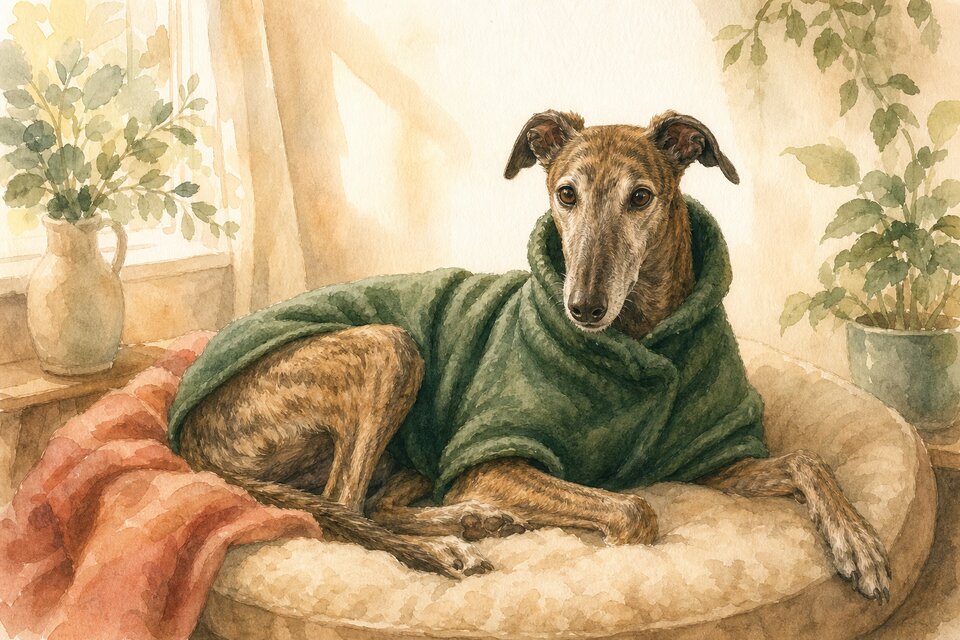
Adult Greyhound: warmth, soft bedding and low-pressure routines support comfortable settling.

29 chapters · English / 中文

Watercolour illustration of an adult brindle Greyhound wearing a dark green fleece coat while curled on a cushioned bed indoors
Adult Greyhound: warmth, soft bedding and low-pressure routines support comfortable settling.

Breed profile

Training group
Sighthounds
Origin
An ancient sighthound developed for visual pursuit; in Australia, many Greyhounds enter homes through retired racing-dog adoption.
Shoulder height
68–76 cm
Weight
25–40 kg
Coat
Extremely short coat with low body fat
Coat care
Build calm consent for gentle coat, body, paw and nail checks. Provide soft bedding and introduce any cold-weather clothing through voluntary, low-pressure handling.
Drive keywords
Visual lock-on · High-speed pursuit · Short-burst movement
Handling practice
Use gentle, low-pressure whole-body, coat, paw and nail handling: one brief touch, marker, reward and release before avoidance begins. · For a newly adopted adult, generalise handling separately across the actual home, vehicle and care settings; familiarity in one setting does not prove familiarity in another.

General reference range only; individual dogs vary considerably.

Three days · three weeks · three months

Adult rehome adaptation

Many Australian Greyhounds enter homes as adult retired racing dogs, so puppy adolescence is not their useful clock. Start at arrival and expect adjustment to unfold unevenly. A quiet early ‘honeymoon’ does not prove every skill or preference is settled; around three months, greater safety may let the dog's fuller personality and unmet needs become visible. Respond by lowering difficulty, not adding pressure.
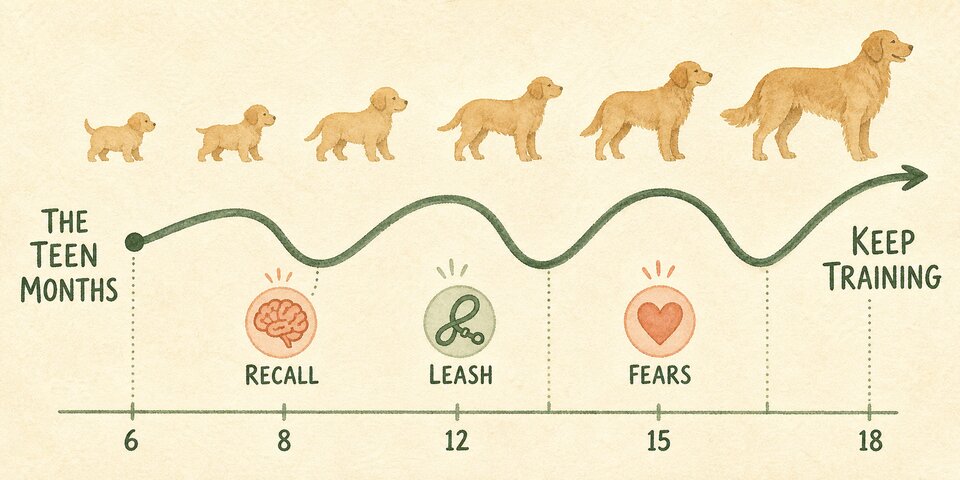
Wavy adolescence timeline from 6 to 18 months, with a dog growing from puppy to adult and reminders for recall, leash skills, fears and continued training
THE TEEN MONTHS = the 6–18 month timeline; KEEP TRAINING = maintain skills; RECALL and LEASH = rebuild safety; FEARS = reduce pressure. Adult rehomes follow the arrival-stage plan below rather than restarting this puppy clock.
First three days — shrink the world

Use one quiet resting zone, a predictable feeding rhythm and three calm on-lead toilet anchors, adding only needs-led toilet trips. Avoid visitors, neighbourhood tours, dog greetings and handling tests. Let sleep, eating and voluntary observation be the work; introduce no more than one household feature at a time.

First three weeks — build predictable choices

Keep routes and daily anchors consistent while separately teaching glass, flooring, stairs, mirrors, vehicle entry and brief absence. Expand only after the dog can eat, rest and move voluntarily at the current step. Protect the bed from interruption and use the wake-first protocol before anyone approaches a sleeping dog.

First three months — meet the fuller dog

Generalise successful household skills one setting at a time and widen the routine only while recovery stays reliable. As the honeymoon fades, new play, fear, social preferences or alone-time needs may emerge. Treat that information as a planning update: restore management, return to the last successful step and seek qualified help when daily life remains blocked.

Training with FluffyWA

Day school, board & train and private sessions are quoted after a chat, and boarding or daycare can be booked online with live prices.