
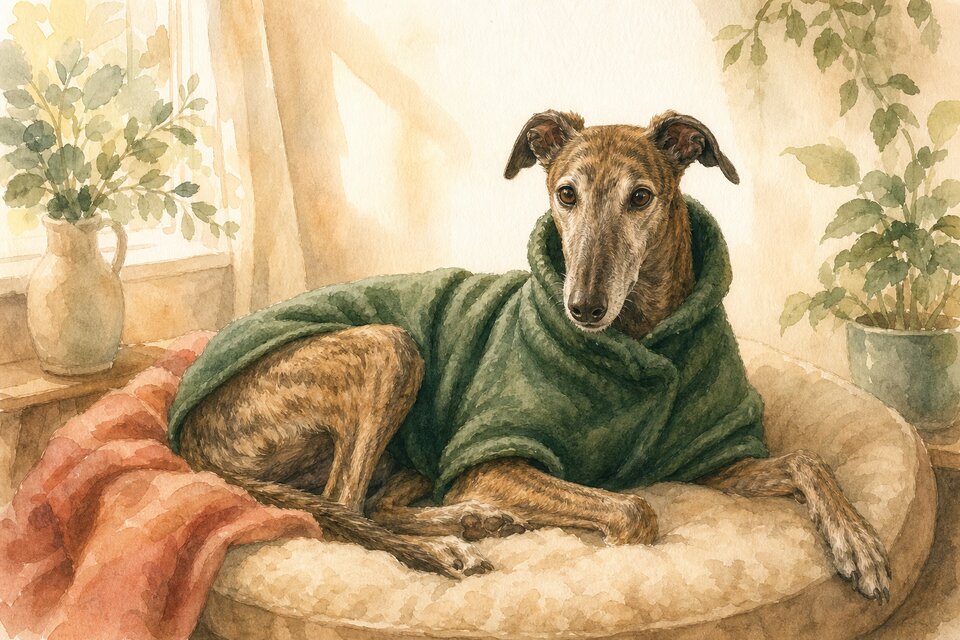
The Greyhound pattern is short bursts of movement plus extensive sleep, not prolonged exercise simply because the dog can run fast. Puppies still follow the manual's general growth-plate protections; adult retired racers begin from their current conditioning and household experience rather than puppy age assumptions. Use securely fenced space for free running and physical management everywhere else.
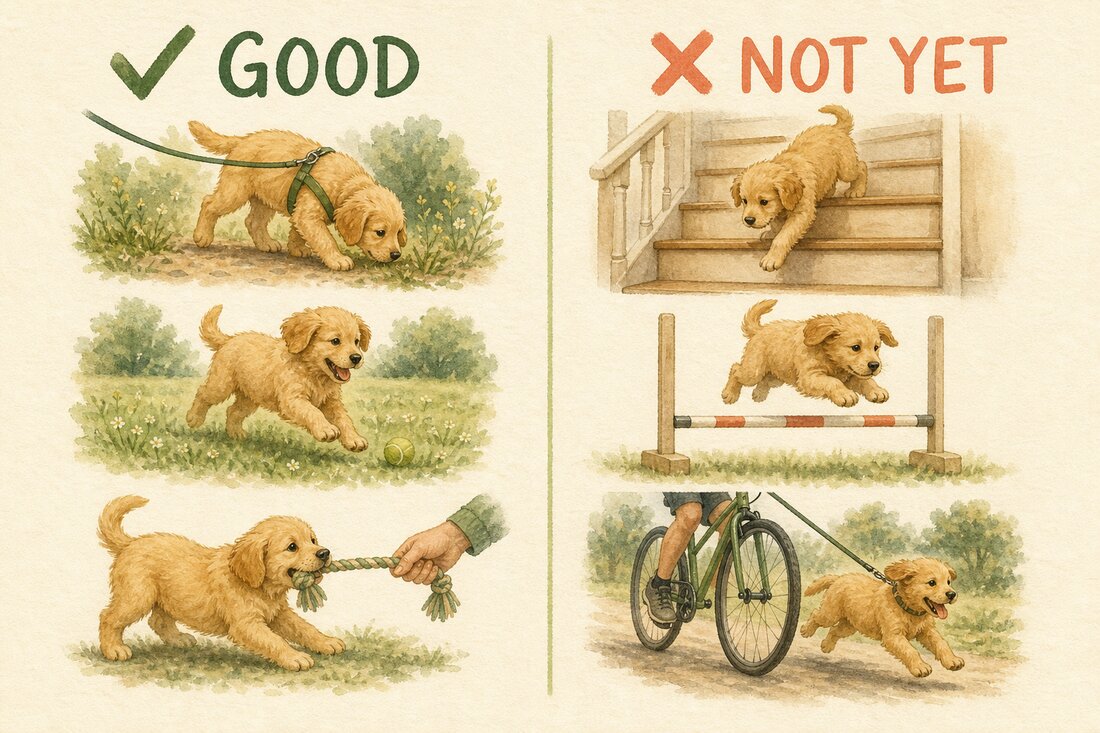
Build an adult rehome movement plan from evidence
| Stage | Plan | Guardrail |
|---|---|---|
| First 72 hours | Use only brief, functional toilet routes on a secure lead. | No fitness, stair, vehicle-jump or handling test. |
| Early weeks | Add calm sniffing on stable footing and increase one variable only after easy recovery. | Use a stable non-slip ramp or controlled low step for vehicle access; never force or improvise a lift. |
| Later conditioning | Ask a veterinarian about the individual baseline, then progress gradually with full recovery. | Running is only in a safe enclosed area; the lead stays attached for life outside secure fencing. |
For an adult rehome, build the day from the dog's current recovery and settling evidence, not a puppy-age quota. Needs-led lead outings, secure sniffing, quiet enrichment and protected sleep come before distance or speed.
Increase one variable only after the previous pattern remains easy. Retired racing history never creates a household exercise debt, and running remains restricted to a safe enclosed area.
| Stage | Movement | Mental work and recovery |
|---|---|---|
| First 72 hours | Brief functional toilet routes on a secure lead. | Quiet observation, food if accepted and uninterrupted soft-bed rest. |
| Early weeks | Add calm sniffing on stable surfaces and finish before freezing or fatigue. | Use simple food searches, voluntary skills and full recovery between blocks. |
| Established routine | Condition gradually; any free running is only in a safe enclosed area. | Keep sniffing, problem-solving, settling and protected sleep in the weekly mix. |