
FluffyWA

Positive training · Adult adoption first

Greyhound Training and Adult Adoption Manual

Puppy Stages Clearly Labelled

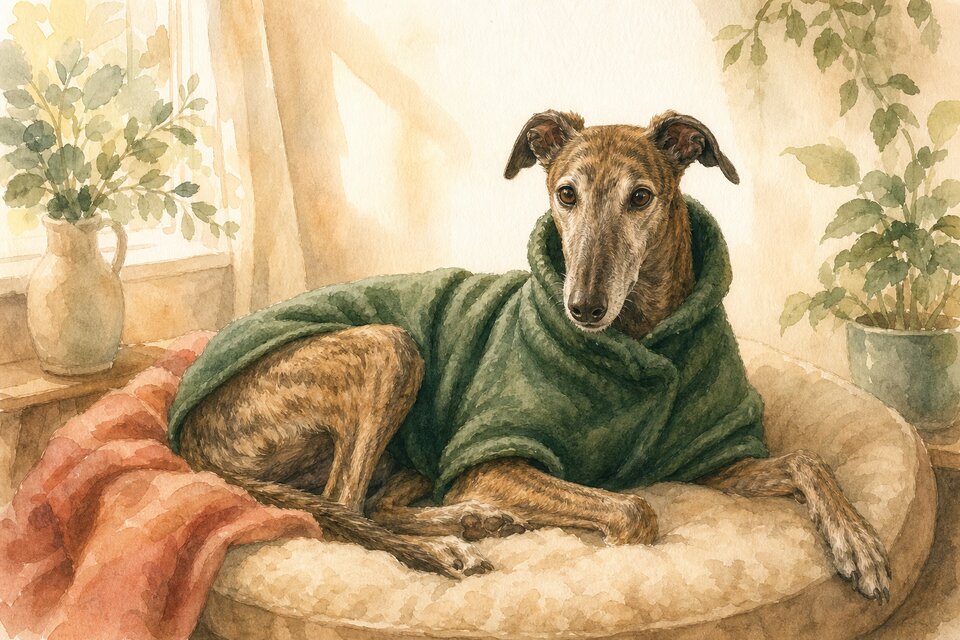
Adult Greyhound: warmth, soft bedding and low-pressure routines support comfortable settling.

29 chapters · English / 中文

Watercolour illustration of an adult brindle Greyhound wearing a dark green fleece coat while curled on a cushioned bed indoors
Adult Greyhound: warmth, soft bedding and low-pressure routines support comfortable settling.

Breed profile

Training group
Sighthounds
Origin
An ancient sighthound developed for visual pursuit; in Australia, many Greyhounds enter homes through retired racing-dog adoption.
Shoulder height
68–76 cm
Weight
25–40 kg
Coat
Extremely short coat with low body fat
Coat care
Build calm consent for gentle coat, body, paw and nail checks. Provide soft bedding and introduce any cold-weather clothing through voluntary, low-pressure handling.
Drive keywords
Visual lock-on · High-speed pursuit · Short-burst movement
Handling practice
Use gentle, low-pressure whole-body, coat, paw and nail handling: one brief touch, marker, reward and release before avoidance begins. · For a newly adopted adult, generalise handling separately across the actual home, vehicle and care settings; familiarity in one setting does not prove familiarity in another.

General reference range only; individual dogs vary considerably.

Teach safe mouth skills

Mouthing, visual lock-on & safe chase outlets

Exploratory mouthing, legal toy play and visual pursuit of a live animal require different responses. Teach a gentle mouth and clear toy rules, while making live-animal chase unavailable through distance, physical management and secure fencing.
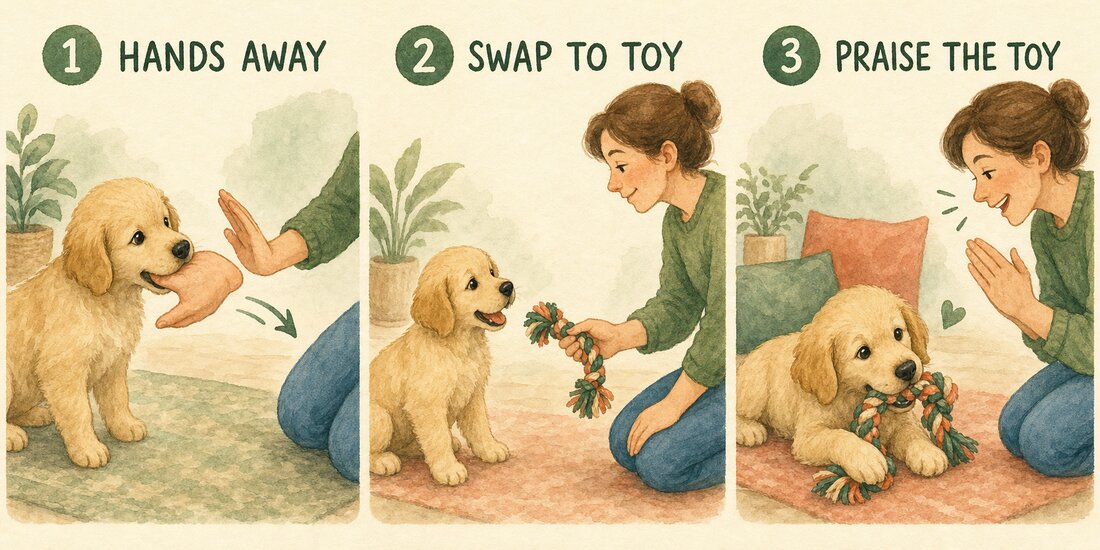
Watercolour three-step diagram showing hands moving away and puppy mouthing redirected to a toy
HANDS AWAY = make hands still and unavailable; SWAP TO TOY = offer an appropriate toy; PRAISE THE TOY = reinforce chewing the toy.

Identify the pattern before responding

Teach the mouth, structure the toy and prevent the live chase
PatternWhat it looks likeWhat it needs
Exploratory mouthingA loose puppy or newly arrived dog samples hands, clothing or safe household objects.Manage access, teach force control and redirect to a safe object without force.
Structured lure or toy playThe dog follows or grips a designated object inside a securely fenced setup and can still respond to the handler.Keep clear start, trade and finish cues, and end before lock-on overwhelms response.
Live-animal visual lock-onThe mouth closes, gaze fixes, weight shifts forward and launch may follow almost without warning.Create distance under physical control. Do not unclip the lead or turn the animal into a training test.

A four-part outlet and safety plan

  1. Manage the live environment first Scan the route, use secure separation and keep lead control wherever cats, wildlife or small animals may appear.
  2. Teach a calm trade Offer a worthwhile reward at the nose, mark release and either return the safe object or finish clearly without chasing or forcing the mouth.
  3. Use only fenced chase outlets Use a designated drag lure or short straight-line run only in a securely fenced setting, then transition into quiet rest.
  4. Reward an early turn away At a manageable distance from low-intensity movement and while physically secured, mark the first head turn back. Increase distance if the dog cannot respond.

Training with FluffyWA

Day school, board & train and private sessions are quoted after a chat, and boarding or daycare can be booked online with live prices.