
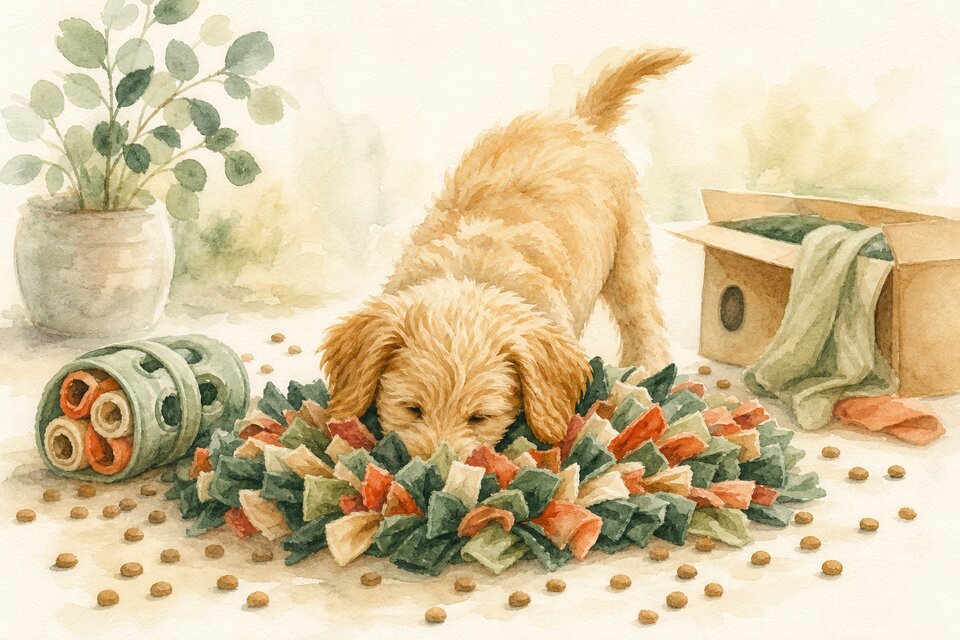
Sniffing and problem-solving create a different kind of effort from walking.
Enrichment and outlet menu
| Type | Examples | Duration | Notes |
|---|---|---|---|
| Sniffing | Scatter feeding on grass, snuffle mat, food hidden in boxes, indoor treat search | About 5–15 minutes | Let the nose set the pace; easy searches should finish successfully. |
| Problem-solving | Treat ball, frozen stuffed toy, folded paper tube, food rolled in a towel | About 5–15 minutes | Begin easy enough to prevent frustration; frozen toys are especially useful during teething. |
| Shaping and tricks | Nose-to-hand touch, spin, weave through legs, toys into a box, switch a light on or off | Up to 10 minutes per session, with breaks | Use shaping and split the skill into tiny, winnable steps. |
| Safely fenced straight run | A voluntary straight run toward a familiar person across level, debris-free ground. | One or two runs of no more than 30 metres. | Mature, gradually conditioned dogs only; growing puppies use brief self-selected movement within Chapter 20 and veterinary limits. Secure enclosure remains mandatory. |
| Safely fenced drag-lure play | Pull a soft lure in one straight line, then stop it for a calm trade. | One straight chase of no more than 30 metres. | Mature, gradually conditioned dogs only; growing puppies get no prescribed distance or repeated sprinting. Follow Chapter 20 and veterinary limits. |
| Safely fenced soft-ground sprint | A brief voluntary sprint on level grass or another suitable non-slip surface. | A few seconds, followed by at least 10 minutes of quiet. | Mature, gradually conditioned dogs only; growing puppies get no prescribed distance or repeated sprinting. Secure fencing is mandatory. |
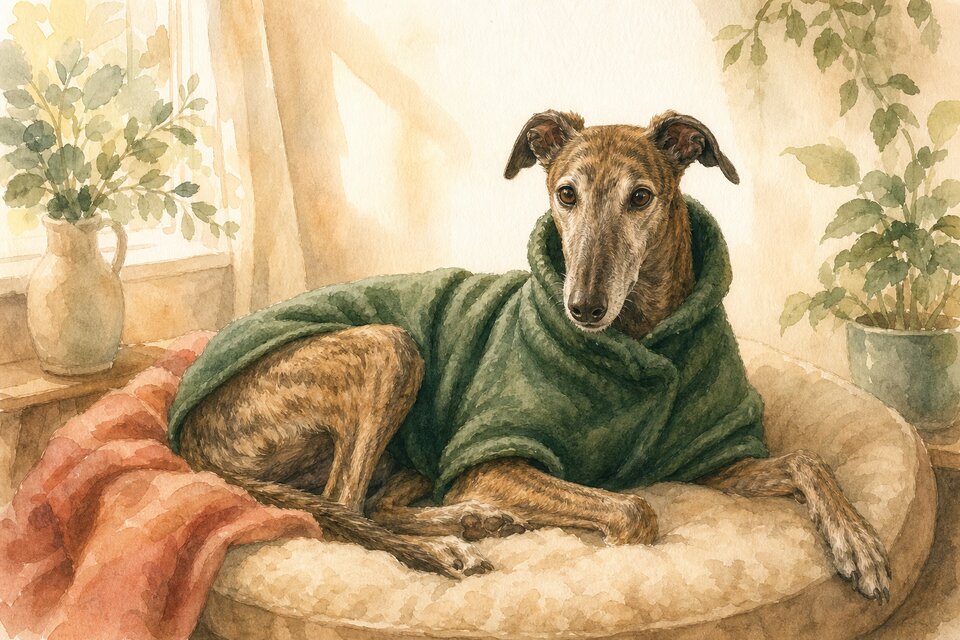
| Protected quiet recovery | Rest on soft bedding in a low-traffic area after any visually exciting activity. | At least 10 minutes after a run; longer whenever the dog chooses. | Do not touch a sleeping dog; call the name and wait for fully open eyes before approaching. |
| Chewing | Veterinarian-approved chew, a small amount of frozen carrot | Puppy-led and supervised | Ask your veterinarian which chews suit your puppy; remove damaged pieces. |
One-week enrichment rotation
| Day | Main block | Recovery block |
|---|---|---|
| Mon / Thu | Easy sniffing search, then one group outlet at the dog's current stage. | Quiet chew and protected sleep. |
| Tue / Fri | Food puzzle plus two minutes of shaping or cooperative handling. | Scatter feed or slow sniffing. |
| Wed / Sat | Signature protocol at easy criteria; stop while cues still work. | Mat settling and uninterrupted rest. |
| Sun | Recovery audit: repeat only an easy favourite if the dog is ready. | Plan the next week from recovery, not exhaustion. |
Teething
Puppy-only biological window
Prepare cold outlets before four to six months
Chewing demand rises sharply at about 4–6 months. Prepare frozen stuffed toys in advance; increased chewing at this age is a developmental need, not a training regression.
Independent ability
Let the dog solve ten minutes alone
Offer a safe puzzle or chew and let the dog work independently for ten minutes. Without opportunities to practise independent settling, some dogs may find alone time harder.