
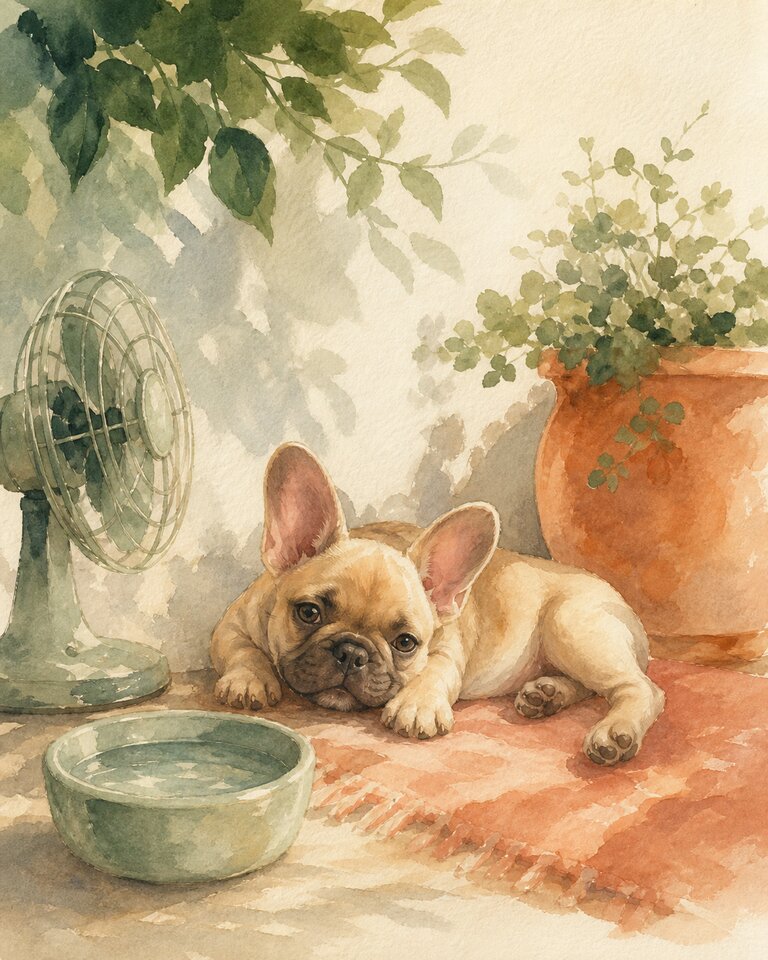
The French Bulldog developed in England and France as a companion dog. Attention to people, play and food are useful training levers, but breathing and temperature always set the ceiling.
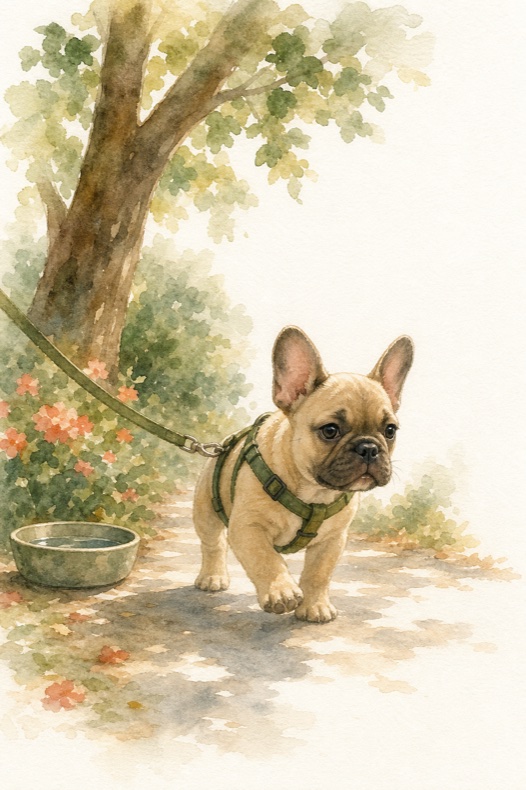
Breed at a glance
A quick profile, not a scorecard
Shedding: High
Grooming frequency: Low
Energy: Moderately low
Trainability: Moderate
- Approx. weight
- Weight8–14 kg
- Approx. shoulder height
- Shoulder height27–35 cm
- Approx. life expectancy
- Reference range10–12 years
Use short, low-intensity and frequent training. If breathing stops being steady, the session is over regardless of whether the planned repetitions are complete.
What this means at home
Reality 01
Breathing ends the session
Visible effort in breathing is not a cue to demand one more repetition. Stop, cool the dog and seek veterinary advice if it recurs.
Reality 02
Repetition loses the learner
Short, varied and clearly reinforced repetitions work better than pressure or drilling the same task after attention has gone.
Reality 03
Small does not remove structural limits
Repeated jumps and stair use still need environmental management. Teach on level ground and block rehearsal rather than correcting it afterwards.
Reality 04
Food and human attention both work
Use those rewards in short sessions, then finish while breathing is steady and the puppy is still engaged.
Breed reference data
| Reference | Value |
|---|---|
| Origin and original role | England and France; companion dog |
| Shoulder height | 27–35 cm |
| Weight | 8–14 kg |
| Coat | Short coat |
| Drive keywords | Living closely with people · play · food |
Suitability
Suited for
- Homes prepared to train indoors or during cool parts of the day
- People who prefer short, frequent and clearly reinforced sessions
- Families willing to practise mouth, nose and facial-fold handling gradually
Not suited for
- Anyone expecting outdoor training at midday during a Perth summer
- Homes that cannot limit repeated jumping and stair access
- People who intend to push through laboured breathing to finish a session