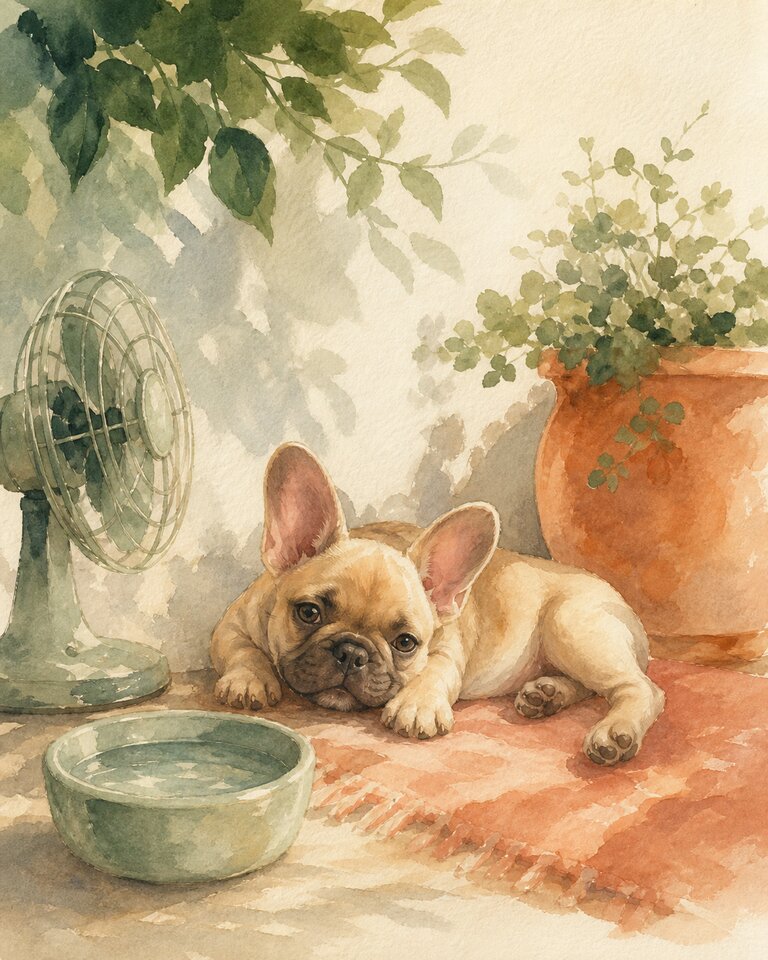
French Bulldog: choose shade, water and airflow before asking for training in warm weather.
29 chapters · English / 中文
French Bulldog: choose shade, water and airflow before asking for training in warm weather.
Breed profile
Training group
Brachycephalic dogs
Origin
Developed in England and France as a companion dog.
Shoulder height
27–35 cm
Weight
8–14 kg
Coat
Short coat
Coat care
Keep handling calm and gradual, with particular attention to comfortable touch around the mouth, nose and facial folds.
Drive keywords
Living closely with people · Play · Food
Handling practice
Condition touch around the mouth, nose and facial folds in tiny, voluntary steps: brief touch, marker, reward, then release before the puppy pulls away. · Teach bat-ear checks and nail care as two voluntary routines. For ears, show the hand, briefly lift the ear edge, mark, reward and release; never probe or force cleaning. For nails, build paw touch, one-second holds and tool presentation before attempting one nail. Sudden discomfort, redness or discharge needs veterinary advice.
General reference range only; individual dogs vary considerably.
13
Teach safe mouth skills
Mouth-play boundaries for a compact companion
A small companion puppy still needs bite inhibition and clear mouth-play rules. Keep the lesson low, calm and brief so structural limits and breathing remain protected.
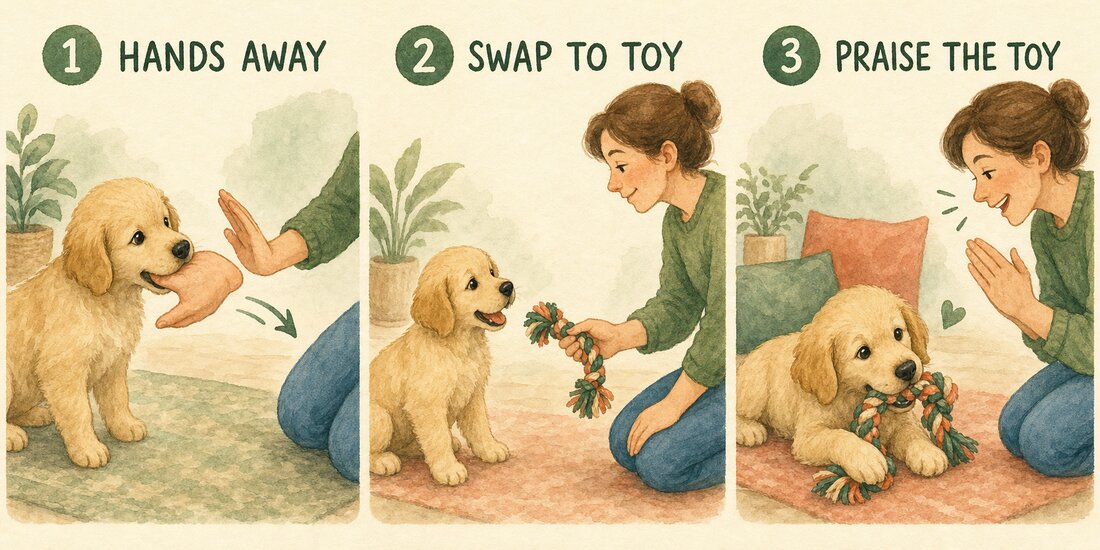
HANDS AWAY = make hands still and unavailable; SWAP TO TOY = offer an appropriate toy; PRAISE THE TOY = reinforce chewing the toy.
Three mouth-use patterns
Respond to the pattern you see, not a label such as stubborn
Type
What it looks like
What it needs
Exploratory mouthing
The puppy tests safe and unsafe objects with its mouth.
Manage access and provide safe objects before correction is needed.
Play mouthing
Loose-bodied play brings teeth onto hands, sleeves or a toy.
Teach bite inhibition and move the game onto an appropriate toy.
Handling avoidance
The puppy turns away or mouths when touch around the face becomes too much.
Stop, lower the handling step and rebuild voluntary participation.
Teach bite inhibition in three stages
8–12 weeksFirst: reduce forceAfter a painful bite, end interaction calmly for 3–5 seconds, then resume only when the puppy is settled.12–16 weeksThen: reduce frequencyReinforce play that stays on safe toys and interrupt repeated contact with skin or clothing.After 16 weeksFinally: keep teeth off peopleKeep mouth play on appropriate objects and preserve the same start-and-stop rules.
Do not skip force control by demanding zero mouthing before the puppy has learned to soften its mouth.
A clear mouth-play routine
Start on a cuePresent a soft, safe toy only after the start cue, keeping the game low and controlled.
Skin contact pauses the gamePause calmly after painful contact; do not add yelling, grabbing or physical correction.
Stop before breathing or arousal risesEnd on a cue while the puppy can still respond, then move to calm sniffing or rest.
Training with FluffyWA
Day school, board & train and private sessions are quoted after a chat, and boarding or daycare can be booked online with live prices.