
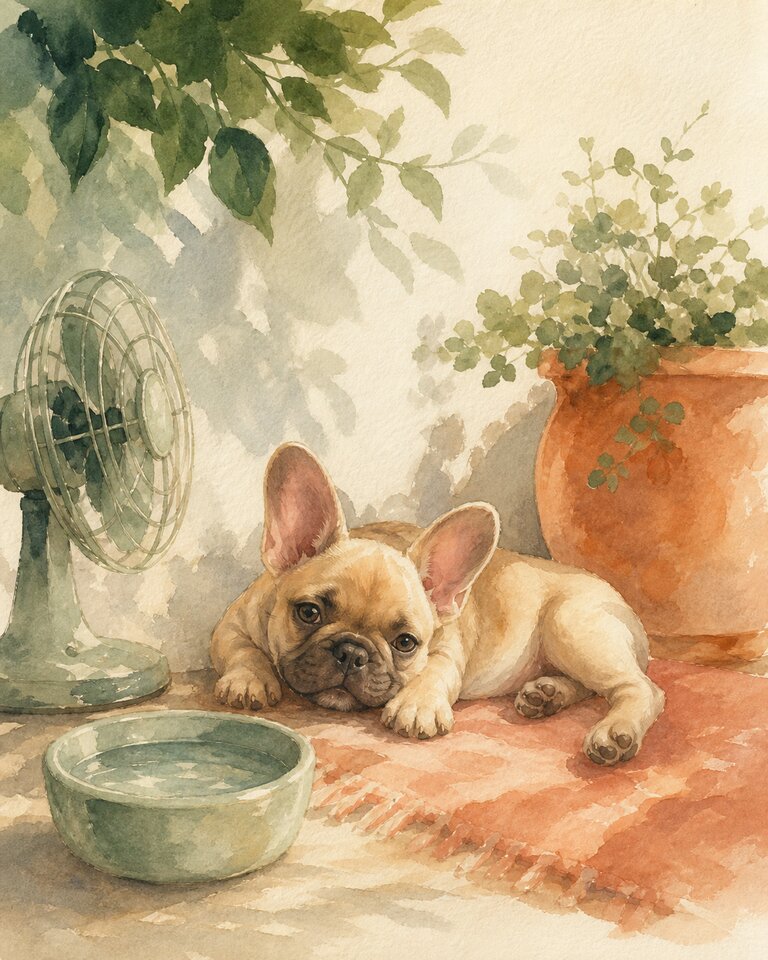
For a French Bulldog, do not turn age into a walk target. Build the day from brief, low-impact rounds in genuinely cool conditions, indoor mental work and full recovery; quiet breathing matters more than minutes.
Use Chapter 20's temperature and breathing decisions before every block. No planned block is owed: new noise, neck extension, open-mouth effort or delayed recovery ends the activity and overrides the table.
| Block | Plan | Stop rule |
|---|---|---|
| Low-impact movement | Short sniffing or lead movement only in a genuinely cool, suitable setting. | End before breathing loses its usual quiet rhythm. |
| Indoor mental work | Rotate scent searches, simple food puzzles and low-intensity shaping. | Finish after a clear success; never add intensity to complete a quota. |
| Recovery | Provide cool, uninterrupted rest after each active block. | Delayed recovery or repeated effort requires veterinary advice. |
Overlap is expected
Do not repay the same minutes twice
A slow sniffing outing can meet both movement and sniffing needs; a meal puzzle is both feeding and mental work. Self-paced exploration differs from structured walking, but “not counted” never means unlimited or creates exercise to repay. Sniffing and walking produce different kinds of effort and should not be converted minute for minute.
Reduce the next block
Recovery quality sets the real limit
Stop and review the activity if it is followed by persistent or unusual panting, refusing food, disorganised movement, frantic grabbing, inability to settle or clear reluctance the next day. Move to a cool calm setting and assess breathing and recovery; visible breathing effort, pain, gait change, signs at rest, delayed recovery or sudden behaviour change needs veterinary advice.