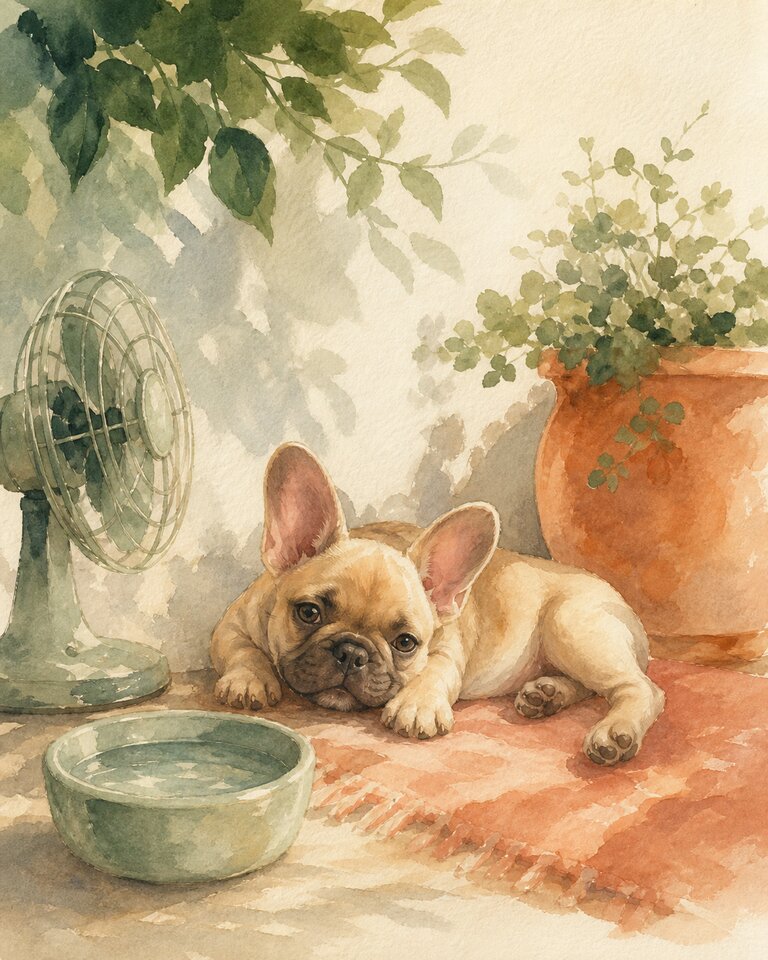
French Bulldog: choose shade, water and airflow before asking for training in warm weather.
29 chapters · English / 中文
French Bulldog: choose shade, water and airflow before asking for training in warm weather.
Breed profile
Training group
Brachycephalic dogs
Origin
Developed in England and France as a companion dog.
Shoulder height
27–35 cm
Weight
8–14 kg
Coat
Short coat
Coat care
Keep handling calm and gradual, with particular attention to comfortable touch around the mouth, nose and facial folds.
Drive keywords
Living closely with people · Play · Food
Handling practice
Condition touch around the mouth, nose and facial folds in tiny, voluntary steps: brief touch, marker, reward, then release before the puppy pulls away. · Teach bat-ear checks and nail care as two voluntary routines. For ears, show the hand, briefly lift the ear edge, mark, reward and release; never probe or force cleaning. For nails, build paw touch, one-second holds and tool presentation before attempting one nail. Sudden discomfort, redness or discharge needs veterinary advice.
General reference range only; individual dogs vary considerably.
20
Protect the growing body
Exercise limits & growth plates
Breathing and temperature are hard upper limits: keep activity short and low-intensity, and favour indoor mental work and cool conditions. Limit jumping and stair use because of body structure, while still following the manual’s general growth-plate protections. Stop and cool the dog immediately if breathing becomes visibly laboured; consult a veterinarian if this happens repeatedly.
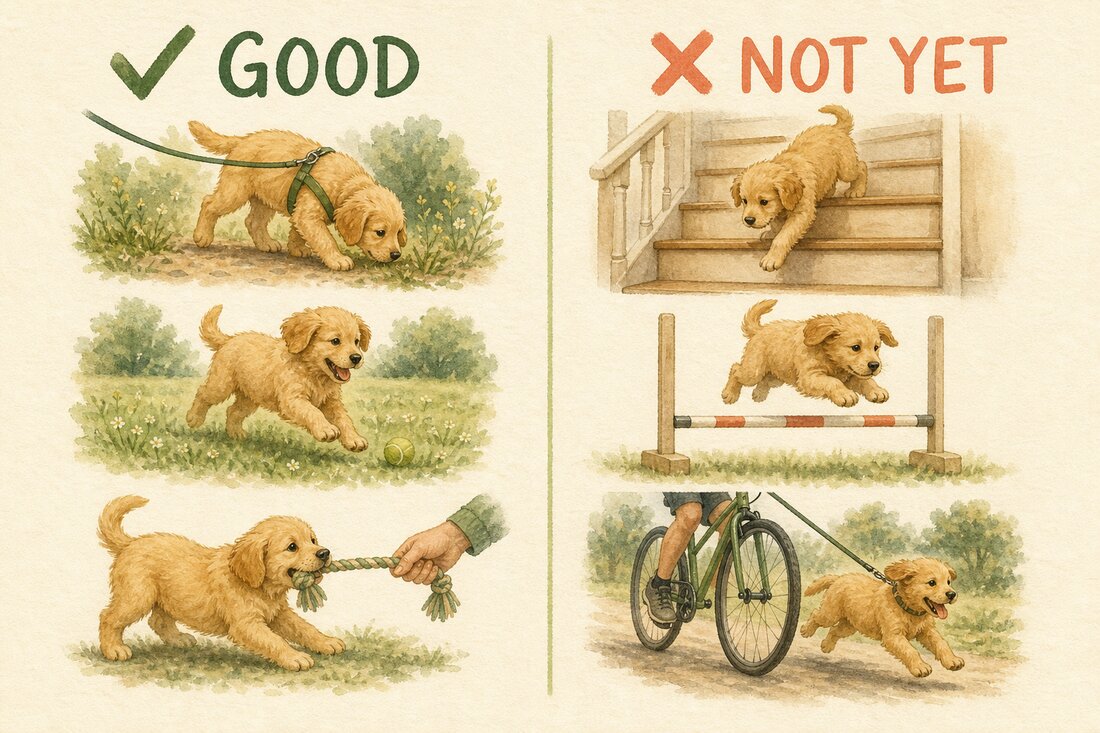
GOOD = low-impact sniffing, self-paced ground play and structured tug; NOT YET = repeated stairs, jumping or running beside a bicycle while growth plates are developing.
Heat-management decision table
Conditions
Plan
Below 22°C
Brief, low-intensity activity; the individual dog's breathing and recovery still override this temperature band.
22–28°C
Shorten the session, choose shade, carry water and switch indoors at any breathing change.
Above 28°C
Indoor scent work or training only; do not use outdoor exercise to meet an activity quota.
Breathing traffic lights
Level
What you see
Action
Green — quiet and steady
Breathing stays quiet and even, the dog remains responsive, and recovery begins promptly during a break.
Continue only a brief, low-intensity session and recheck after every short round.
Amber — stop signal
New breathing noise, slower responses or recovery taking longer than usual appears during low-intensity work.
End the activity, move to a cool setting and do not resume merely to complete the plan.
Red — end and cool
The neck extends, the mouth stays open with visible breathing effort, or the dog does not settle after stopping.
End and cool immediately. Failure to recover after stopping and cooling begins, collapse, or visible effort at rest needs prompt or urgent veterinary care.
Review growth without opening a heat or breathing loophole
Review point
What may change
Permanent guardrail
Growth or fitness review
Adjust one low-impact variable gradually with veterinary guidance.
Breathing, temperature and recovery still end the round; age is never automatic clearance for running or higher-impact sport.
Any later life stage
Keep useful sniffing, problem-solving and calm low-impact movement.
Never test heat tolerance and never continue through new noise, neck extension, open-mouth effort or delayed recovery.
Training with FluffyWA
Day school, board & train and private sessions are quoted after a chat, and boarding or daycare can be booked online with live prices.