
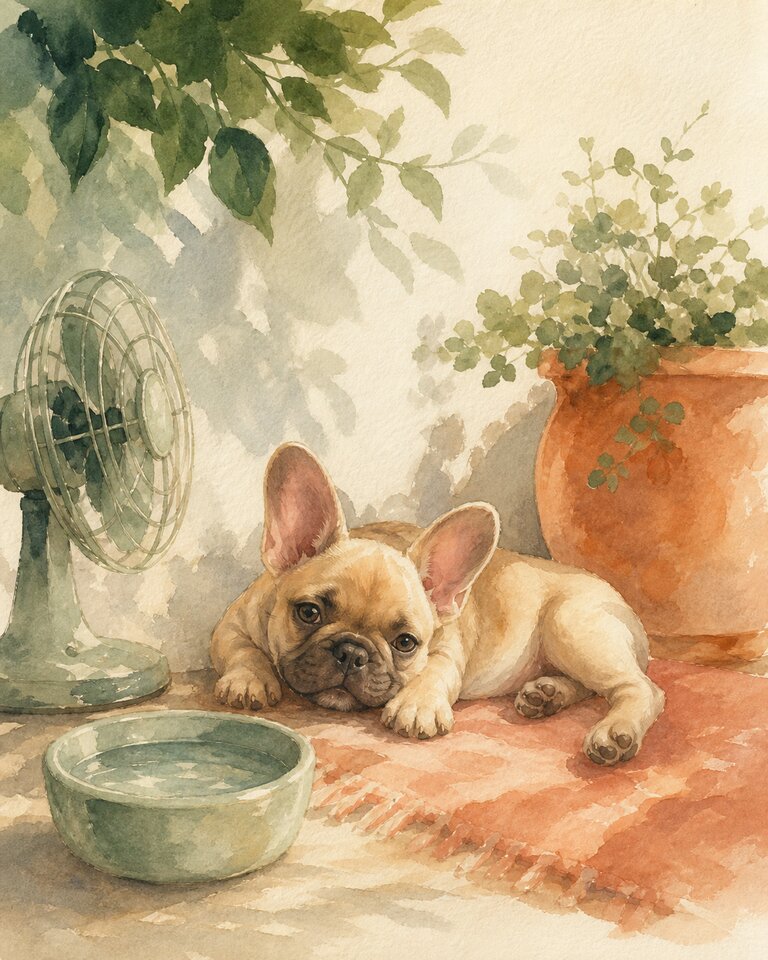
French Bulldog prevention begins with hard breathing and temperature limits, then protects the body, voluntary care and emotional independence. Manage the environment before asking for self-control, and treat sudden physical or behavioural change as a reason for veterinary assessment rather than harder training.
Prevention card 01
Breathing and heat pushed past the limit
Why it happens
For a brachycephalic French Bulldog, breathing and temperature are hard constraints on training intensity.
Early signals
Breathing loses its steady rhythm, visible effort increases, or the puppy cannot recover during the planned break.
Prevent it now
Train indoors or during cool parts of the day, keep sessions short and stop before breathing becomes laboured.
If it has started
Stop immediately and cool the dog; do not resume the session to complete planned repetitions.
When to get professional help
Consult a veterinarian if visibly laboured breathing occurs repeatedly.
Prevention card 02
Pressure replaces clear teaching
Why it happens
Sensitivity plus dull repetition can make the puppy disengage; more force then adds conflict rather than information.
Early signals
Turning away, slowing down, avoiding the training area or no longer taking an available reward.
Prevent it now
Use short, varied sessions, split criteria and finish after a clear success.
If it has started
Stop drilling, lower the task and rebuild voluntary engagement with easy marked responses.
When to get professional help
Get qualified positive-reinforcement help if training or handling produces persistent freezing, growling, snapping or avoidance.
Prevention card 03
Repeated jumping and stair rehearsal
Why it happens
Body structure means jumping and stair use need tighter environmental limits during puppyhood.
Early signals
Furniture jumping or stair rushing becomes part of the puppy’s normal route through the home.
Prevent it now
Use barriers, keep training on stable level ground and arrange daily routes without repeated jumps.
If it has started
Block the rehearsal immediately and move the relevant reward, bed or activity to ground level.
When to get professional help
A sudden change in movement, reluctance to move or apparent pain needs veterinary assessment rather than a training fix.
Prevention card 04
Face handling becomes a daily struggle
Why it happens
Mouth, nose and facial-fold touch is a priority handling skill, but forced repetition teaches avoidance.
Early signals
The puppy turns its head away, backs off, paws at the hand or mouths as touch approaches.
Prevent it now
Use one tiny voluntary touch at a time, then mark, reward and release before avoidance starts.
If it has started
Stop forced handling, return to an easier body area and rebuild consent in smaller steps.
When to get professional help
Seek veterinary assessment for a sudden handling change, and qualified behaviour help for freezing, growling, snapping or biting.
Prevention card 05
Alone-time distress grows through sudden absences
Why it happens
Strong companionship motivation does not automatically create the skill of resting calmly without a person present.
Early signals
Shadowing every movement, reacting to keys or shoes, abandoning food, vocalising or pacing as the person leaves.
Prevent it now
Film a baseline and practise absences of only a few successful seconds, separating keys and shoes from actual departures.
If it has started
Return below the first distress sign, shorten the absence and do not use boarding or crying it out as treatment.
When to get professional help
Persistent panic, drooling, escape damage, self-injury or inability to stay below threshold needs qualified behaviour help and veterinary input.