
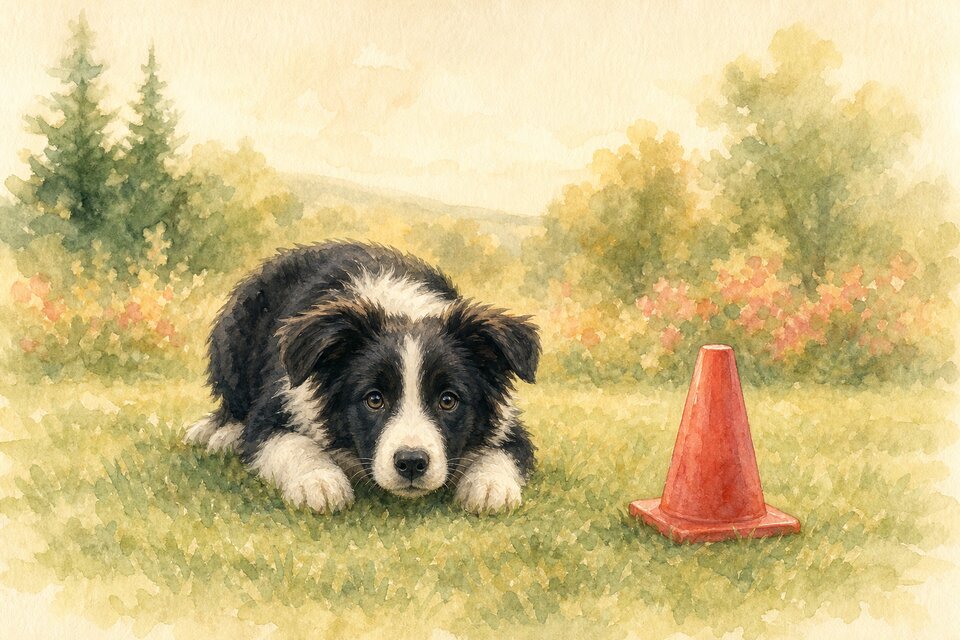
Start with sleep, health, management and difficulty. What looks like disobedience is usually a puppy whose needs, environment or training step do not yet match the task.
Question 01
My puppy bites hands hard enough to draw blood
Most likely cause
Overtiredness, over-arousal, teething discomfort or bite-inhibition practice that has become too intense.
What to do today
- End interaction calmly for 3–5 seconds after a painful bite; do not hit, hold the muzzle or yell.
- Redirect to a soft, safe toy or chilled teething toy before hands become the target.
- Schedule the next protected nap and shorten the next play period.
When professional help is needed
Bites are puncturing skin repeatedly, the body becomes stiff before biting, handling triggers the bite, or the behaviour changes suddenly; arrange veterinary assessment and qualified behaviour help.
Only when no health or safety red flag is present, use Chapter 28 if two weeks of appropriate, consistent management brings no improvement. For any red flag listed above, seek the indicated veterinary or qualified behaviour help now rather than waiting.
Question 02
My puppy cries through the night
Most likely cause
A toilet need, a crate placed too far from the family, an abrupt first-night transition or too much daytime sleep disruption.
What to do today
- Place the crate beside the bed and make the final toilet trip quiet and predictable.
- If the cry begins suddenly with circling or scratching, take the puppy out on lead for a silent toilet trip, then return directly.
- Protect daytime naps and avoid exciting play immediately before bedtime.
When professional help is needed
Crying comes with vomiting, diarrhoea, pain, breathing difficulty, persistent drooling, frantic escape attempts or self-injury; contact a veterinarian promptly.
Only when no health or safety red flag is present, use Chapter 28 if two weeks of appropriate, consistent management brings no improvement. For any red flag listed above, seek the indicated veterinary or qualified behaviour help now rather than waiting.
Question 03
My puppy howls as soon as the crate door closes
Most likely cause
The crate plan advanced too quickly, the crate predicts isolation, or a basic need was not met before the door closed.
What to do today
- Return to open-door food games and one full meal with the door open.
- After toileting, close the door for only three seconds, then open it while the puppy is still calm. Repeat.
- Record the session so you can distinguish brief protest from escalating panic.
When professional help is needed
The puppy drools, paces continuously, damages the door, eliminates despite having toileted, cannot eat or risks injury when left.
Only when no health or safety red flag is present, use Chapter 28 if two weeks of appropriate, consistent management brings no improvement. For any red flag listed above, seek the indicated veterinary or qualified behaviour help now rather than waiting.
Question 04
My puppy jumps on every person
Most likely cause
Jumping has repeatedly produced eye contact, touch or excited speech, so human attention is reinforcing it.
What to do today
- Use a gate or lead so the puppy cannot rehearse jumping during greetings.
- Remove attention while paws are up; mark and reward the instant all four paws touch the floor.
- Ask visitors to approach only while four paws stay down and to step away if jumping restarts.
When professional help is needed
Greeting includes a hard stare, stiff body, growling, snapping, fearful retreat or bites, or adults cannot safely manage contact.
Only when no health or safety red flag is present, use Chapter 28 if two weeks of appropriate, consistent management brings no improvement. For any red flag listed above, seek the indicated veterinary or qualified behaviour help now rather than waiting.
Question 05
Toilet training has suddenly gone backwards
Most likely cause
The interval became too long, supervision loosened, the environment changed, adolescence began, or there is a health issue.
What to do today
- Return to the previous successful schedule—typically every 45–60 minutes while awake and after every trigger event.
- Record every meal, trip, success and accident for three days.
- Clean accidents with enzyme cleaner and restore close supervision or a smaller managed area.
When professional help is needed
Urination is frequent or painful, there is blood, unusual thirst, lethargy, diarrhoea or a sudden unexplained change; see a veterinarian first.
Only when no health or safety red flag is present, use Chapter 28 if two weeks of appropriate, consistent management brings no improvement. For any red flag listed above, seek the indicated veterinary or qualified behaviour help now rather than waiting.
Question 06
My puppy will not eat or seems fussy
Most likely cause
Illness must be excluded first; other possibilities include stress, too many treats, frequent food changes or meals offered all day.
What to do today
- Check energy, drinking, vomiting, diarrhoea, pain and the time of the last normal meal.
- Offer the usual measured food at set mealtimes and count training food within the daily ration.
- Contact your veterinarian for advice rather than repeatedly changing foods or adding rich toppers.
When professional help is needed
A young puppy misses meals, becomes lethargic, cannot keep water down, has diarrhoea, seems painful or loses weight; seek veterinary advice promptly.
Only when no health or safety red flag is present, use Chapter 28 if two weeks of appropriate, consistent management brings no improvement. For any red flag listed above, seek the indicated veterinary or qualified behaviour help now rather than waiting.
Question 07
My puppy destroys furniture and the house
Most likely cause
Too much unsupervised access, teething, unmet chewing and sniffing needs, sleep debt, or distress when alone.
What to do today
- Block access with a pen or gate and remove the item before the puppy can rehearse chewing it.
- Place two safe chewing options in the managed area and trade calmly whenever the wrong item is taken.
- Add one short sniffing task and a protected nap; record alone time to check for distress.
When professional help is needed
The puppy may have swallowed material, is vomiting, cannot pass stool, damages doors only when alone, drools or risks self-injury.
Only when no health or safety red flag is present, use Chapter 28 if two weeks of appropriate, consistent management brings no improvement. For any red flag listed above, seek the indicated veterinary or qualified behaviour help now rather than waiting.
Question 08
My puppy lies down and will not walk outside
Most likely cause
The environment is too intense, the surface or equipment feels unfamiliar, the puppy is tired, or movement is uncomfortable.
What to do today
- Do not drag the lead. Stop, soften the lead and let the puppy observe from a safe distance.
- Reward one voluntary look or step, then finish after a very short successful outing.
- Check harness fit, heat and ground temperature, and practise again in an easier location.
When professional help is needed
For limping, pain, sudden refusal or suspected heat stress, stop the activity and contact a veterinarian promptly; suspected heatstroke is urgent. After physical causes are excluded, seek qualified behaviour assessment for extreme fear or failure to recover after leaving the trigger.
Only when no health or safety red flag is present, use Chapter 28 if two weeks of appropriate, consistent management brings no improvement. For any red flag listed above, seek the indicated veterinary or qualified behaviour help now rather than waiting.
Question 09
My puppy screams and pulls when another dog appears
Most likely cause
Excitement or worry has crossed the learning threshold, greetings have become an expectation, and the distance is too small.
What to do today
- Turn away early and create enough distance that the puppy can eat and respond.
- Mark one calm look at the dog, then reward the return of attention to you.
- Pause on-lead greetings and replace them with short observation sessions or parallel walking.
When professional help is needed
The puppy freezes, growls, lunges, snaps, redirects onto the handler or cannot recover after the other dog leaves.
Only when no health or safety red flag is present, use Chapter 28 if two weeks of appropriate, consistent management brings no improvement. For any red flag listed above, seek the indicated veterinary or qualified behaviour help now rather than waiting.
Question 10
My puppy is afraid of the vacuum or thunder
Most likely cause
The sound or movement arrived above threshold, escape was limited, or forced exposure strengthened the fear.
What to do today
- Stop the exposure and provide a quiet safe room with a genuine exit choice.
- For controllable sounds, begin later at a barely noticeable volume and pair each sound with food.
- During real storms, reduce light and sound, offer a familiar chew if the puppy can eat, and do not force contact.
When professional help is needed
Fear causes escape attempts, shaking that does not settle, refusal of all food, self-injury or prolonged inability to recover.
Only when no health or safety red flag is present, use Chapter 28 if two weeks of appropriate, consistent management brings no improvement. For any red flag listed above, seek the indicated veterinary or qualified behaviour help now rather than waiting.
Question 11
My puppy steals items, will not return them and growls
Most likely cause
Resource guarding is developing because possession predicts pursuit, grabbing, removal or conflict.
What to do today
Growling is already a red flag. The steps below are immediate safety management while you arrange qualified help, not a do-it-yourself behaviour-modification plan.
- Do not chase, corner, reach into the mouth or punish the growl.
- From a safe distance, toss several higher-value treats away from the item and pick it up only after the puppy moves away.
- Prevent access to valuable hazards and practise Drop only with low-value objects the puppy willingly trades.
When professional help is needed
There is freezing, hard staring, growling, lip lifting, snapping, guarding of food or space, or any bite; stop testing and seek qualified help.
Only when no health or safety red flag is present, use Chapter 28 if two weeks of appropriate, consistent management brings no improvement. For any red flag listed above, seek the indicated veterinary or qualified behaviour help now rather than waiting.
Question 12
My puppy ignores the recall cue
Most likely cause
The cue has been repeated without consequence, predicts the end of fun, or is being tested against distractions before it is ready.
What to do today
- Attach a 5–10 metre long line to a Y-shaped harness only in a safe area set well back from traffic, use a short lead beside roads, and stop testing recall off lead.
- Rebuild indoors with one cue, rapid movement away, three excellent rewards and a collar touch.
- After at least half of successful recalls, release the dog back to play only inside secure fencing or while the physical connection remains attached; protect the emergency word.
When professional help is needed
The puppy moves into danger, escapes management, or recall failure creates an immediate public-safety risk.
Only when no health or safety red flag is present, use Chapter 28 if two weeks of appropriate, consistent management brings no improvement. For any red flag listed above, seek the indicated veterinary or qualified behaviour help now rather than waiting.
Breed question
My puppy chases children and nips their ankles
Most likely cause
Running and squealing trigger the Border Collie eye–stalk–chase–grip sequence, and each chase rehearses it again.
What to do today
- Separate puppy and running children with a gate or adult-held lead before movement begins.
- Teach children to stop, stay quiet and call an adult rather than run or scream.
- Give a legal outlet with a short rule-based tug game, then cue Go to mat or scatter food to the ground.
When professional help is needed
Nips leave marks, the puppy cannot disengage, guarding or growling appears, or the household cannot maintain physical separation.
If two weeks of consistent implementation brings no improvement, or you see freezing, growling or a bite that leaves a mark, follow Chapter 28 and seek professional help.
Breed question
My puppy becomes too excited to stop
Most likely cause
Sleep debt, stacked stimulation and play that never includes a recovery phase have pushed arousal above the learning threshold.
What to do today
- Remove the trigger and move to a quiet managed space; do not keep giving cues.
- Offer five minutes of scatter sniffing or a familiar chew if the puppy can engage.
- Protect the next nap and audit whether total sleep has reached 18–20 hours for an eight-week-old.
When professional help is needed
Arousal changes suddenly, the puppy cannot sleep, spins or chases compulsively, injures itself or others, or remains unable to recover in a quiet space.
If two weeks of consistent implementation brings no improvement, or you see freezing, growling or a bite that leaves a mark, follow Chapter 28 and seek professional help.
Breed question
My puppy keeps staring at shadows or spots of light
Most likely cause
An emerging compulsive light-chasing pattern is being triggered and self-reinforced by moving reflections or shadows.
What to do today
- Never use a laser pointer or flashlight for play, and stop anyone from creating moving light spots.
- Block reflective surfaces, stabilise moving curtains and change the lighting that creates the trigger.
- Interrupt at the first stare with distance and a sniffing task; record trigger, duration and recovery.
When professional help is needed
The pattern repeats daily, is difficult to interrupt, replaces sleep or eating, spreads to more triggers or causes injury; contact your veterinarian and seek veterinary behaviour referral early.
If two weeks of consistent implementation brings no improvement, or you see freezing, growling or a bite that leaves a mark, follow Chapter 28 and seek professional help.