
FluffyWA

Positive training · From eight weeks

Shiba Inu Puppy Training Manual

From 8 Weeks

Harness, lead and reward pouch: build the Shiba Inu's voluntary cooperation alongside physical safety.

29 chapters · English / 中文

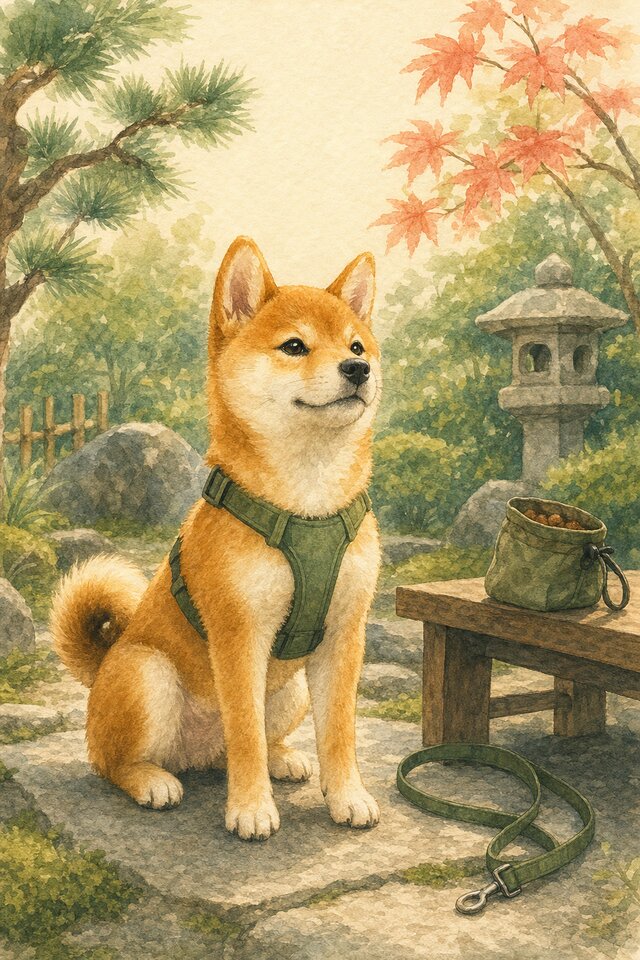
Watercolour illustration of a Shiba Inu puppy wearing a green harness beside a lead and reward pouch in a Japanese garden
Harness, lead and reward pouch: build the Shiba Inu's voluntary cooperation alongside physical safety.

Breed profile

Training group
Sled and spitz dogs
Origin
The Shiba Inu originated in Japan as a mountain hunting dog for birds and small animals.
Shoulder height
Approximately 35–41 cm
Weight
Approximately 7–11 kg
Coat
Harsh, straight outer coat with a soft, dense undercoat
Coat care
Seasonal coat shedding needs more frequent, short cooperative brushing sessions. Introduce coat separation, paw checks and dryer sound in tiny voluntary steps, pausing before vocal or avoidance behaviour escalates.
Drive keywords
Independent decision-making · Chase · Small-animal hunting · Environmental vigilance
Handling practice
During seasonal coat shedding, use frequent but very short sessions for brushing, coat separation and dryer sound, with a non-slip surface and a clear option to pause or leave. · During the 8–16 week window, arrange people with varied appearances, movement and voices at a distance where the puppy can eat, leave and recover. Do not require approach, touch or greeting.

General reference range only; individual dogs vary considerably.

The cue that can save a life

Recall: the one that saves lives

Recall is a lifelong project. This group was selected to make decisions without depending on human direction.

For a Shiba Inu, recall practice always keeps a secured long line or fully secure fence between training and escape risk. Reward early check-ins, one turn back, coming all the way in and a collar touch; every unfenced setting keeps the line attached, regardless of age or indoor success.
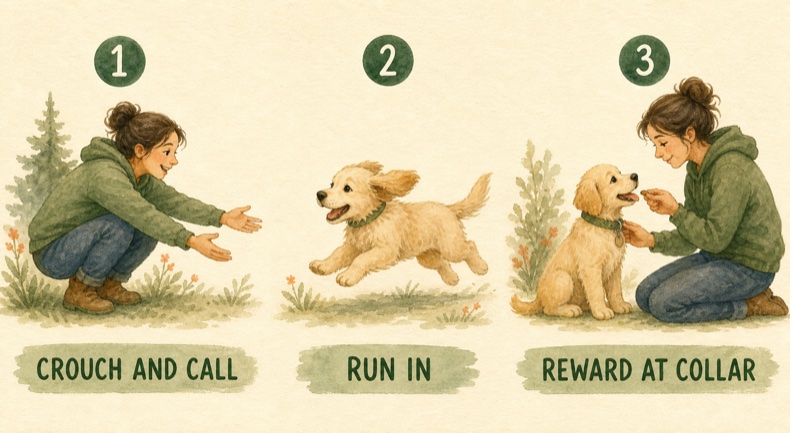
Watercolour diagram showing three dog recall steps
CROUCH AND CALL = invite once; RUN IN = the dog comes all the way to hand; REWARD AT COLLAR = touch the collar and reward.

Build it from the house to the park

  1. Indoor follow-me game

    Say the dog’s name once, move backwards a few gentle steps and reward a complete return to hand. Never chase the dog.

  2. Two-person ping-pong

    Two people take turns calling and rewarding across a quiet room, one invitation at a time.

  3. Add the cue

    When running to you is predictable, say “Come” once just before the puppy starts moving.

  4. Long line in the yard

    Use a 5–10 m long line as a safety net. Begin with easy distance and very mild distractions.

  5. Long line in the park

    Move to a quiet park only after the yard is reliable; increase distance or distraction, never both together.

  6. Group-specific long-line guidance

    Plan for long-term long-line or fenced management. Where the breed profile requires a secured long line in every unfenced setting, never treat line removal as a training milestone.

Emergency recall

Keep one cue behind glass

Choose a separate signal, such as two short whistle blasts. Practise it only once or twice a week and give a highest-value jackpot—served safely as several tiny pieces in succession and counted within the daily food allowance. Never spend the signal on an everyday recall.

Collar-touch conditioning

Arrival means coming all the way to hand

Recall, touch the collar gently, feed, then release. Repeating that sequence prevents the puppy from learning to orbit one metre beyond reach.

Training with FluffyWA

Day school, board & train and private sessions are quoted after a chat, and boarding or daycare can be booked online with live prices.