
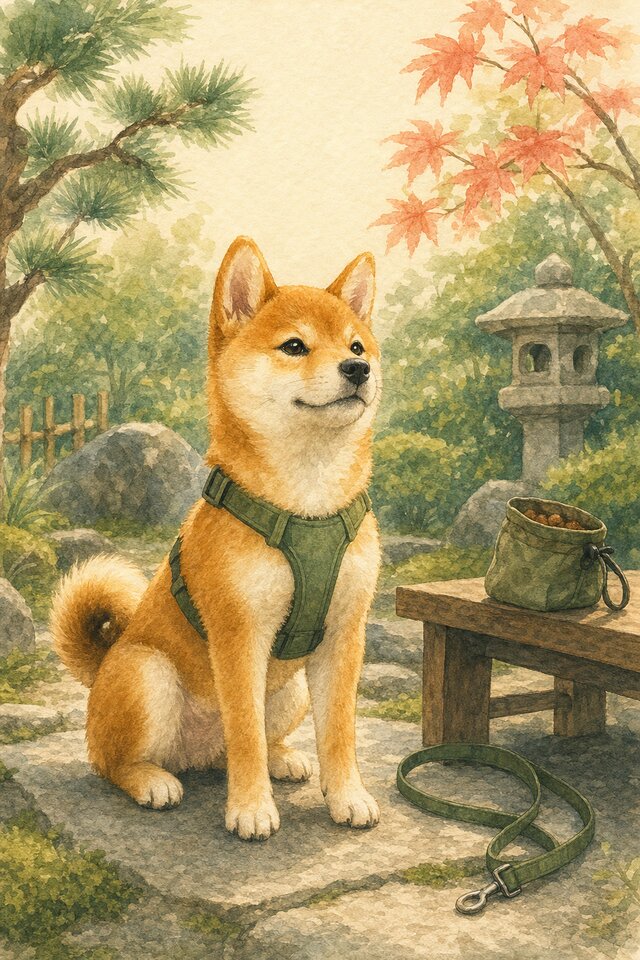
Shiba Inu risks grow when physical management is removed, escape routes are rehearsed or pressure is increased through warning signals. Keep the safety layer, change access first and reinforce voluntary alternatives while the puppy can still respond.
Prevention card 01
Recall fails as chase takes over
Why it happens
Independent mountain hunting and retained chase make self-directed movement highly rewarding, so an open environment can outcompete a familiar cue.
Early signals
Check-ins stop, the mouth closes, orientation and weight move toward a target, speed rises or familiar food loses value.
Prevent it now
Use a secured long line in every unfenced setting, reward the earliest turn back and use fully secure fencing whenever free activity is the goal.
If it has started
Restore physical management, increase distance and rebuild one achievable check-in without repeating the cue or unclipping the line.
When to get professional help
Seek qualified reward-based help if the dog repeatedly breaches management, reaches a dangerous area or cannot disengage at a workable distance.
Prevention card 02
A door or fence weakness becomes an escape route
Why it happens
Independent problem-solving makes every successful push through a gap, latch or fence base reinforce the next attempt.
Early signals
Waiting beside an exit, nosing the same gap, pawing a latch, digging one fence section or using nearby objects as launch points.
Prevent it now
Use two physical barriers, audit the complete boundary every day and supervise all yard access instead of relying on Wait alone.
If it has started
Stop unsupervised access, secure the exact weak point and re-audit the whole route, including family handovers, rather than patching only the visible gap.
When to get professional help
Get practical professional help after any boundary breach, road access or repeated escape attempt that the household cannot safely prevent.
Prevention card 03
Pressure escalates a Shiba scream or stranger wariness
Why it happens
Forced touch or approach can teach the puppy that subtle avoidance does not work, while low exposure variety can let unfamiliar people remain significant threats.
Early signals
Turning away, leaving, freezing, refusing food, sharp vocalising, barking at approach or taking longer to recover after a greeting.
Prevent it now
Keep handling in tiny voluntary steps and place varied strangers at a distance where the puppy can eat, leave and recover without being touched.
If it has started
Stop the approach or handling, restore space and an exit, then reinforce calm observation or one easy cooperative step. Do not punish the sound.
When to get professional help
A sudden handling change needs veterinary assessment; persistent freezing, growling, snapping, biting or failure to recover needs qualified behaviour help.