
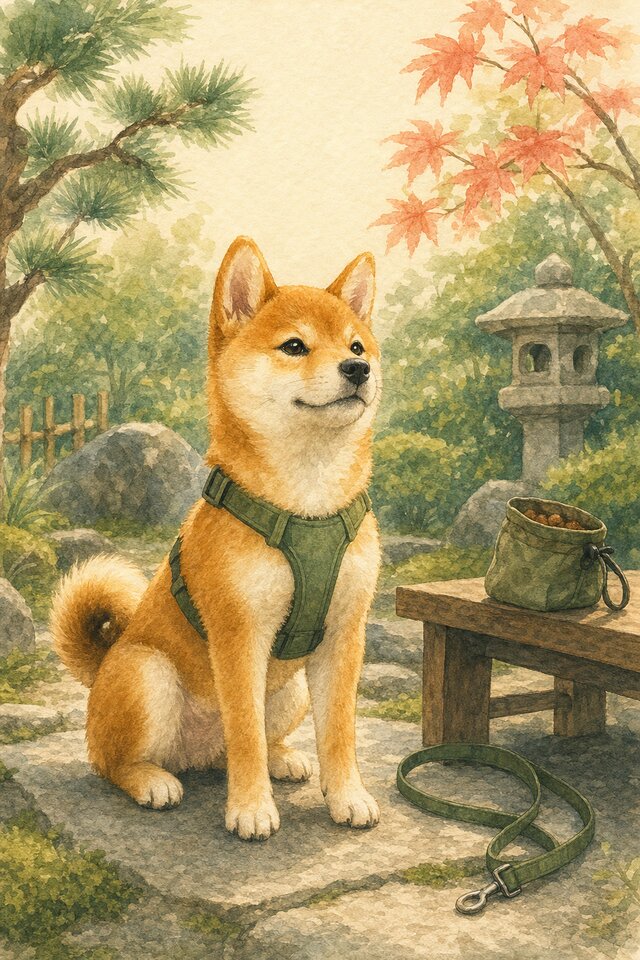
The Shiba Inu originated in Japan as a mountain hunting dog for birds and small animals. Independent decisions, chase and environmental vigilance shape learning; training earns voluntary turns back while a secured long line, gates and fencing carry the safety load.
Breed at a glance
A quick profile, not a scorecard
Shedding: Moderate
Grooming frequency: Moderately low
Energy: Moderate
Trainability: Moderately low
- Approx. weight
- WeightApproximately 7–11 kg
- Approx. shoulder height
- Shoulder heightApproximately 35–41 cm
- Approx. life expectancy
- Reference range13–16 years
Mountain hunting rewarded searching, pursuing and making choices without continuous human direction. A cue is therefore built through worthwhile outcomes under management, never tested by removing that management.
What this means at home
Reality 01
Recall always keeps a physical safety layer
Room success does not make an open environment safe. Use a secured long line in every unfenced setting and fully secure fencing for free activity.
Reality 02
A closed gate still needs an audit
Check gaps, latches, fence bases, height, nearby launch points and family handovers. Wait is useful training, but it is not a substitute for two physical barriers.
Reality 03
A scream is information, not a contest
Sharp vocalising can occur around frustration, unfamiliar approach or handling pressure. Pause, identify the context and restore choice rather than overpowering the puppy.
Reality 04
Socialisation protects choice
The goal is calm or pleasant association with varied people, not forced greeting. Work where the puppy can eat, leave and recover, especially during the 8–16 week window.
Breed reference data
| Reference | Value |
|---|---|
| Origin and original role | Japan; mountain hunting dog for birds and small animals |
| Shoulder height | Approximately 35–41 cm |
| Weight | Approximately 7–11 kg |
| Coat | Harsh straight outer coat; soft dense undercoat |
| Drive keywords | Independent decisions · chase · small-animal hunting · vigilance |
Suitability
Suited for
- Homes prepared to keep a secured long line in every unfenced setting
- People willing to audit gates, latches, gaps and fence bases every day
- Families comfortable with low-pressure socialisation and choice-based grooming
Not suited for
- Anyone expecting indoor recall success to make open areas safe
- Homes relying on an unchecked gate or unsupervised yard access
- People planning to force greetings or hold the puppy through handling distress