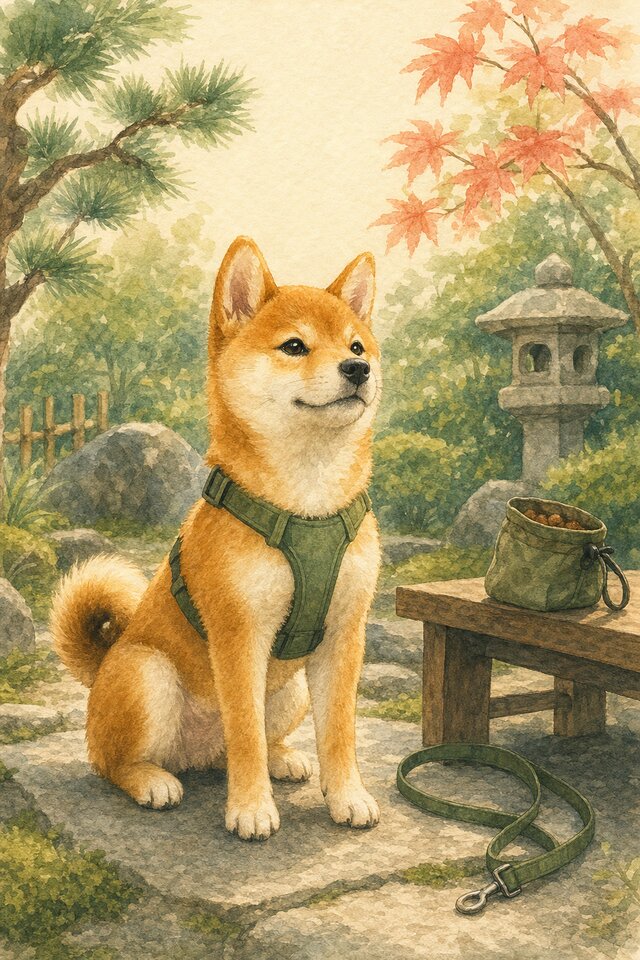
Harness, lead and reward pouch: build the Shiba Inu's voluntary cooperation alongside physical safety.
29 chapters · English / 中文
Harness, lead and reward pouch: build the Shiba Inu's voluntary cooperation alongside physical safety.
Breed profile
Training group
Sled and spitz dogs
Origin
The Shiba Inu originated in Japan as a mountain hunting dog for birds and small animals.
Shoulder height
Approximately 35–41 cm
Weight
Approximately 7–11 kg
Coat
Harsh, straight outer coat with a soft, dense undercoat
Coat care
Seasonal coat shedding needs more frequent, short cooperative brushing sessions. Introduce coat separation, paw checks and dryer sound in tiny voluntary steps, pausing before vocal or avoidance behaviour escalates.
During seasonal coat shedding, use frequent but very short sessions for brushing, coat separation and dryer sound, with a non-slip surface and a clear option to pause or leave. · During the 8–16 week window, arrange people with varied appearances, movement and voices at a distance where the puppy can eat, leave and recover. Do not require approach, touch or greeting.
General reference range only; individual dogs vary considerably.
28
Early help protects the dog and the family
When to call a professional
Professional help is not a last resort. It is the correct next step whenever safety, health or a dog’s ability to recover is in doubt.
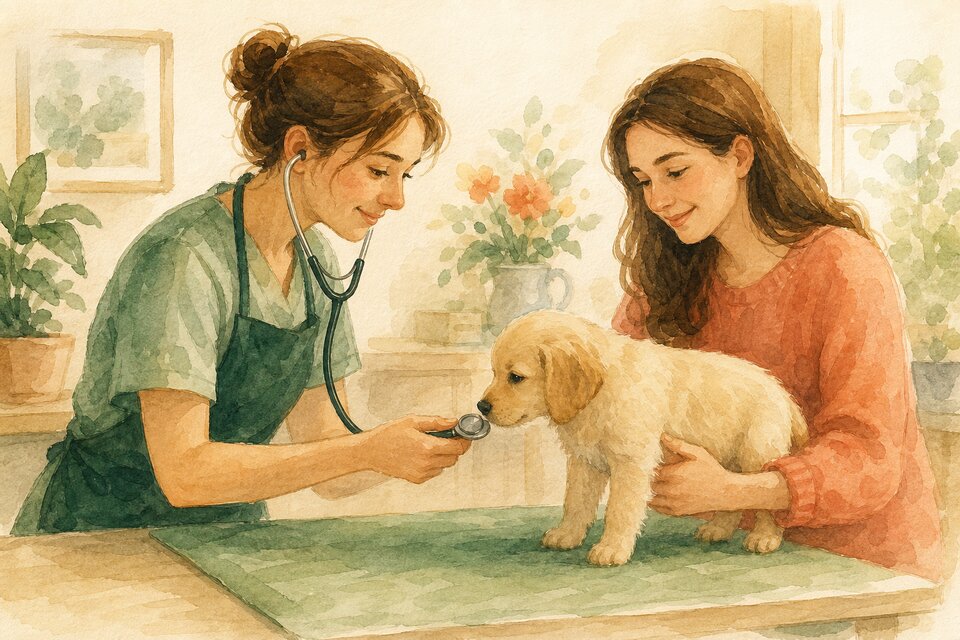
Sudden change, pain, illness or recovery concerns go to a veterinarian before being treated as training alone.
Who to call, in this order
Veterinarian · first stopRule out pain, illness, sensory changes and other medical contributors before treating a behaviour as “training only.”
Qualified positive-reinforcement trainerLook for positive-reinforcement credentials and professional commitments such as Delta Institute (Delta Society Australia) certification or Pet Professional Guild Australia (PPGA) membership.
Veterinary behaviour specialistFor anxiety, fear, compulsive behaviour or aggression, ask your veterinarian for referral to a veterinary behaviourist who can combine behaviour care with medical assessment when appropriate.
Perth general resources
Use the aftercare contact page—no stale phone numbers here
The FluffyWA aftercare page points to Perth 24-hour emergency hospitals, RSPCA WA, Dogs’ Refuge Home and local council dog-management resources. Check the current details before travelling.