

Toilet training is a schedule and supervision task. Every outdoor success is information; every indoor accident means the schedule, supervision or health context needs review.

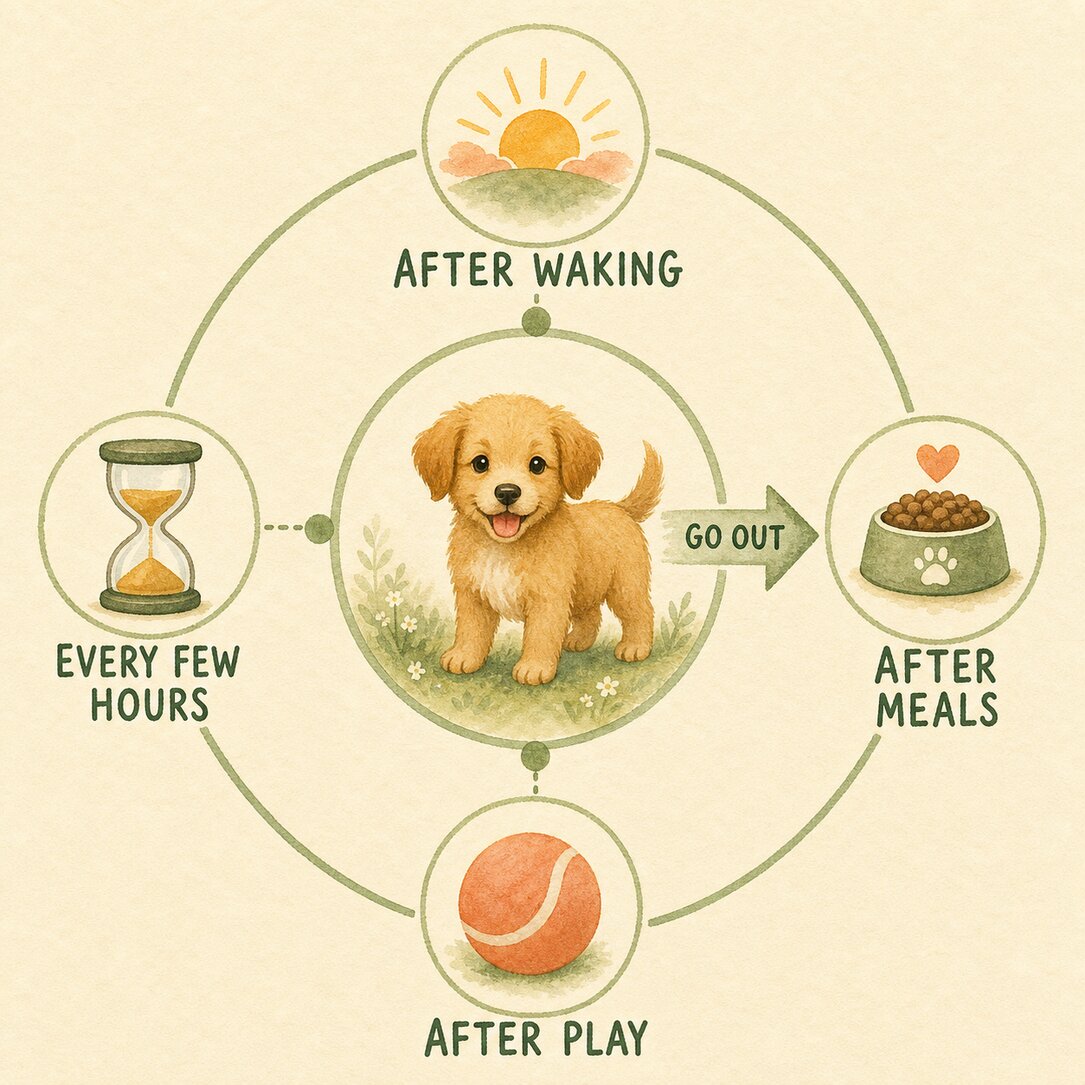
Six times the puppy must go out
During the day, add a scheduled trip every 45–60 minutes.
Use the same toilet-place sequence
- Take the same route Escort the dog on a secure lead directly to the toilet area without a tour of the yard.
- Use the same surface Consistency of place and surface helps the dog recognise the job.
- Wait quietly for 2–3 minutes No play, conversation or wandering while you wait.
- Mark the instant toileting happens Mark while the dog is still outside and completing the behaviour.
- Reward outside Deliver the reward at the toilet place. Do not wait until you are back indoors.
- Play only after success If toileting always ends outdoor time, the dog may learn to hold on to make the outing last longer.
Find the missing trip
Record three consecutive days
Chapter 27 provides fields for date, time, outdoor success, indoor accident and last meal time. Three consecutive days usually reveal where the schedule is late.
Regression is information
Expect a setback at 14–16 weeks and again in adolescence
Return to the previous stage’s outing frequency. Do not increase punishment.