
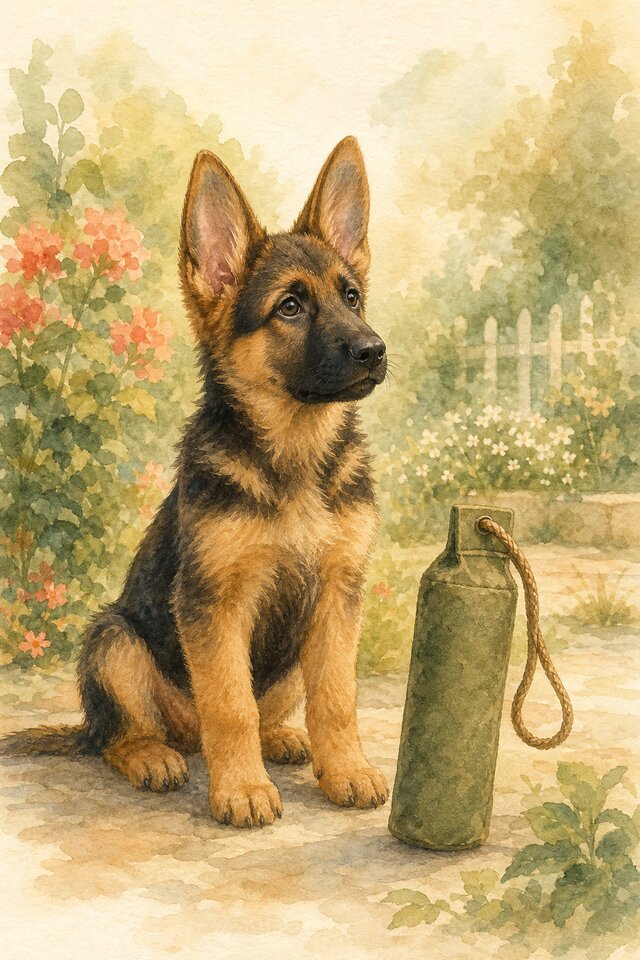
The German Shepherd originated in Germany, first for herding and later for working and service roles. Cooperation with people, guarding and endurance are useful training levers, but they require early neutrality, recovery and clear everyday skills.
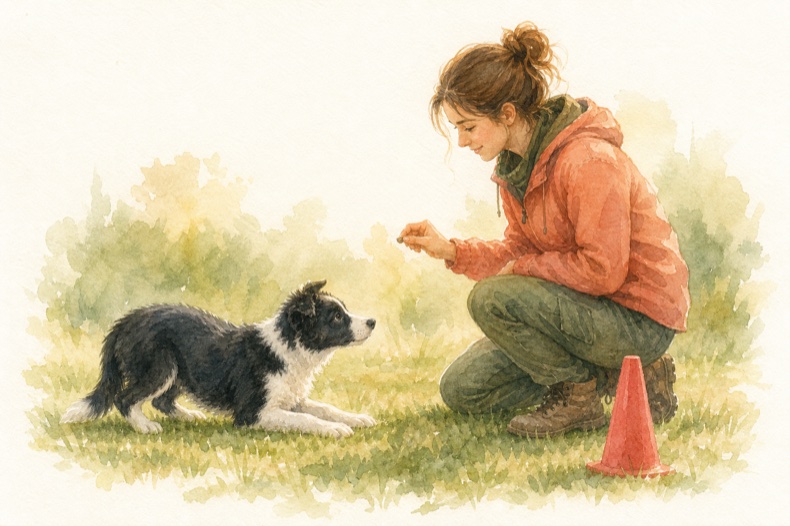
Breed at a glance
A quick profile, not a scorecard
Shedding: High
Grooming frequency: Moderately low
Energy: Moderate
Trainability: Very high
- Approx. weight
- Weight22–40 kg
- Approx. shoulder height
- Shoulder height55–65 cm
- Approx. life expectancy
- Reference range7–10 years
This manual develops a family dog that can notice unfamiliar people and return to the handler without escalating. It does not rehearse confrontation: distance, calm observation and voluntary disengagement are the working goals.
What this means at home
Reality 01
Socialisation aims for neutrality
A puppy does not need to greet every unfamiliar person. It needs repeated evidence that people can appear without pressure and that turning back to the handler pays.
Reality 02
Strength can arrive before manners
Waiting to teach loose-leash walking makes every successful pull more valuable as the puppy grows. Begin on easy routes while the handler can still reinforce the correct position calmly.
Reality 03
A large puppy is still developing
Size and endurance do not make repeated jumping, stairs or forced exercise appropriate. Environment management must carry the load that immature self-control and growing joints cannot.
Reality 04
Cooperation does not replace alone-time practice
A puppy that is always beside a person has not learned to be alone. Gradual departures and recorded observation must be practised before absence becomes unavoidable.
Breed reference data
| Reference | Value |
|---|---|
| Origin and original roles | Germany; herding, then working and service roles |
| Shoulder height | 55–65 cm |
| Weight | 22–40 kg |
| Coat | Double coat |
| Drive keywords | Cooperation with people · guarding · endurance |
Suitability
Suited for
- A household prepared to run broad, controlled socialisation without forcing unfamiliar people into the puppy's space.
- People ready to teach loose-leash walking before pulling power increases further.
- A home able to block repetitive stairs and jumps and provide stable low-impact activity.
- Families willing to practise gradual alone time even when someone is usually home.
Not suited for
- Anyone intending to make the puppy confront unfamiliar people or reward escalating vigilance.
- A household unable to manage routine stair access, furniture jumps or slippery movement routes.
- People planning to postpone leash training until the dog is physically mature.
- A routine that supplies constant company but no deliberate, below-threshold alone-time practice.