

FluffyWA

Positive training · From eight weeks

German Shepherd Puppy Training Manual

From 8 Weeks

German Shepherd: channel working drive through structured, reward-based tasks with clear starts and finishes.

29 chapters · English / 中文

Watercolour illustration of a German Shepherd puppy sitting alert beside a canvas retrieve dummy with a rope handle in a fenced garden
German Shepherd: channel working drive through structured, reward-based tasks with clear starts and finishes.

Breed profile

Training group
Herding and cattle dogs
Origin
The German Shepherd originated in Germany, first for herding and later for working and service roles.
Shoulder height
55–65 cm
Weight
22–40 kg
Coat
Double coat
Coat care
Build voluntary acceptance of brushing, coat checks, airflow and dryer noise, alongside calm handling of paws, ears and the whole growing body.
Drive keywords
Cooperation with people · Guarding · Endurance
Handling practice
Condition double-coat brushing, coat checks, airflow and dryer noise in small voluntary steps before the dog's body becomes much larger. · Practise calm paw, toe-space, ear and whole-body checks, plus cooperative standing and repositioning without physical wrestling.

General reference ranges only; individual dogs vary considerably.

Teach safe mouth skills

Mouthing, grip & leash control

A German Shepherd puppy needs early bite-force control, clear gripping-game rules and loose-leash foundations before body weight and pulling power increase. The goal is cooperative release and movement, never a contest of force.
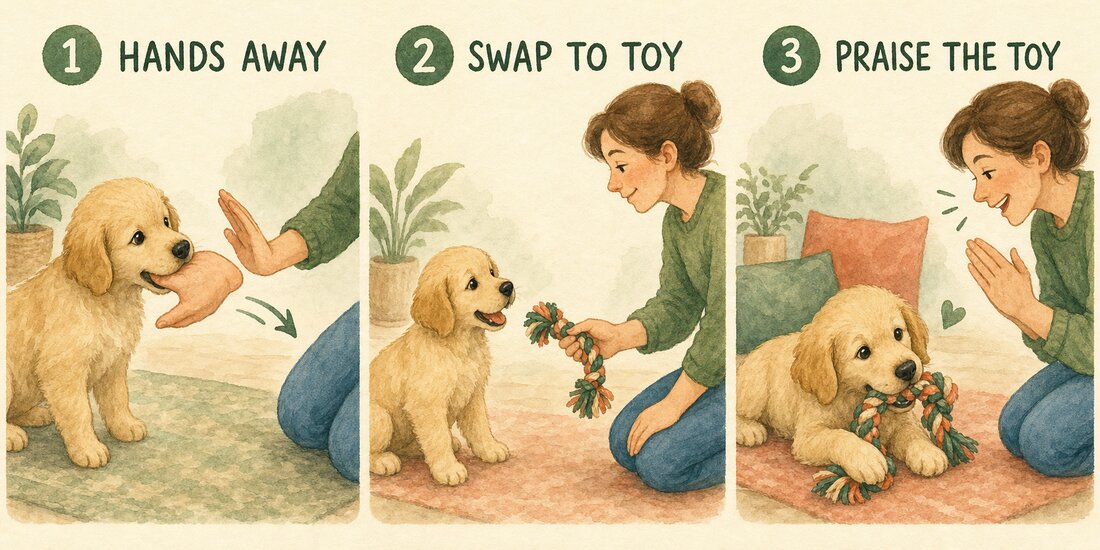
Watercolour three-step diagram showing hands moving away and puppy mouthing redirected to a toy
HANDS AWAY = make hands still and unavailable; SWAP TO TOY = offer an appropriate toy; PRAISE THE TOY = reinforce chewing the toy.

Separate mouthing, legal grip and aroused grabbing

The response depends on whether the puppy is learning, playing under rules or losing the ability to respond
TypeWhat it looks likeWhat it needs
Exploratory mouthingThe puppy investigates hands, clothing and objects with a loose body and flexible attention.Manage access, provide safe chewing and teach bite-force inhibition without physical correction.
Rule-based toy gripThe puppy grips a designated toy, stays clear of hands, releases on Drop and can return to the handler.This is a useful outlet when start, exchange, restart and finish remain predictable.
Aroused grabbing and pullingThe puppy grabs the lead or clothing, leans its weight into pulling and stops responding to familiar cues.The setup is too difficult or arousing; stop access, reduce movement and rebuild below threshold.

Teach bite inhibition in stages

8–12 weeks First: reduce force Hard contact calmly ends attention for 3–5 seconds. Resume only when the puppy can place a softer mouth on an appropriate object.
12–16 weeks Then: reduce frequency Reinforce teeth staying on designated toys, voluntary release and four paws on the ground; interrupt skin, clothing or lead grabbing before arousal climbs.
After 16 weeks Finally: keep teeth off people All mouth-based play remains on designated objects and can stop on one cue before the puppy moves into a calm activity.

Do not skip pressure control by demanding zero mouthing immediately. Teach a softer mouth, then lower frequency, while preventing pulling games from becoming strength contests.

A four-part grip and leash plan

  1. Teach the legal grip first Present a designated toy after the start cue, keep hands clear, mark Drop and either return the toy or finish explicitly.
  2. Make a loose lead open the route Begin on an easy route, reinforce the puppy beside you and allow forward movement only while the lead remains loose.
  3. Tight lead stops access Stop without yanking, wait for weight to shift back or cue an easy turn, then reinforce and continue. Do not let pulling reach the destination.
  4. Finish before response disappears End gripping or leash work while the puppy can still take food and respond, then use quiet sniffing, chewing or rest for recovery.

Training with FluffyWA

Day school, board & train and private sessions are quoted after a chat, and boarding or daycare can be booked online with live prices.