
FluffyWA

Positive training · From eight weeks

West Highland White Terrier Puppy Training Manual

From 8 Weeks

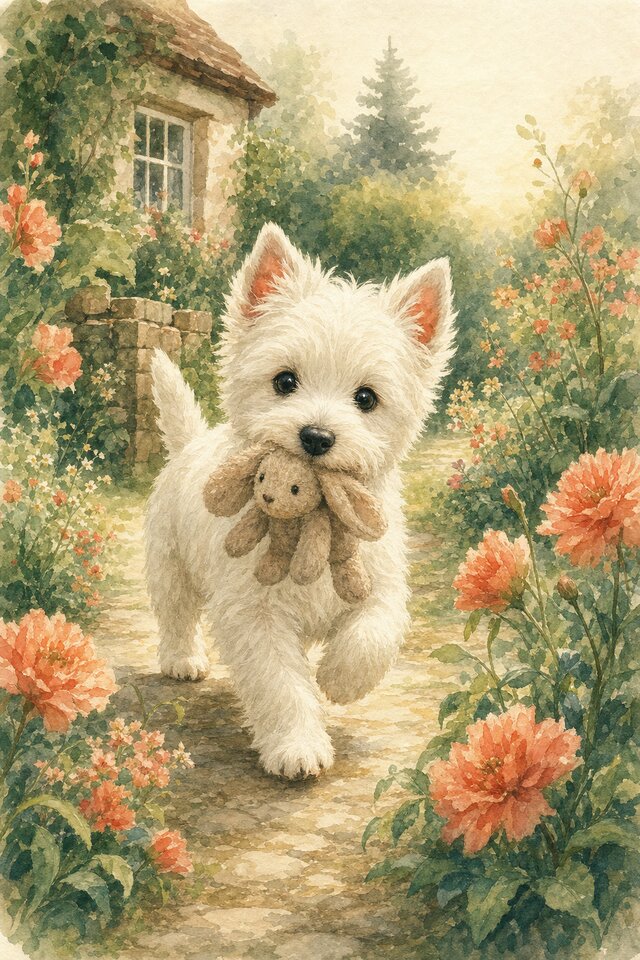
A carried plush rabbit provides the West Highland White Terrier with a quiet, legal alternative outlet.

29 chapters · English / 中文

Watercolour illustration of a West Highland White Terrier puppy carrying a plush rabbit toy along a garden path
A carried plush rabbit provides the West Highland White Terrier with a quiet, legal alternative outlet.

Breed profile

Training group
Terriers
Origin
The West Highland White Terrier originated in Scotland as a terrier that worked independently above and below ground in pursuit of small animals.
Shoulder height
Approximately 28 cm
Weight
Approximately 6–10 kg
Coat
White harsh outer coat with a soft undercoat
Coat care
Plan several short cooperative brushing sessions each week and set the professional grooming interval around the individual coat and a qualified groomer's advice. Some individuals may have skin sensitivity; do not imply that a white coat causes it. Do not force grooming through persistent discomfort, redness or a sudden behaviour change; consult a veterinarian rather than diagnosing the cause at home.
Drive keywords
Small-animal pursuit · Digging · Persistence · Alert vocalising
Handling practice
Schedule several short cooperative brushing sessions each week, introducing the brush, comb, coat separation and grooming surface one easy step at a time. Set professional grooming frequency from the individual coat and a qualified groomer's advice. · Check paws, toe spaces, coat and skin comfort after digging or outdoor work. Persistent discomfort, redness or sudden handling avoidance should be assessed by a veterinarian; do not diagnose or force the grooming task at home.

General reference range only; individual dogs vary considerably.

Prevent, escort, reward

Toilet training

Toilet training is a schedule and supervision task. Every outdoor success is information; every indoor accident means the schedule, supervision or health context needs review.

Person in a raincoat holding an umbrella while a small dog sniffs beside a red flag marking its outdoor toilet spot
One marked toilet place and the same calm sequence make wet-weather practice predictable.

Six times the puppy must go out

During the day, add a scheduled trip every 45–60 minutes.
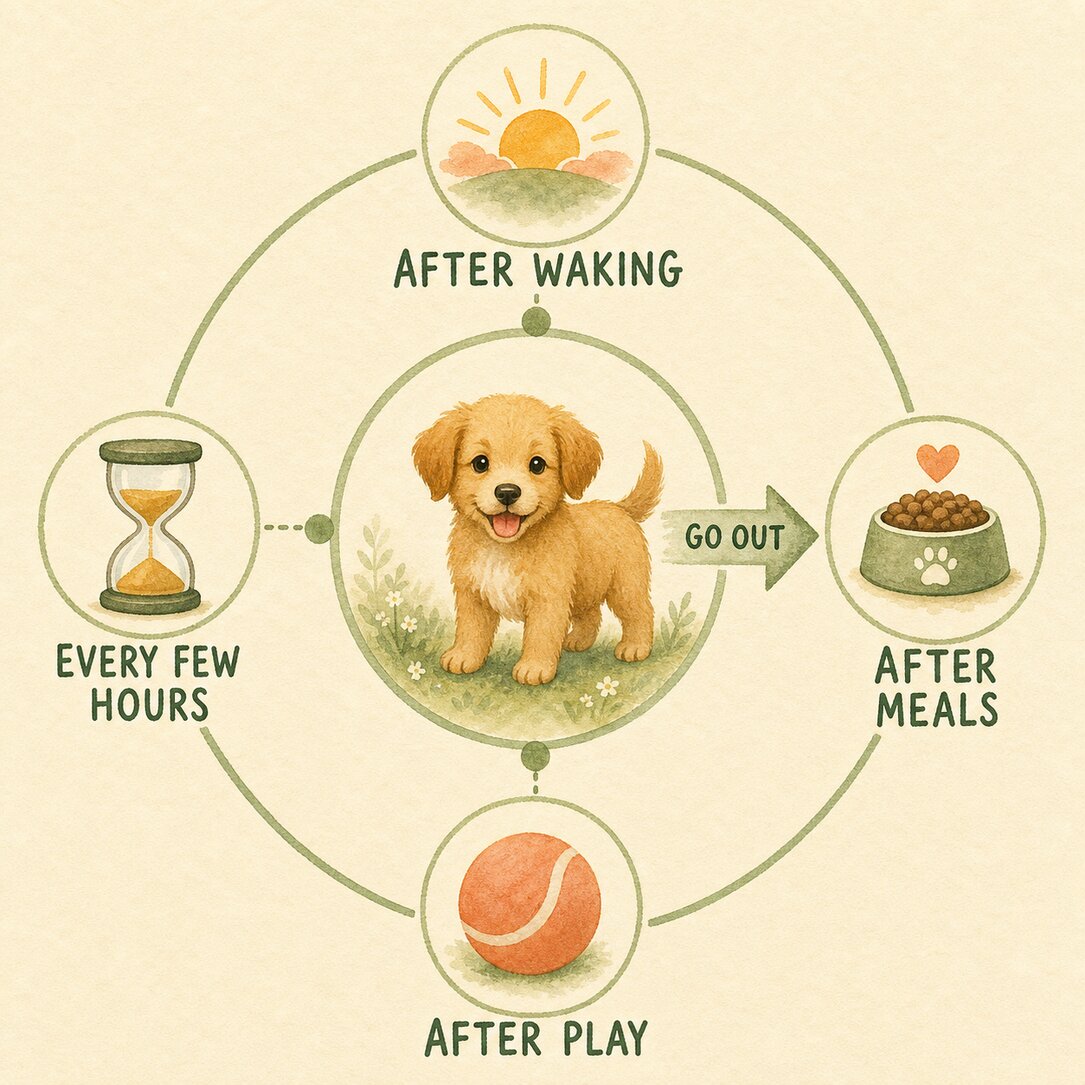
Watercolour toilet timing wheel showing a puppy going outside after waking, meals and play and every few hours
GO OUT after WAKING, after MEALS and after PLAY, plus EVERY FEW HOURS on the dog’s current schedule.

Use the same toilet-place sequence

  1. Take the same route Escort the dog on a secure lead directly to the toilet area without a tour of the yard.
  2. Use the same surface Consistency of place and surface helps the dog recognise the job.
  3. Wait quietly for 2–3 minutes No play, conversation or wandering while you wait.
  4. Mark the instant toileting happens Mark while the dog is still outside and completing the behaviour.
  5. Reward outside Deliver the reward at the toilet place. Do not wait until you are back indoors.
  6. Play only after success If toileting always ends outdoor time, the dog may learn to hold on to make the outing last longer.

Find the missing trip

Record three consecutive days

Chapter 27 provides fields for date, time, outdoor success, indoor accident and last meal time. Three consecutive days usually reveal where the schedule is late.

Regression is information

Expect a setback at 14–16 weeks and again in adolescence

Return to the previous stage’s outing frequency. Do not increase punishment.

Training with FluffyWA

Day school, board & train and private sessions are quoted after a chat, and boarding or daycare can be booked online with live prices.