

The West Highland White Terrier originated in Scotland as an independent above- and below-ground hunter of small animals. Pursuit, digging, persistence and alert vocalising shape learning; useful outlets and careful antecedent management work better than repetitive pressure.
Breed at a glance
A quick profile, not a scorecard
Shedding: Moderate
Grooming frequency: High
Energy: Moderate
Trainability: Moderate
- Approx. weight
- WeightApproximately 6–10 kg
- Approx. shoulder height
- Shoulder heightApproximately 28 cm
- Approx. life expectancy
- Reference range13–15 years
Earth work selected for independent search, pursuit and persistence when access became difficult. Training should redirect those jobs into legal digging, searching and rule-based toy work rather than treating persistence as deliberate opposition.
What this means at home
Reality 01
Small animals can outcompete food
A moving lizard, bird or cat can start the full hunting sequence quickly. Scan first, keep physical control and reward disengagement before the puppy is locked on.
Reality 02
Digging needs both an outlet and a boundary
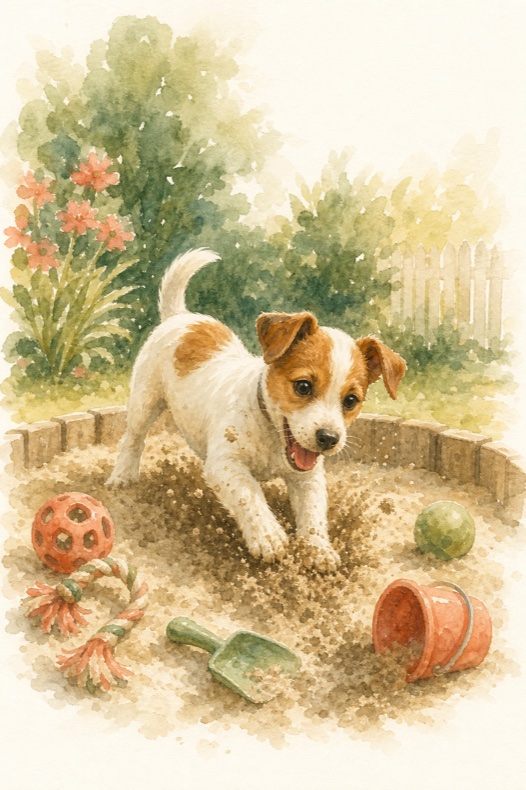
A legal digging box meets part of the inherited job, while fence-base audits and supervision prevent that job from becoming an escape route.
Reality 03
Barking changes only when its outcome changes
Attention, access and a trigger leaving can all reward barking. Record what happens before and after, then reinforce a specific quiet alternative.
Reality 04
Independence is not the same as alone-time skill
A puppy can make hunting choices independently and still find household departures difficult. Build seconds of calm separation deliberately and review video, rather than waiting out distress.
Breed reference data
| Reference | Value |
|---|---|
| Origin and original role | Scotland; independent small-animal terrier above and below ground |
| Shoulder height | Approximately 28 cm |
| Weight | Approximately 6–10 kg |
| Coat | White harsh outer coat; soft undercoat |
| Drive keywords | Small-animal pursuit · digging · persistence · alert vocalising |
Suitability
Suited for
- Homes able to supervise yards and audit fence bases for digging exits
- People prepared to provide legal searching, digging and chewing work
- Families willing to teach quiet alternatives, gradual alone time and cooperative grooming
Not suited for
- Anyone planning to leave the puppy unsupervised beside an unchecked fence base
- Homes treating live-animal pursuit as entertainment or exercise
- People expecting shouting, waiting out distress or forced grooming to solve the pattern