

Exploratory mouthing, rule-based toy gripping and small-animal pursuit need separate responses. Teach pressure and release while directing the complete terrier sequence onto safe objects, searches and a legal digging area.
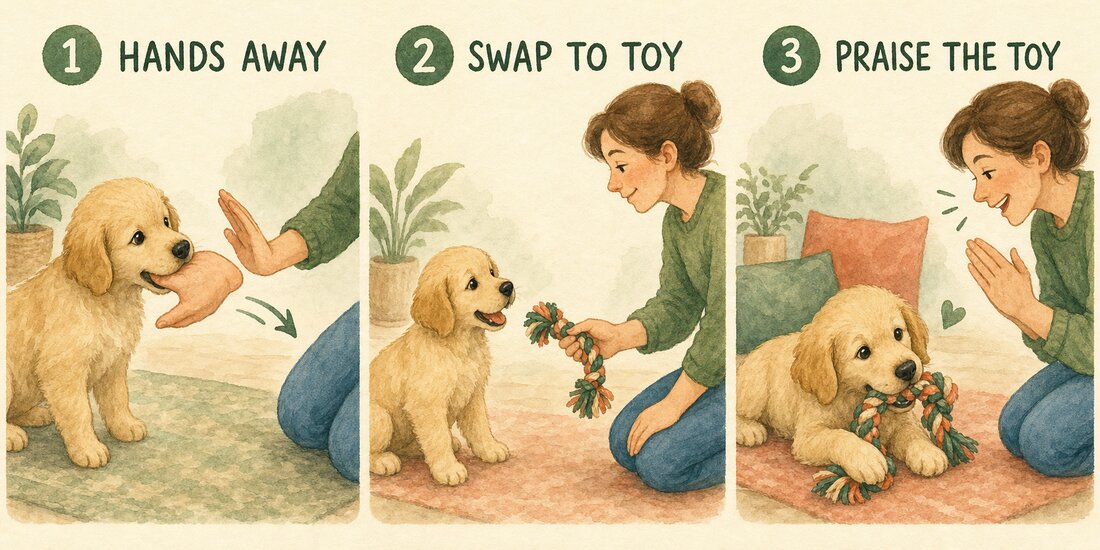
Identify the pattern before responding
| Pattern | What it looks like | What it needs |
|---|---|---|
| Exploratory or play mouthing | Loose body, changing targets and variable pressure during ordinary puppy play | Teach pressure control, redirect and protect sleep |
| Legal tearing or gripping | The puppy takes the designated object after a start cue and can still hear Drop | Keep the outlet short, supervised and clearly cued |
| Live-animal pursuit | Stillness, hard fixation, forward weight and rapid pursuit of a lizard, bird, cat or small pet | Use physical separation and distance; a toy is not permission to approach |
Teach pressure, then move the job onto legal objects
A legal terrier outlet does not reduce the need for physical separation from live animals or supervision near a fence.
A four-part terrier outlet plan
- Scan and separate first Check the yard, use a lead or barrier and keep live animals outside the training setup before presenting an outlet.
- Cue the designated job Direct the puppy to the digging area, food search or gripping toy and reinforce staying with that target.
- Trade before persistence peaks Use one Drop cue, deliver the trade clearly and finish while the puppy can reorient without a contest.
- Move into recovery Follow gripping or digging with calm sniffing, supervised chewing or mat settling so the puppy practises lowering arousal.