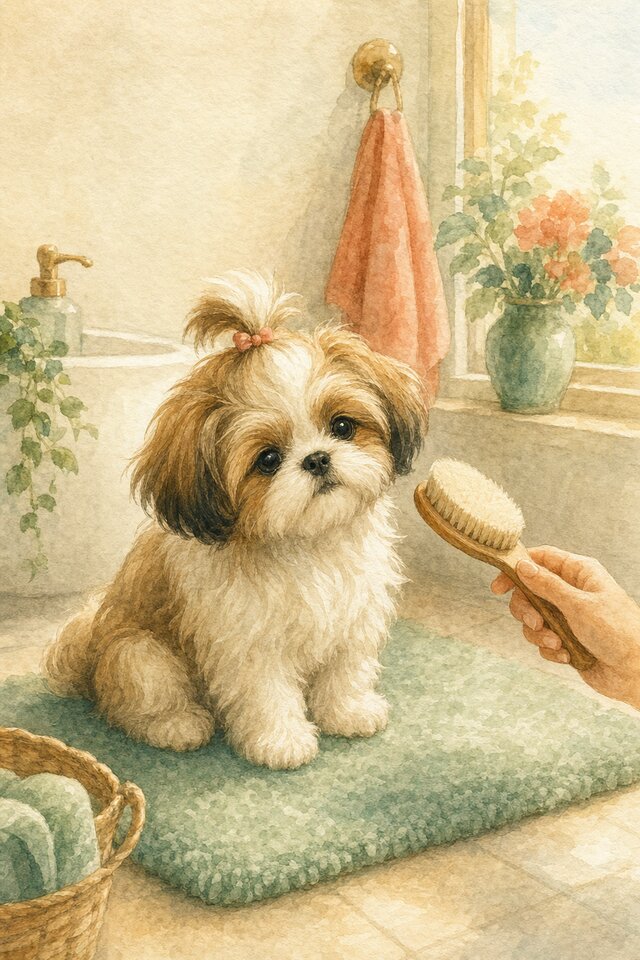
Shih Tzu: offer the brush, pause often and build cooperative grooming through consent.
29 chapters · English / 中文
Shih Tzu: offer the brush, pause often and build cooperative grooming through consent.
Breed profile
Training group
Toy and companion dogs
Origin
The Shih Tzu originated in China as a court companion dog.
Weight
4–7 kg
Coat
Long double coat
Coat care
Condition brushing, combing and eye-area handling through small voluntary steps so coat care and cleaning do not become recurring forced conflict.
Drive keywords
Living closely with people · Sensitivity · Playful engagement
Handling practice
Separate long-double-coat care into presentation of the tool, body-area touch and one easy brush or comb stroke, followed by a marker, reward and release. · Condition eye-area handling without restraint: approach, brief touch or cleaning motion, marker, reward and release before the puppy turns away; consult a veterinarian about any health concern.
General reference range only; individual dogs vary considerably.
20
Protect the growing body
Exercise limits & growth plates
Use short, self-paced activity in cool conditions, together with indoor problem-solving, small-scale scent games and light trick training. The short muzzle and mild brachycephalic features mean breathing and temperature must guide intensity, while the manual's general growth-plate protections still apply. Stop and cool the dog if breathing becomes visibly laboured; repeated episodes require veterinary advice.
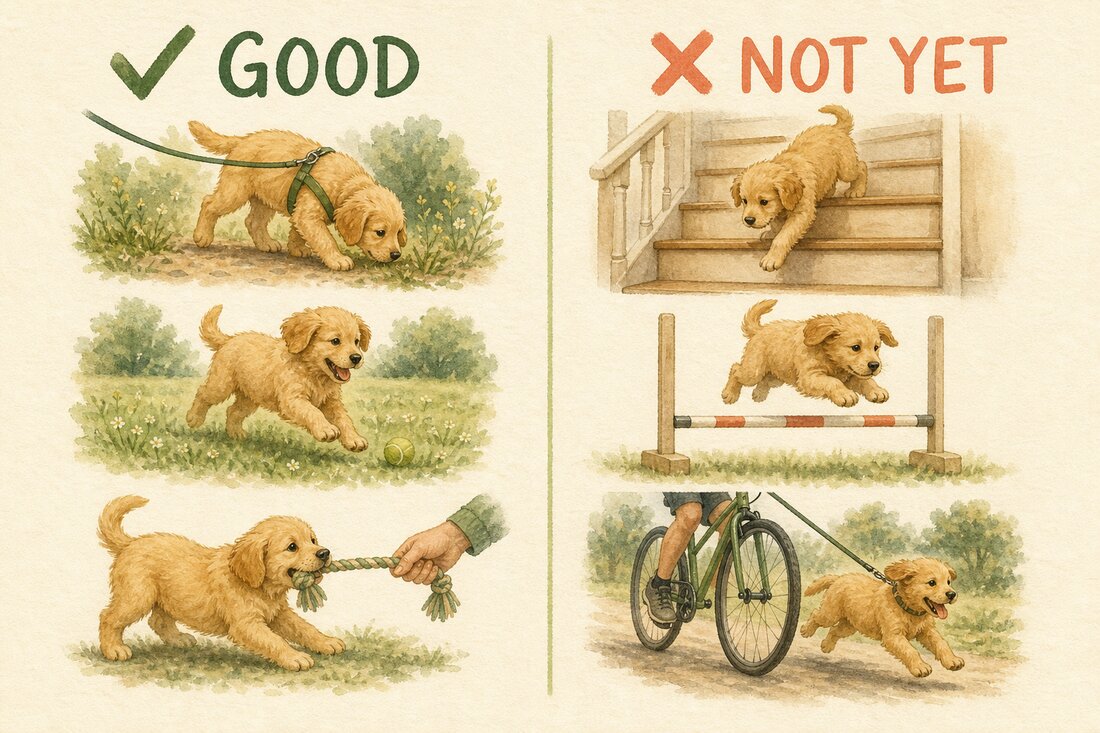
GOOD = low-impact sniffing, self-paced ground play and structured tug; NOT YET = repeated stairs, jumping or running beside a bicycle while growth plates are developing.
Before twelve months: limit impact, keep exploration
Replace repetitive impact with low-impact, puppy-controlled activity.
Avoid or limit
Safer option now
Repeated stair climbing
Level-ground sniffing and exploration
Jumping down from a sofa or vehicle without a safe access plan
Block access or introduce a stable non-slip ramp or controlled low step gradually
Aerial Frisbee catches and sudden stops
Low, controlled toy games without jumping
Long-distance running beside a bicycle or with a jogger
Short sniffing walks under the puppy-age plan
Prolonged running on hard ground
Short free play on soft ground with a similar-age puppy or friendly adult dog
Repeated high-speed turns and sudden stops
Food searches and calm problem-solving
Jumping or twisting during highly arousing play
Short, controlled play with all four paws kept low
Forced activity or movement on unstable, slippery surfaces
Calm, puppy-controlled movement on stable footing
Review points after twelve and eighteen months
Age is a review point, not automatic clearance; obtain a veterinary check before adding intensity.
Stage
What may open gradually
Guardrail
At about 12 months
Longer structured walks and easy, low-impact hikes
Veterinary review first; do not assume all growth plates have closed.
From 12 to 18 months
Build distance or duration in small steps on forgiving surfaces
Increase one variable at a time and continue limiting repetitive jumping and sharp turns.
After about 18 months
Condition gradually for running or higher-impact dog sports in a legal, controlled setting
Only after veterinary clearance and progressive conditioning; never tether a dog to a moving bicycle or vehicle.
Training with FluffyWA
Day school, board & train and private sessions are quoted after a chat, and boarding or daycare can be booked online with live prices.