
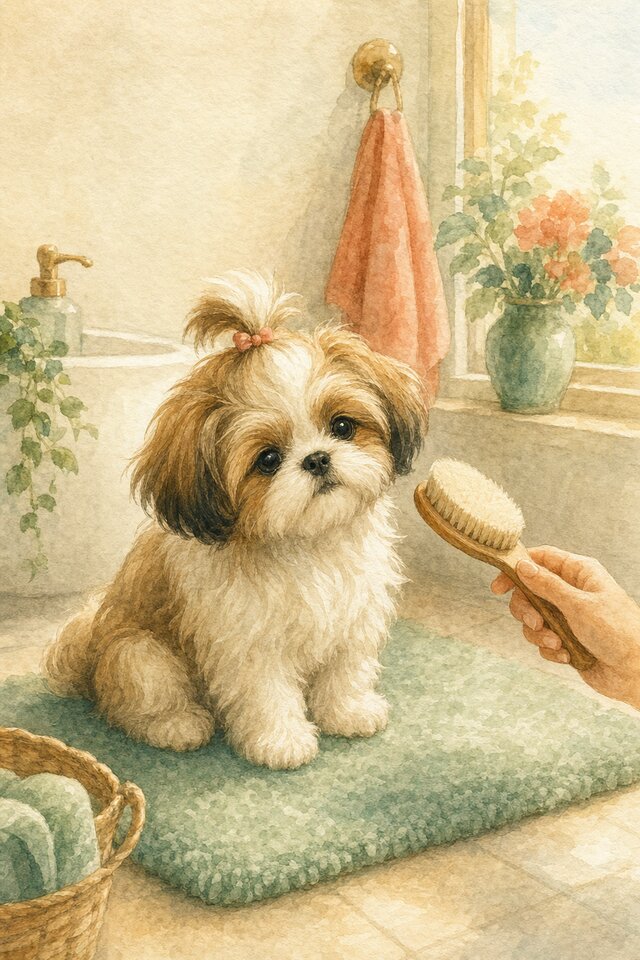
Prevention card 01
Coat and eye-area handling becomes a struggle
Why it happens
A long double coat and eye-area cleaning create repeated close handling; forced completion teaches the puppy to avoid hands and tools.
Early signals
Turning away, leaving the handling surface, grabbing a tool, pawing at the hand, stiffening or mouthing as the face is approached.
Prevent it now
Use stable footing and teach one touch, tool presentation, brush stroke or eye-area motion at a time, followed by a marker, reward and release.
If it has started
Stop restraint, return to an accepted body area or tool distance and rebuild voluntary participation in smaller steps.
When to get professional help
A sudden change, apparent pain or any eye or other health concern needs veterinary advice; persistent freezing, growling, snapping or biting needs qualified behaviour support.
Prevention card 02
Training turns into disengagement
Why it happens
Long repetitive drills and high pressure reduce willing participation in a sensitive companion dog and can be mistaken for stubbornness.
Early signals
Turning away, slowing down, leaving the training area, avoiding the setup or no longer taking an available reward.
Prevent it now
Keep sessions short, frequent and varied, split criteria and finish after one exact success while the puppy remains engaged.
If it has started
Stop drilling, lower the task and rebuild with one easy marked response and a worthwhile reward.
When to get professional help
Seek qualified positive-reinforcement help if training produces persistent fear, freezing, growling, snapping or avoidance; a sudden behaviour change also needs veterinary assessment.
Prevention card 03
Heat or breathing pushed past the limit
Why it happens
The short muzzle and mild brachycephalic features require cautious exercise intensity, and the breed has lower heat tolerance.
Early signals
Breathing loses its steady rhythm, visible effort increases or the puppy does not recover during the planned break.
Prevent it now
Use cool-time or indoor activity, shade, water and a cool resting area; keep sessions short and stop before breathing becomes laboured.
If it has started
Stop immediately and cool the dog; do not resume to complete planned repetitions.
When to get professional help
Repeated visibly laboured breathing or any other health concern requires veterinary advice.
Prevention card 04
Small-bladder toilet rhythm breaks down in wet weather
Why it happens
A small bladder leaves less margin for missed opportunities, while rain, wet ground or a soaked long coat can make going outside less appealing. Repeated indoor accidents then rehearse the wrong location.
Early signals
Sniffing or circling after transitions, pausing at the wet doorway, returning inside without toileting, or having an accident soon after a missed outing.
Prevent it now
Use a predictable schedule, direct supervision and a short sheltered route to one dry-footed toilet point. Reinforce immediately after finishing and dry the coat calmly on return.
If it has started
Clean the location thoroughly, restore close supervision and offer more easy toilet opportunities. Do not punish, scold or leave the dog outside until it toilets.
When to get professional help
A sudden toileting change, straining or apparent discomfort needs veterinary advice. Persistent difficulty despite a consistent plan warrants qualified reward-based training help.