
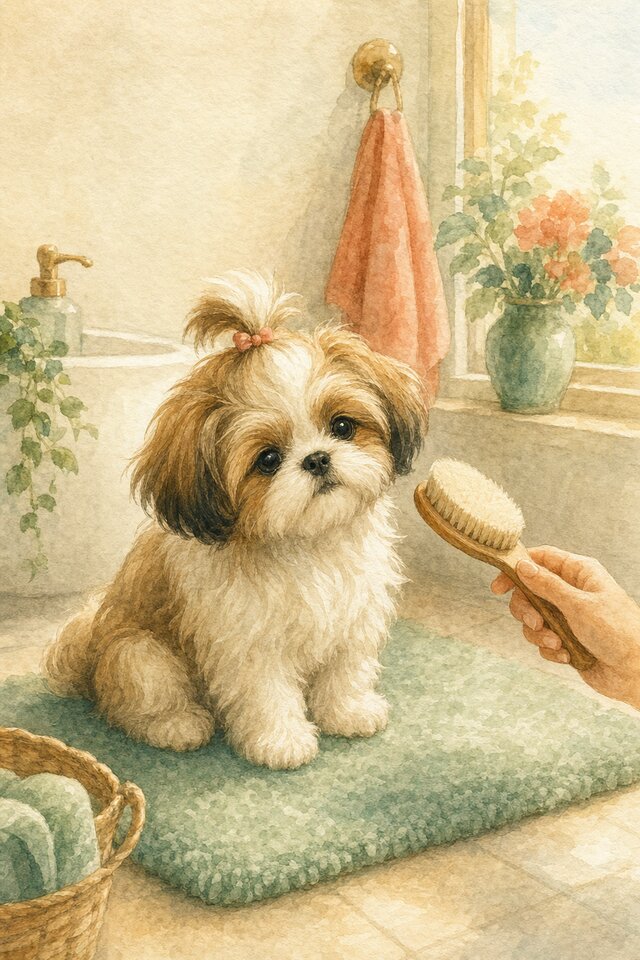
A Shih Tzu puppy still needs bite inhibition and clear mouth-play rules. Keep the lesson brief and low, and distinguish playful mouthing from a puppy using the mouth to stop coat or eye-area handling that has become too difficult.
Identify the mouth-use pattern
| Pattern | What it looks like | What it needs |
|---|---|---|
| Exploratory mouthing | A loose puppy samples hands, clothing or nearby objects with the mouth. | Teach bite-force control and redirect to an appropriate object. |
| Over-aroused play | Movement speeds up, teeth repeatedly find skin or clothing and response to the stop cue drops. | Finish sooner and move to calm sniffing or rest while breathing remains steady. |
| Handling avoidance | The puppy turns away, grabs a tool or mouths the hand as coat or eye-area handling approaches. | Stop and rebuild at an easier touch, tool distance or body area with voluntary participation. |
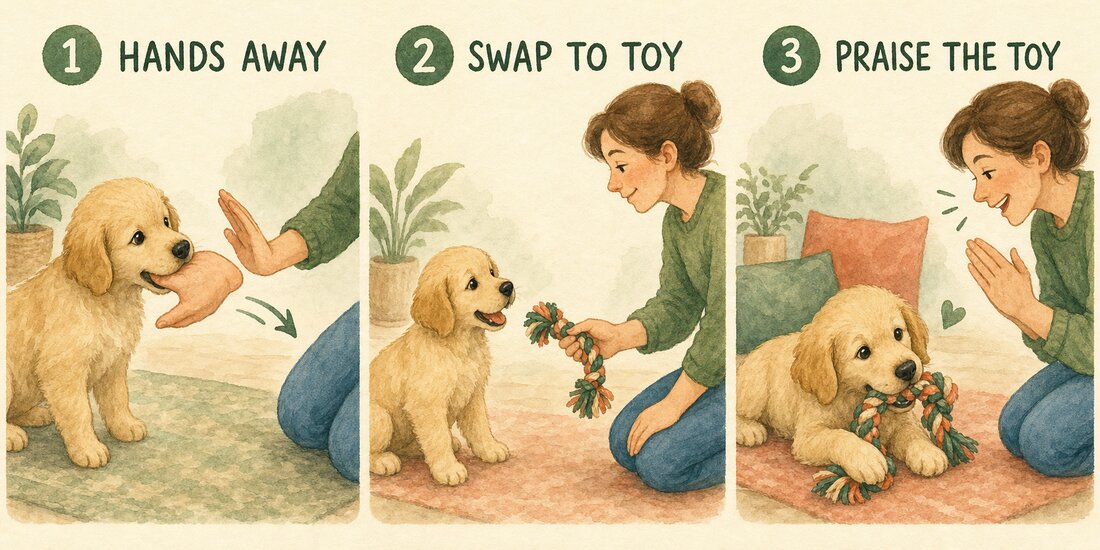
Teach bite inhibition in three stages
Do not skip force control by demanding zero mouthing immediately. Mouthing during grooming means the handling step also needs review.
A short, clear mouth-play routine
- Start with a suitable object Offer a soft, safe toy on a consistent start cue and keep movement small enough for the puppy to stay organised.
- Painful contact pauses interaction Pause calmly after painful contact; do not yell, grab the muzzle or hold the puppy down.
- Finish before arousal or breathing rises End on a consistent cue while the puppy can still respond, then offer calm sniffing or rest.