
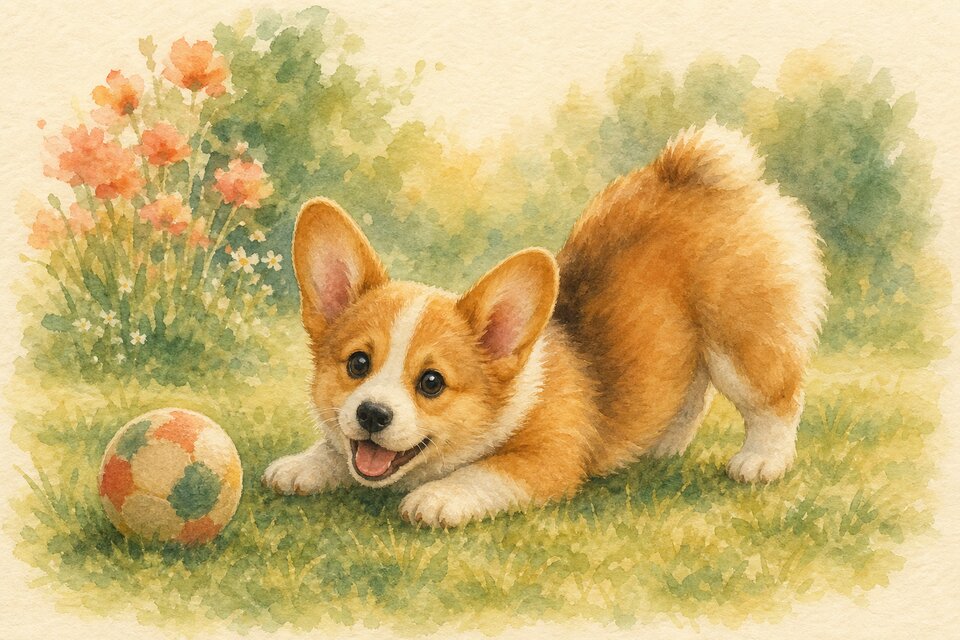
The Pembroke Welsh Corgi originated in Wales as a low-set cattle-herding dog. Its inherited sequence makes moving ankles relevant, while its long-backed build and strong food motivation shape how families should design exercise and reinforcement.
Breed at a glance
A quick profile, not a scorecard
Shedding: High
Grooming frequency: Moderately low
Energy: High
Trainability: Moderate
- Approx. weight
- WeightMales approximately 10–12 kg; females approximately 9–11 kg
- Approx. shoulder height
- Shoulder heightApproximately 25–30 cm
- Approx. life expectancy
- Reference range12–13 years
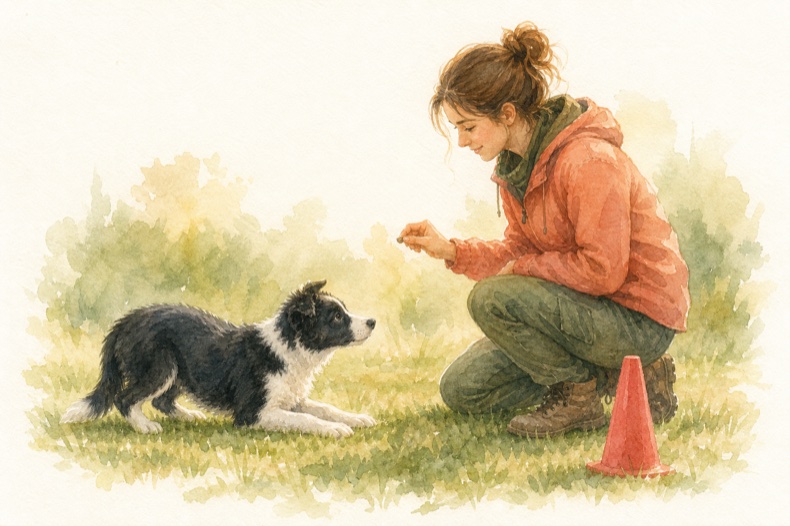
Good family training does not try to erase herding. It prevents rehearsal on people, teaches an alternative before movement starts and gives the puppy predictable work on toys, scent and short cooperative tasks.
What this means at home
Reality 01
Running children can switch on the old job
Heel nipping is not a child-training project. Adults manage distance and teach alternatives before movement; children never carry the responsibility for stopping contact.
Reality 02
Body structure changes the route
A low-set, long-backed puppy still needs movement, but repeated jumping and stairs are not suitable energy outlets. Gates, ramps, non-slip ground and calm lifting make safety routine.
Reality 03
Food is powerful only when budgeted
Food motivation supports rapid learning, but several unrecorded reward streams add up. One measured household ration keeps reinforcement deliberate and visible.
Reality 04
Seasonal shedding needs cooperative care
A double coat releases more undercoat during shedding periods. Frequent short, voluntary sessions work better than waiting for a long grooming struggle.
Breed reference data
| Reference | Value |
|---|---|
| Origin and original work | Wales; low-set cattle-herding dog |
| Shoulder height | Approximately 25–30 cm |
| Weight | Males approximately 10–12 kg; females approximately 9–11 kg |
| Coat | Medium-length double coat; seasonal shedding |
| Drive keywords | Movement control · heel gripping · cooperation · food |
Suitability
Suited for
- A household where adults can manage every interaction between a puppy and running children.
- People willing to install gates, use stable ramps and maintain non-slip low-impact routes.
- Families prepared to measure one daily ration and share a visible reward allowance.
- A home ready for regular double-coat care and more frequent brief sessions during shedding.
Not suited for
- Anyone expecting children to run with the puppy and correct heel nipping themselves.
- A home unable to restrict repetitive furniture jumps or routine stair access.
- A household that cannot coordinate food rewards or account for them within the daily ration.
- People seeking to exhaust a puppy through impact or forced mileage instead of balancing low-impact movement, mental work and rest.