
FluffyWA

Positive training · From eight weeks

Pembroke Welsh Corgi Puppy Training Manual

From 8 Weeks

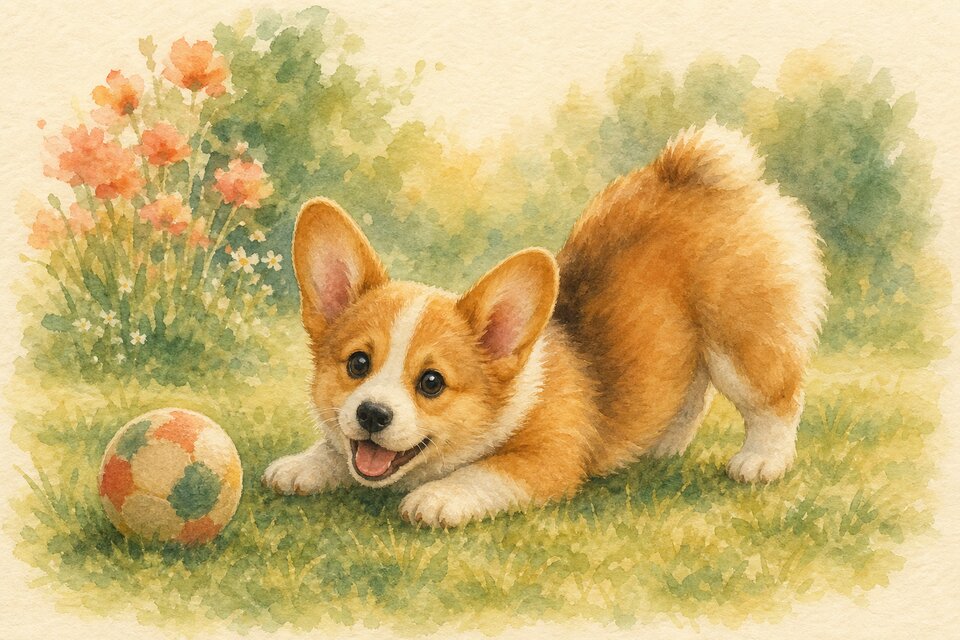
A play bow toward a colourful ball: give the Pembroke Welsh Corgi's movement-control instincts safe, low-impact outlets.

29 chapters · English / 中文

Watercolour illustration of a Pembroke Welsh Corgi puppy play-bowing toward a colourful ball on grass
A play bow toward a colourful ball: give the Pembroke Welsh Corgi's movement-control instincts safe, low-impact outlets.

Breed profile

Training group
Herding and cattle dogs
Origin
The Pembroke Welsh Corgi originated in Wales as a low-set cattle-herding dog, moving stock in part by working at their heels.
Shoulder height
Approximately 25–30 cm
Weight
Males approximately 10–12 kg; females approximately 9–11 kg
Coat
Medium-length double coat
Coat care
Build voluntary acceptance of brushing, coat checks, airflow and dryer noise. Increase brief, comfortable brushing during seasonal shedding rather than forcing a long session.
Drive keywords
Controlling movement · Heel gripping · Cooperation with people · Food motivation
Handling practice
Condition double-coat brushing, line-by-line coat checks, airflow and dryer noise in brief voluntary steps, increasing frequency during seasonal shedding without increasing force. · Teach calm ramp use and cooperative lifting with one arm supporting the chest and the other supporting the hindquarters; do not let the body dangle.

General reference ranges only; individual dogs vary considerably.

Teach safe mouth skills

Bite inhibition & child-safe heel-nip prevention

A Pembroke Welsh Corgi puppy needs ordinary bite-force control plus an adult-run plan for inherited heel nipping. Running children are not training assistants: manage access before movement, teach a clear alternative and keep every gripping game on a designated object.
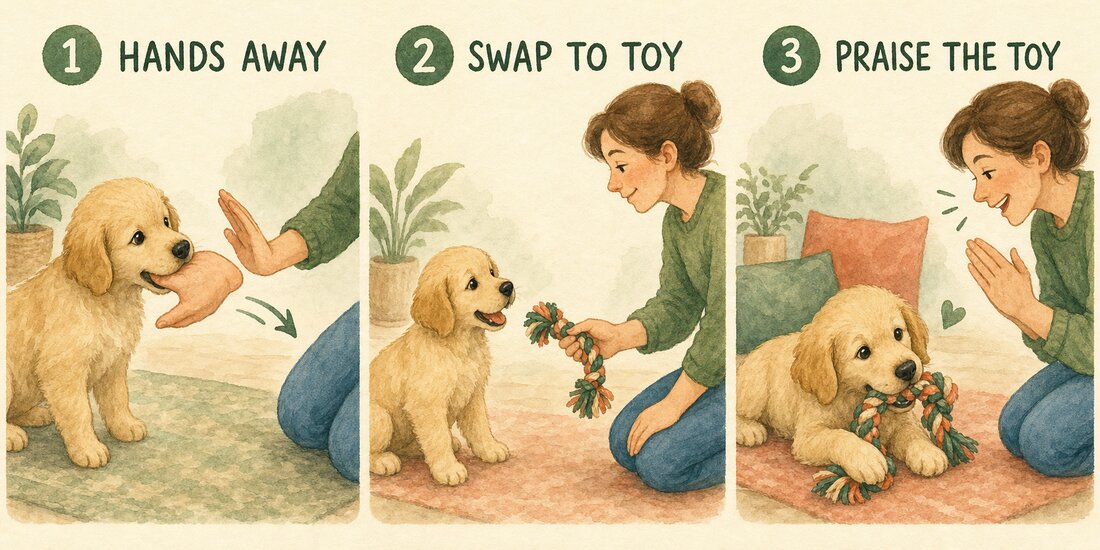
Watercolour three-step diagram showing hands moving away and puppy mouthing redirected to a toy
HANDS AWAY = make hands still and unavailable; SWAP TO TOY = offer an appropriate toy; PRAISE THE TOY = reinforce chewing the toy.

Identify the mouth pattern before responding

Exploratory mouthing, toy gripping and movement-triggered heel nipping need different setups
TypeWhat it looks likeWhat it needs
Exploratory mouthingA loose-bodied puppy samples hands, clothing or objects and can still shift attention.Manage access, provide safe chewing and teach softer pressure before reducing frequency.
Rule-based toy gripThe puppy grips a designated toy, releases on Drop and can finish while still responsive.Use clear start, exchange and finish cues, keeping hands and clothing out of the game.
Herding heel nipA running child or swinging leg triggers low pursuit, ankle focus and contact with skin, shoes or trouser legs.An adult blocks access before contact, stops movement and redirects to a mat or designated toy.

Teach bite inhibition in stages

8–12 weeks First: reduce force Hard contact calmly ends attention for 3–5 seconds. Resume when the puppy can place a softer mouth on an appropriate object.
12–16 weeks Then: reduce frequency Reinforce four paws on the ground, choosing the designated toy and disengaging from legs before movement raises arousal.
After 16 weeks Finally: moving people cue an alternative A child beginning to move predicts Go to mat, disengagement or a designated toy while an adult maintains the management barrier.

Do not demand zero mouthing before teaching pressure control, but do not let children's ankles become the practice surface. Bite learning and child safety run in parallel under adult management.

A four-part child-safe movement plan

  1. Manage before movement An adult attaches the lead or closes the barrier before a child starts moving. The child never holds the lead during this exercise.
  2. Cue the alternative early Ask for Go to mat, a hand target away from the route or engagement with the designated toy before ankle focus appears.
  3. Make movement small and predictable Begin with one slow adult step, reinforce success and stop while the puppy remains responsive; add child movement only with two adults available.
  4. Interrupt access, then reset If the puppy locks onto ankles, the person stops, the managing adult creates distance and the next repetition returns to an easier movement level.

Training with FluffyWA

Day school, board & train and private sessions are quoted after a chat, and boarding or daycare can be booked online with live prices.