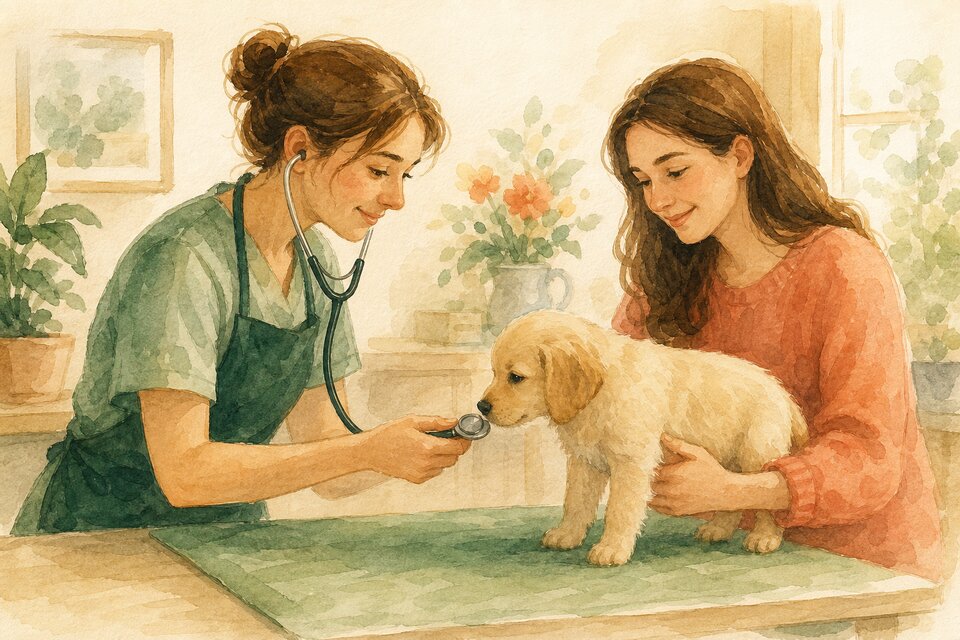
Maltese: short cooperative brushing sessions keep handling predictable and voluntary.
29 chapters · English / 中文
Maltese: short cooperative brushing sessions keep handling predictable and voluntary.
Breed profile
Training group
Toy and companion dogs
Origin
The Maltese originated in the Mediterranean as a companion dog.
Weight
2–4 kg
Coat
White, long silky coat
Coat care
Daily brushing needs to be taught as a calm, voluntary handling routine; without early desensitisation, long-coat care can become a lifelong struggle.
Drive keywords
Close companionship · Sensitivity · Environmental alertness
Handling practice
Teach daily long-coat brushing and eye-area wiping as separate voluntary skills: present the brush or soft cloth, touch one easy area, make one gentle stroke, mark, reward and release. Build eye and tear-stain-area contact without restraint; any discharge, soreness or other abnormal change belongs with a veterinarian. · Keep human movements small and give the puppy stable footing; practise calm, supported lifting and returning to the ground without using constant carrying in place of training.
General reference range only; individual dogs vary considerably.
28
Early help protects the dog and the family
When to call a professional
Professional help is not a last resort. It is the correct next step whenever safety, health or a dog’s ability to recover is in doubt.
Sudden change, pain, illness or recovery concerns go to a veterinarian before being treated as training alone.
Who to call, in this order
Veterinarian · first stopRule out pain, illness, sensory changes and other medical contributors before treating a behaviour as “training only.”
Qualified positive-reinforcement trainerLook for positive-reinforcement credentials and professional commitments such as Delta Institute (Delta Society Australia) certification or Pet Professional Guild Australia (PPGA) membership.
Veterinary behaviour specialistFor anxiety, fear, compulsive behaviour or aggression, ask your veterinarian for referral to a veterinary behaviourist who can combine behaviour care with medical assessment when appropriate.
Perth general resources
Use the aftercare contact page—no stale phone numbers here
The FluffyWA aftercare page points to Perth 24-hour emergency hospitals, RSPCA WA, Dogs’ Refuge Home and local council dog-management resources. Check the current details before travelling.