
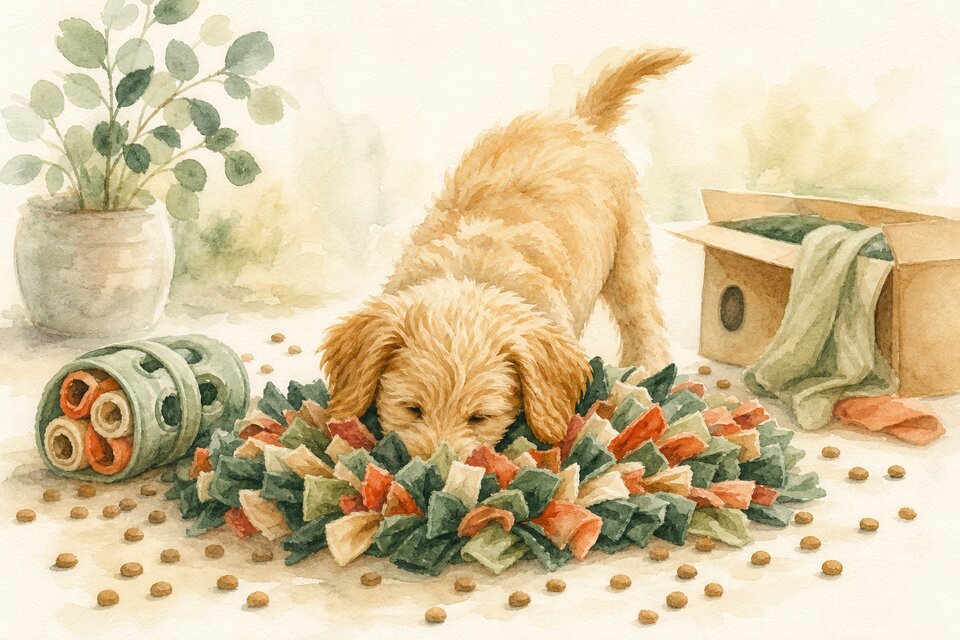
Sniffing and problem-solving create a different kind of effort from walking.
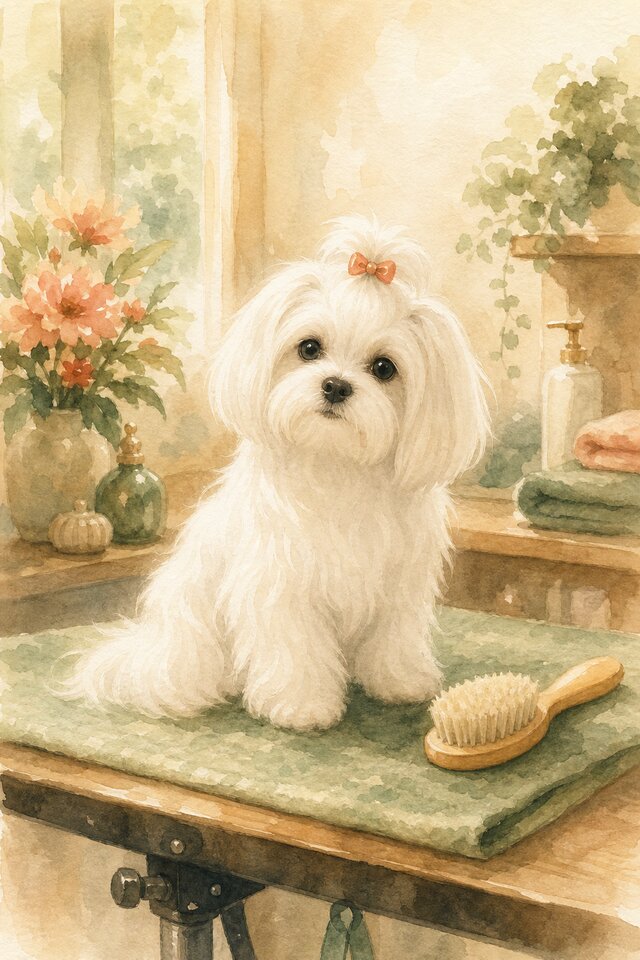
Protect the Maltese puppy's right to move on the ground. Say the lift cue, pause for a consent signal, support the body briefly, then return to stable footing. Pair this with calm ground-level observation of a carefully selected larger dog at generous distance, rewarding voluntary looking, approaching or leaving rather than carrying the puppy through every social experience.
Enrichment and outlet menu
| Type | Examples | Duration | Notes |
|---|---|---|---|
| Sniffing | Scatter feeding on grass, snuffle mat, food hidden in boxes, indoor treat search | About 5–15 minutes | Let the nose set the pace; easy searches should finish successfully. |
| Problem-solving | Treat ball, frozen stuffed toy, folded paper tube, food rolled in a towel | About 5–15 minutes | Begin easy enough to prevent frustration; frozen toys are especially useful during teething. |
| Shaping and tricks | Nose-to-hand touch, spin, weave through legs, toys into a box, switch a light on or off | Up to 10 minutes per session, with breaks | Use shaping and split the skill into tiny, winnable steps. |
| Ground-choice confidence | Lift-cue consent, floor exploration, calm dog watching | One to three minutes at easy distance | Keep footing stable and preserve the option to leave. |
| Indoor problem-solving | Find food under one of three cups or unfold a lightly rolled towel. | 3–6 minutes, once or twice in a day. | Use measured food and keep equipment stable, light and matched to the dog’s size. |
| Small-scale scent search | Hide three treats around one quiet room at floor level. | Three searches of 1–2 minutes with pauses. | Let the dog move on the floor; do not carry it from hide to hide. |
| Light trick and handling skills | Hand target, chin rest, step onto a mat or offer one paw. | Two or three 1-minute lessons, ending while successful. | Keep hands low and predictable; pause when the dog withdraws consent. |
| Carefully matched dog social time | Parallel walking or brief floor-level interaction with one calm, socially skilled dog. | 5–10 minutes, with frequent choice breaks. | Match play style as well as size; leave before hiding, freezing or defensive barking escalates. |
| Chewing | Veterinarian-approved chew, a small amount of frozen carrot | Puppy-led and supervised | Ask your veterinarian which chews suit your puppy; remove damaged pieces. |
One-week enrichment rotation
| Day | Main block | Recovery block |
|---|---|---|
| Mon / Thu | Easy sniffing search, then one group outlet at the dog's current stage. | Quiet chew and protected sleep. |
| Tue / Fri | Food puzzle plus two minutes of shaping or cooperative handling. | Scatter feed or slow sniffing. |
| Wed / Sat | Signature protocol at easy criteria; stop while cues still work. | Mat settling and uninterrupted rest. |
| Sun | Recovery audit: repeat only an easy favourite if the dog is ready. | Plan the next week from recovery, not exhaustion. |
Teething
Prepare cold outlets before four to six months
Chewing demand rises sharply at about 4–6 months. Prepare frozen stuffed toys in advance; increased chewing at this age is a developmental need, not a training regression.
Independent ability
Let the dog solve ten minutes alone
Offer a safe puzzle or chew and let the dog work independently for ten minutes. Without opportunities to practise independent settling, some dogs may find alone time harder.