
FluffyWA

Positive training · From eight weeks

Maltese Puppy Training Manual

From 8 Weeks

Maltese: short cooperative brushing sessions keep handling predictable and voluntary.

29 chapters · English / 中文

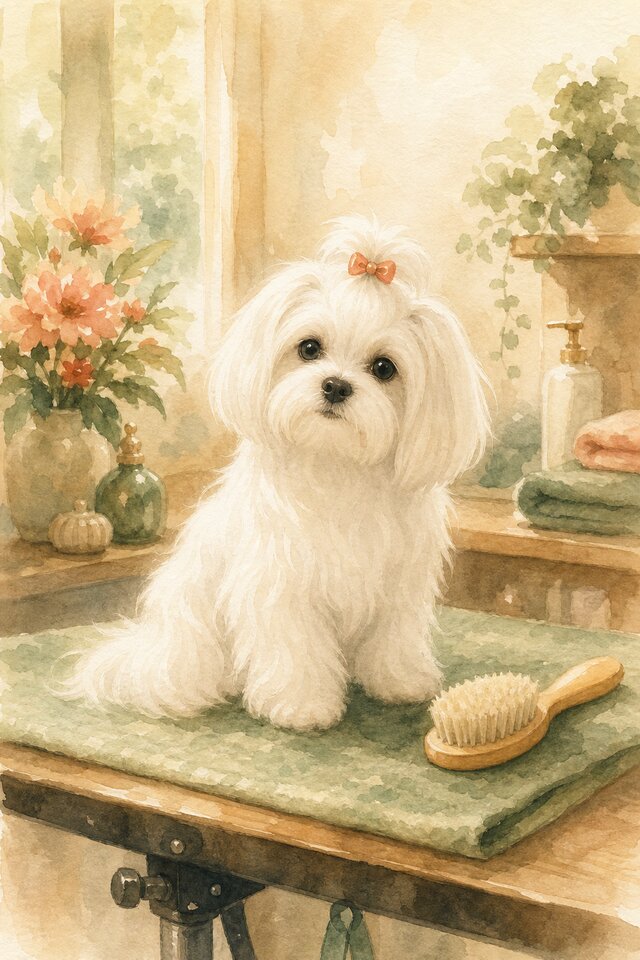
Watercolour illustration of a Maltese sitting calmly on a grooming table beside a brush, folded towels and grooming bottles
Maltese: short cooperative brushing sessions keep handling predictable and voluntary.

Breed profile

Training group
Toy and companion dogs
Origin
The Maltese originated in the Mediterranean as a companion dog.
Weight
2–4 kg
Coat
White, long silky coat
Coat care
Daily brushing needs to be taught as a calm, voluntary handling routine; without early desensitisation, long-coat care can become a lifelong struggle.
Drive keywords
Close companionship · Sensitivity · Environmental alertness
Handling practice
Teach daily long-coat brushing and eye-area wiping as separate voluntary skills: present the brush or soft cloth, touch one easy area, make one gentle stroke, mark, reward and release. Build eye and tear-stain-area contact without restraint; any discharge, soreness or other abnormal change belongs with a veterinarian. · Keep human movements small and give the puppy stable footing; practise calm, supported lifting and returning to the ground without using constant carrying in place of training.

General reference range only; individual dogs vary considerably.

Teach safe mouth skills

Mouth-play boundaries for a small companion

A Maltese puppy still needs bite inhibition and clear mouth-play rules. Keep hands and movements small, teach on the ground and do not turn carrying or restraint into the answer to every unwanted use of the mouth.
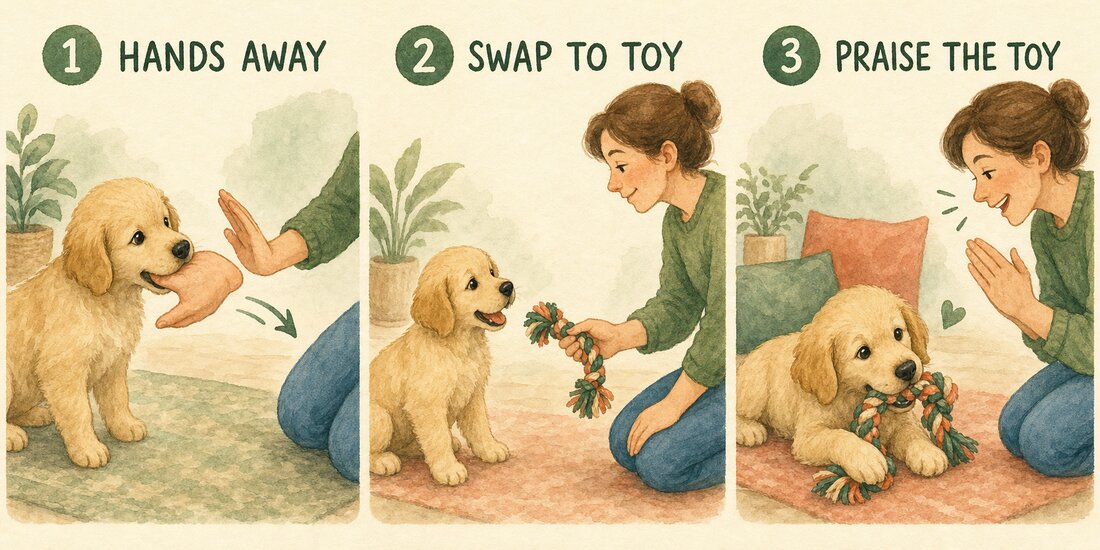
Watercolour three-step diagram showing hands moving away and puppy mouthing redirected to a toy
HANDS AWAY = make hands still and unavailable; SWAP TO TOY = offer an appropriate toy; PRAISE THE TOY = reinforce chewing the toy.

Identify the mouth-use pattern

Teach the behaviour shown instead of treating small size as an exemption
PatternWhat it looks likeWhat it needs
Exploratory mouthingA loose puppy samples hands, clothing or nearby objects with the mouth.Teach bite-force control, manage unsafe access and redirect to a suitable object.
Over-aroused playFaster movement, repeated contact with skin or clothing and less response to a familiar stop cue.End earlier, lower movement and move to calm sniffing or rest.
Handling avoidanceThe puppy turns away, mouths the brush or targets a hand when coat handling continues too long.Stop, return to an easier handling step and rebuild voluntary participation.

Teach bite inhibition in three stages

8–12 weeks First: reduce force After a painful bite, end interaction calmly for 3–5 seconds, then resume only when the puppy is settled.
12–16 weeks Then: reduce frequency Reinforce play that stays on safe objects and interrupt repeated contact with skin or clothing before arousal rises.
After 16 weeks Finally: keep teeth off people Keep mouth play on suitable objects and preserve the same calm start-and-stop rules.

Do not skip force control by demanding zero mouthing immediately, and do not lift the puppy every time teeth appear.

A clear small-dog mouth-play routine

  1. Start with a suitable object Offer a soft, safe toy at ground level and keep hand movement small enough for the puppy to follow without grabbing skin.
  2. Painful contact pauses interaction Pause calmly after painful contact; do not yell, grab the muzzle or hold the puppy down.
  3. Finish while response remains available End on a consistent cue before movement escalates, then offer calm sniffing or rest.

Training with FluffyWA

Day school, board & train and private sessions are quoted after a chat, and boarding or daycare can be booked online with live prices.