
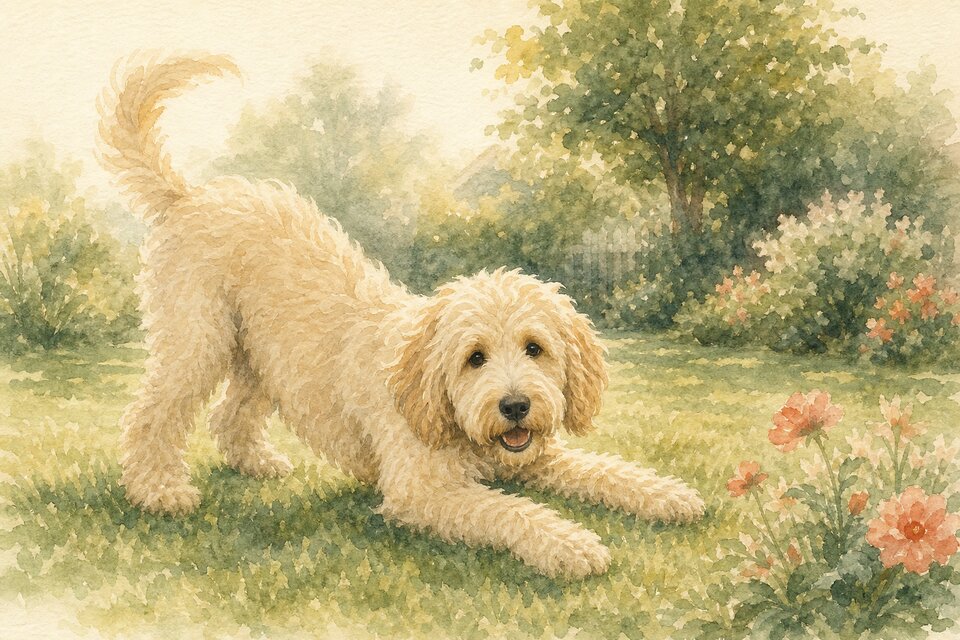
The Groodle or Labradoodle is a retriever–Poodle cross and is extremely common in Australia. The useful starting point is not an imagined midpoint between the parents, but the actual combination of retrieving, problem-solving and human cooperation shown by this puppy.
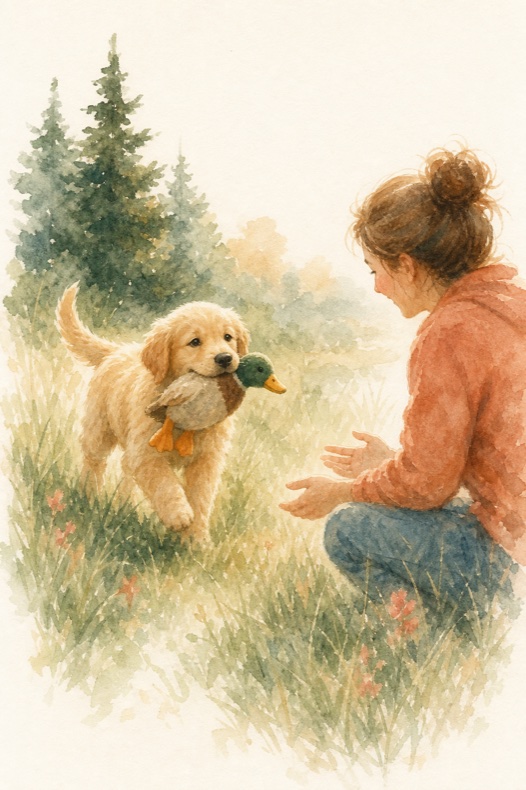
Mixed-breed context
The individual comes before the parent labels
- There is no single official breed standard for this mix.
- Traits are not an average of the parent breeds.
- Size, coat and temperament can vary widely with the individual and generation.
- Use both parent manuals as planning references, then train the dog in front of you.
Parent-breed manuals to compare
Crossbred behaviour is not the average of the parent breeds, and individual variation is greater. Keep plans for both parent sides, observe which triggers and rewards matter, and change the plan from evidence rather than the label.
What this means at home
Reality 01
The cross is not an average
Do not wait for a neat half-retriever, half-Poodle profile. Track what this puppy pursues, carries, solves and finds reinforcing, then train from those observations.
Reality 02
Both parent plans stay available
Use structured trade-and-return work for mouth and carrying behaviour, and shaping or problem-solving for the puppy that needs a thinking task. Adjust the balance from the dog’s response.
Reality 03
Coat care is trained cooperation
A substantial curly or wavy coat can mat and needs regular clipping. Tiny voluntary grooming repetitions now prevent every future appointment becoming a restraint exercise.
Reality 04
Actual growth sets the setup
Across a miniature-to-standard, 10–35 kg span, predicted adult size is not a reliable training prescription. Refit equipment and adjust activity to the body that is developing now.
Breed reference data
| Reference | Value |
|---|---|
| Type and context | Retriever–Poodle cross; extremely common in Australia |
| Size span | Miniature to standard |
| Common weight range | 10–35 kg |
| Coat | Curly or wavy; needs regular clipping |
| Training rule | Observe the individual and keep plans for both parent-breed drives |
Suitability
Suited for
- Families willing to train the individual dog rather than an assumed parent-breed average.
- People prepared to make cooperative grooming a core, ongoing training task.
- Homes able to manage mouthing and provide structured retrieving and problem-solving outlets.
- People ready to refit equipment and revise exercise as the puppy’s actual size emerges.
Not suited for
- Anyone expecting crossbred behaviour to be a predictable average of the parent breeds.
- A home unwilling to prepare for both retriever and Poodle training needs.
- Anyone unable to maintain regular coat care and gradual grooming desensitisation.
- People intending to buy final-size equipment or prescribe exercise from a size label before observing actual growth.