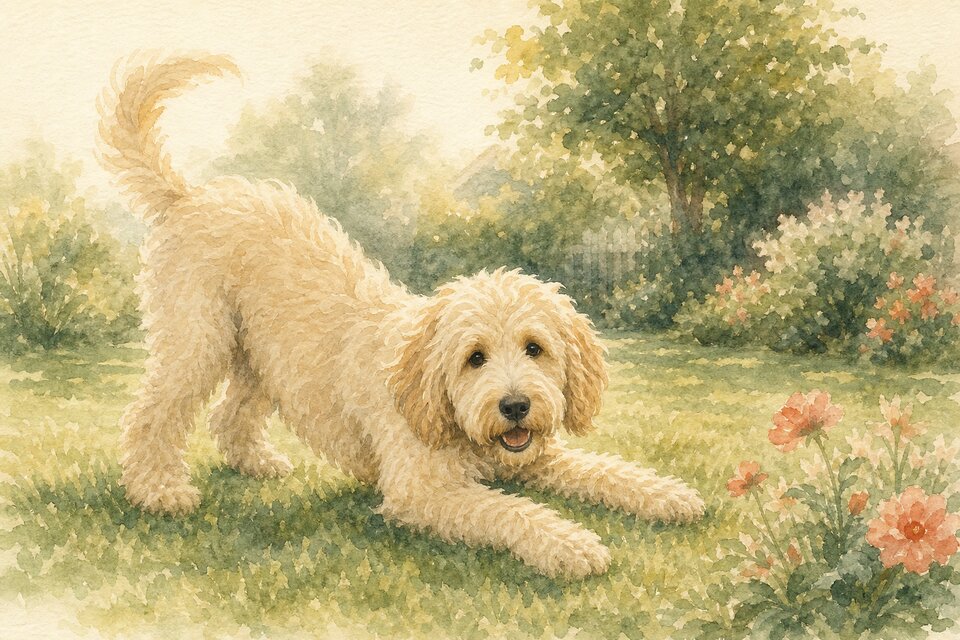
Groodle / Labradoodle: use playful engagement, then reinforce calm transitions and four paws on the floor.
29 chapters · English / 中文
Groodle / Labradoodle: use playful engagement, then reinforce calm transitions and four paws on the floor.
Breed profile
Training group
Gundogs and retrievers
Origin
A retriever–Poodle cross that is extremely common in Australia.
Size span
Miniature to standard
Common weight range
10–35 kg
Coat
Curly or wavy coat
Coat care
The substantial coat can mat and needs regular clipping, so cooperative grooming practice is a core training task rather than an optional extra.
Drive keywords
Retrieving and carrying · Problem-solving · Cooperation with people
Handling practice
Voluntary brushing and combing, followed by gradual exposure to dryer and clipper sounds and calm standing on the grooming surface. · Cooperative body and paw handling that lets equipment fit and grooming steps be adjusted to the individual puppy as it grows.
General reference range only; individual dogs vary considerably.
20
Protect the growing body
Exercise limits & growth plates
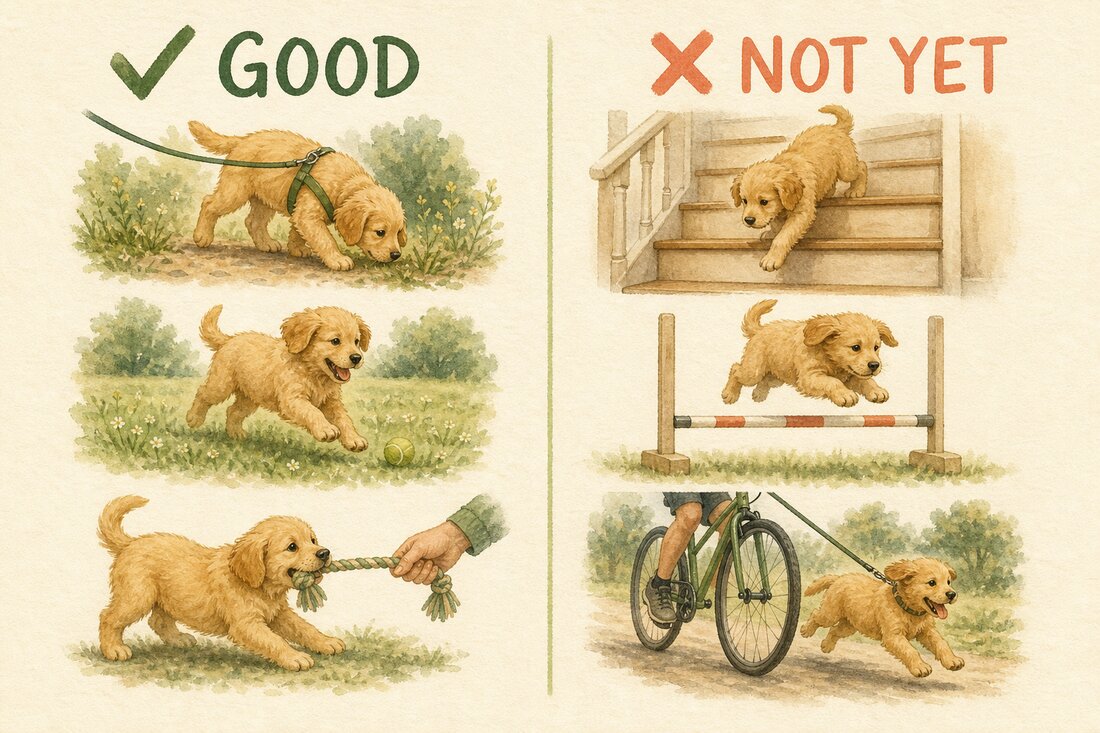
A miniature-to-standard, 10–35 kg range makes the breed label a poor basis for an exercise plan. Adjust activity to the puppy’s actual size, movement and growth while following the manual’s general growth-plate protections. Favour self-paced, low-impact exploration, sniffing, problem-solving and structured retrieving over unlimited ball throwing. If water play is used, keep it in shallow water under supervision.
GOOD = low-impact sniffing, self-paced ground play and structured tug; NOT YET = repeated stairs, jumping or running beside a bicycle while growth plates are developing.
Before twelve months: limit impact, keep exploration
Replace repetitive impact with low-impact, puppy-controlled activity.
Avoid or limit
Safer option now
Repeated stair climbing
Level-ground sniffing and exploration
Jumping down from a sofa or vehicle without a safe access plan
Block access or introduce a stable non-slip ramp or controlled low step gradually
Aerial Frisbee catches and sudden stops
Low, controlled toy games without jumping
Long-distance running beside a bicycle or with a jogger
Short sniffing walks under the puppy-age plan
Prolonged running on hard ground
Short free play on soft ground with a similar-age puppy or friendly adult dog
Repeated high-speed turns and sudden stops
Food searches and calm problem-solving
Jumping or twisting during highly arousing play
Short, controlled play with all four paws kept low
Forced activity or movement on unstable, slippery surfaces
Calm, puppy-controlled movement on stable footing
Review points after twelve and eighteen months
Age is a review point, not automatic clearance; obtain a veterinary check before adding intensity.
Stage
What may open gradually
Guardrail
At about 12 months
Longer structured walks and easy, low-impact hikes
Veterinary review first; do not assume all growth plates have closed.
From 12 to 18 months
Build distance or duration in small steps on forgiving surfaces
Increase one variable at a time and continue limiting repetitive jumping and sharp turns.
After about 18 months
Condition gradually for running or higher-impact dog sports in a legal, controlled setting
Only after veterinary clearance and progressive conditioning; never tether a dog to a moving bicycle or vehicle.
Training with FluffyWA
Day school, board & train and private sessions are quoted after a chat, and boarding or daycare can be booked online with live prices.