
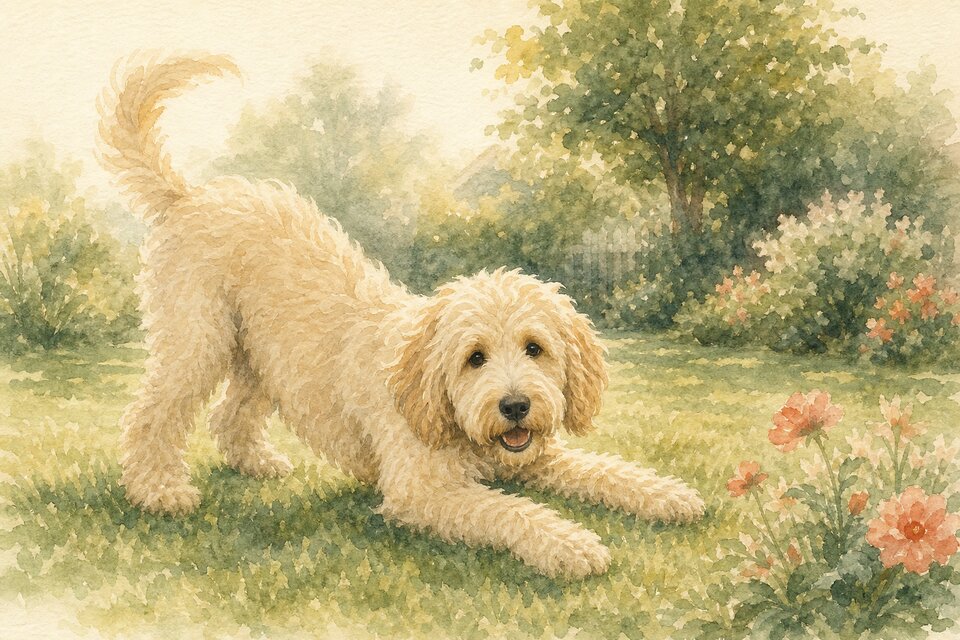
A retriever–Poodle puppy may explore, carry and seek interaction with its mouth, but the amount and form vary by individual. Teach bite inhibition, prevent unsafe object access and build a structured trade-and-return game from the behaviour this puppy actually shows.
Identify the mouth behaviour first
| Type | What it looks like | What it needs |
|---|---|---|
| Exploratory mouthing | The puppy samples household objects, hands or clothing with a loose body. | Manage access, provide safe objects and teach bite inhibition before unsafe pickup is rehearsed. |
| Carrying or retrieving | The puppy picks up a designated object and moves with it or brings it towards a person. | Build a clear take, return, Drop and release sequence without chasing or grabbing. |
| Over-aroused grabbing | Mouth pressure rises, movement becomes frantic and familiar cues or food lose value. | End the active game, reduce stimulation and return to training only after recovery. |
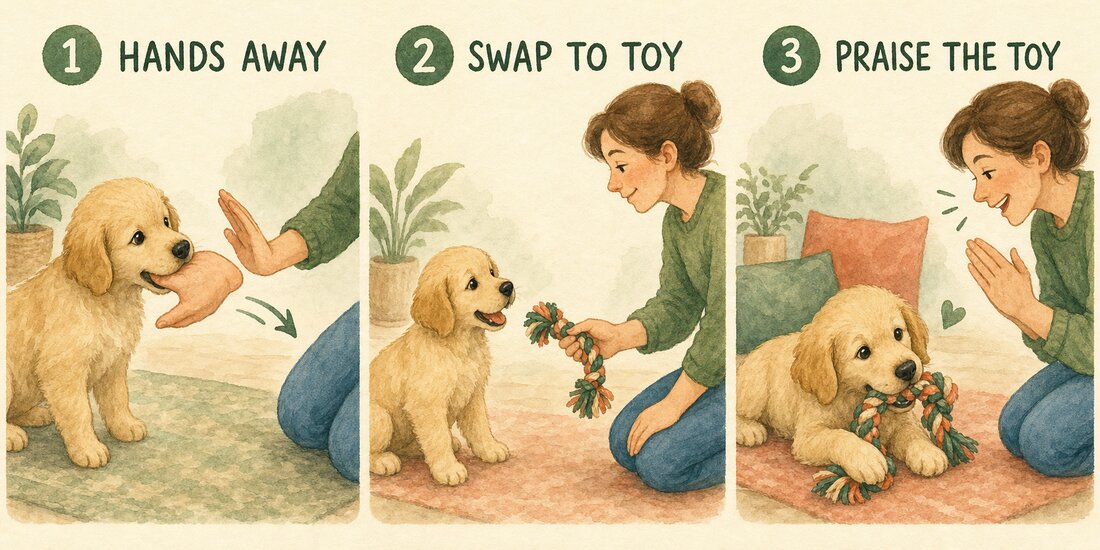
Teach bite inhibition in three stages
Do not demand zero mouthing before the puppy has learned force control; teach a softer mouth first, then reduce frequency.
Build a structured mouth-work routine
- Manage the environment Remove swallowable objects and keep a safe carrying or chewing option within reach before the puppy searches for its own.
- Teach trade and return Offer a worthwhile trade, mark release on Drop, then return the safe object often enough that giving it up does not always end access.
- Use the drive that is present If retrieving engages this puppy, reinforce the return. If problem-solving engages it more, use shaping or food puzzles instead of forcing repeated retrieves.
- Finish while cues still work End the active game before mouth pressure or movement escalates, then transition to sniffing, chewing or protected rest.