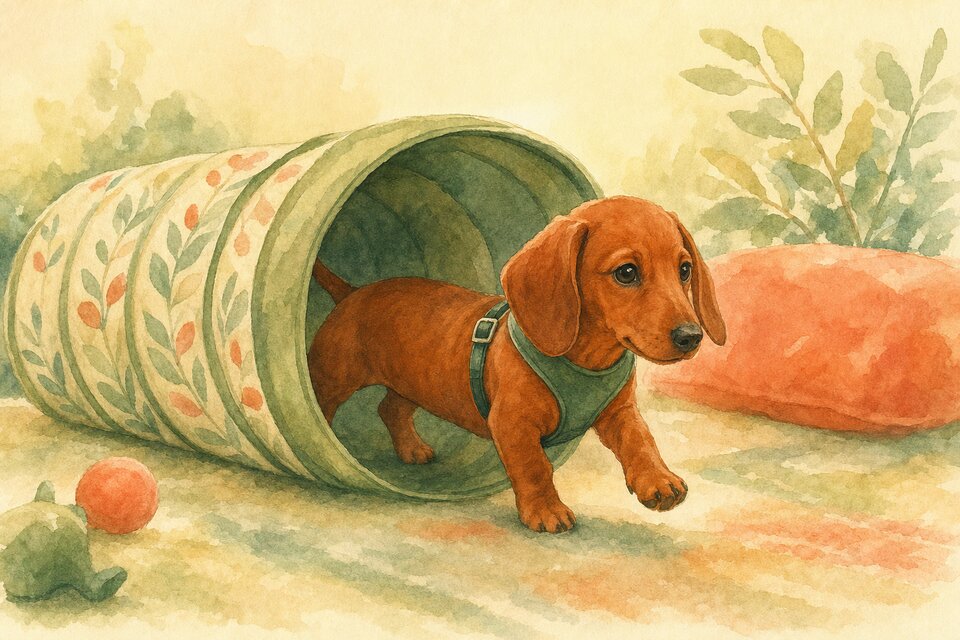
Dachshund: a well-fitted Y-front harness and low tunnel support safe, low-impact confidence work.
29 chapters · English / 中文
Dachshund: a well-fitted Y-front harness and low tunnel support safe, low-impact confidence work.
Breed profile
Training group
Scenthounds
Origin
The Dachshund originated in Germany as an earth-working hunting dog.
Standard weight
7–15 kg
Miniature weight
4–5 kg
Shoulder height
13–23 cm
Coat
Short, long or wire coat
Coat care
Choose grooming tools for the individual coat and condition brushing, body checks and paw handling gradually. Make calm, supported lifting and ramp use voluntary learned skills rather than sudden restraint.
Drive keywords
Scent · Digging · Den guarding
Handling practice
Condition both supported lifting and Y-front-harness wear in tiny voluntary steps: cue, hands or harness presented, brief supported lift or one strap movement, marker, reward and return to stable ground before struggle. Choose a harness that leaves the shoulders free, avoids neck loading and is rechecked as the puppy grows. · Match brushing and body checks to the individual short, long or wire coat, with calm paw and under-body handling rather than forced restraint.
General reference ranges only; individual dogs vary considerably.
28
Early help protects the dog and the family
When to call a professional
Professional help is not a last resort. It is the correct next step whenever safety, health or a dog’s ability to recover is in doubt.
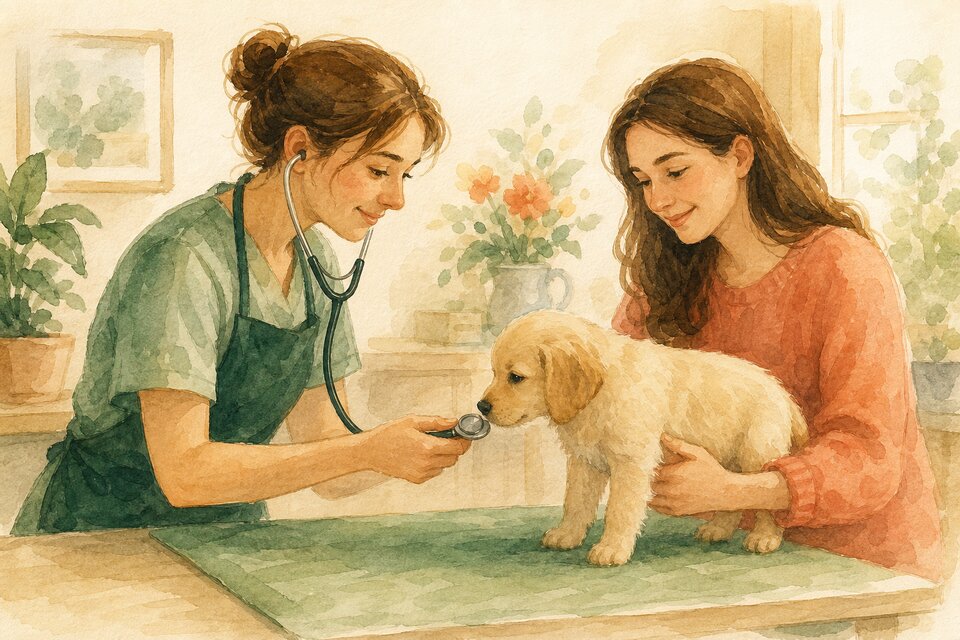
Sudden change, pain, illness or recovery concerns go to a veterinarian before being treated as training alone.
Who to call, in this order
Veterinarian · first stopRule out pain, illness, sensory changes and other medical contributors before treating a behaviour as “training only.”
Qualified positive-reinforcement trainerLook for positive-reinforcement credentials and professional commitments such as Delta Institute (Delta Society Australia) certification or Pet Professional Guild Australia (PPGA) membership.
Veterinary behaviour specialistFor anxiety, fear, compulsive behaviour or aggression, ask your veterinarian for referral to a veterinary behaviourist who can combine behaviour care with medical assessment when appropriate.
Perth general resources
Use the aftercare contact page—no stale phone numbers here
The FluffyWA aftercare page points to Perth 24-hour emergency hospitals, RSPCA WA, Dogs’ Refuge Home and local council dog-management resources. Check the current details before travelling.