

A first stay combines two challenges: being in an unfamiliar place and being away from you. Practise them separately before asking the dog to manage both at once.
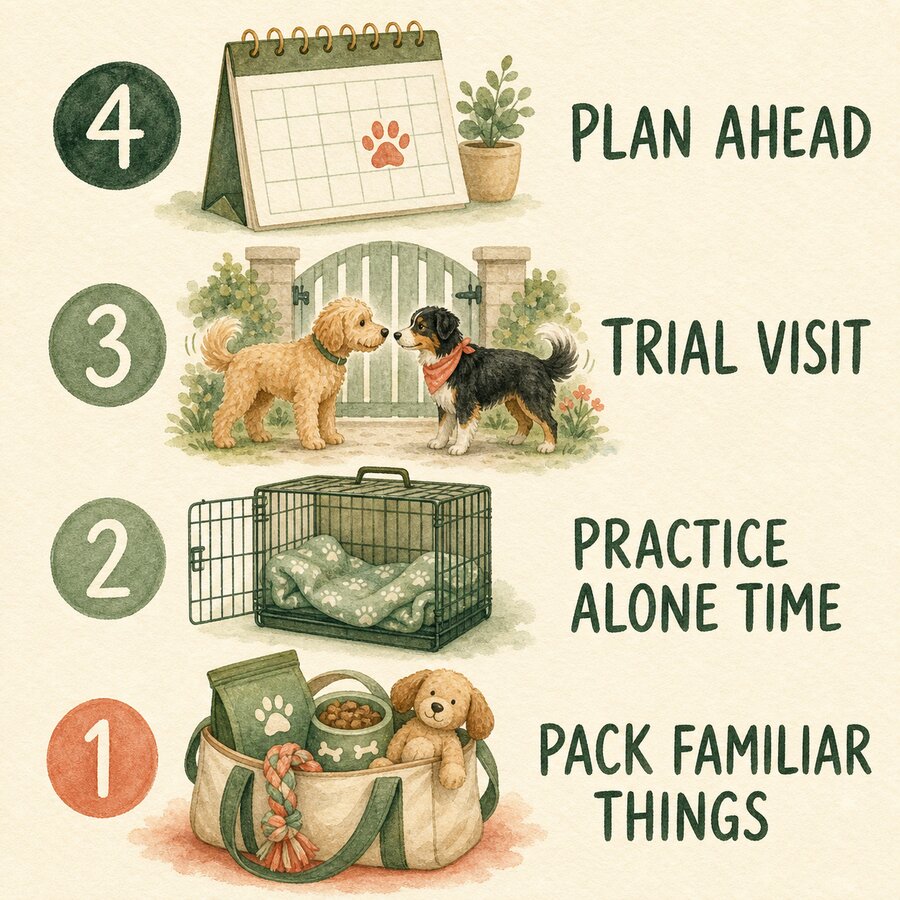
Use the calm-alone standard from Chapter 11 in the dog's agreed safe rest area; a crate is not required. Then introduce the facility in a short, low-pressure visit. A stay is care, not treatment: boarding does not cure separation anxiety.
Count backwards from the first stay
A good provider should offer a way to discuss suitability and introduce the setting. FluffyWA's Trial Meet & Greet is one example, not the only acceptable model. Leave while the dog is still coping.
Record a short absence, rehearse resting behind a gate or in the agreed sleep space, and keep departures ordinary. Reduce duration at the first sign of distress.
Measure food into labelled portions, update contacts and written care notes, and avoid adding a new food, tool or demanding outing.
Allow enough time for a clear handover, then leave without repeated returns or a long farewell ritual. Calm does not mean rushing staff or hiding important information.
Questions any provider should answer
Care design
People, rest and matching
- How many dogs does each staff member supervise, and how are groups formed?
- Where and how often can dogs rest away from play?
- What happens if a dog asks for distance or cannot settle?
Methods and incidents
Ask what happens on a difficult day
- Which training methods and handling tools are used?
- How are illness, injury, conflict and emergency veterinary contact handled?
- Can you see the care areas or receive an honest alternative if access is temporarily restricted?
Pack for continuity, not novelty
Food and familiar scent
Bring the dog's usual food in labelled portions and, when the provider permits it, one washable familiar-smelling item. State food allergies, guarding history and feeding setup plainly.
Medication and contacts
Hand over veterinary medication exactly as supplied, in original labelled packaging, with the prescribing clinic's details. Follow the written instructions and do not restate them from memory. Provide one reachable primary contact and one authorised backup.
Choose the service by outcome
| Service | Main purpose | Ready when |
|---|---|---|
| Daycare | Supervised daytime care without an overnight stay; rest should be built into the day. | Current entry requirements are confirmed and the dog can separate and rest for a provider-defined baseline. |
| Boarding | Overnight care with feeding, sleep and handover routines. | The dog has practised the place and separation separately, and the overnight care plan is agreed. |
| Doggy Day School | Structured weekday training plus a handover plan for the family to continue. | The training goal, humane methods, rest plan and home practice are all clear. |
The first forty-eight hours home
Offer water, ordinary meals, toileting, sleep and quiet sniffing. Keep social plans light. A brief increase in sleep, clinginess, excitement or toileting mistakes can reflect transition; lower expectations and restore the known routine rather than adding correction.
Tell the provider promptly about persistent digestive-system change, injury, prolonged distress, conflict or a marked behaviour change, and follow its incident process. Contact a veterinarian or qualified behaviour professional when the signs warrant it.