

The Cavalier King Charles Spaniel originated in England as a companion dog. Living closely with people and gentle social contact are powerful training levers, but strong attachment makes alone-time learning the first priority rather than a lesson to postpone.
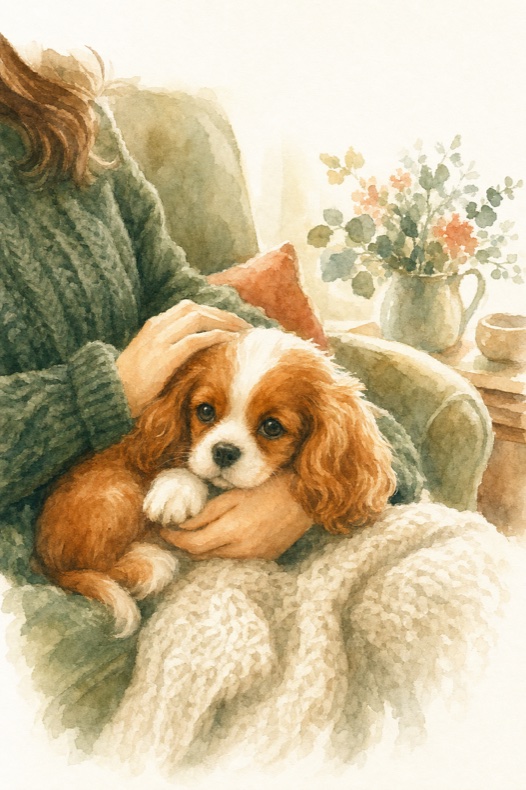
Breed at a glance
A quick profile, not a scorecard
Shedding: Moderately low
Grooming frequency: Moderately low
Energy: Moderately low
Trainability: Very high
- Approx. weight
- Weight5–8 kg
- Approx. shoulder height
- Shoulder height30–33 cm
- Approx. life expectancy
- Reference range12–15 years
Use calm food reinforcement, small human movements and short voluntary repetitions. Sensitivity means the puppy learns from feeling safe enough to choose, not from being held in an interaction until it stops responding.
What this means at home
Reality 01
Alone time is the first priority
Constant company does not teach independent settling. Begin with easy planned separations while the puppy can still cope and use calm behaviour—not elapsed time—as the reason to advance.
Reality 02
Socialisation needs selected partners
One frightening or overwhelming large-dog interaction can teach avoidance. Quality, distance and voluntary engagement matter more than greeting every dog.
Reality 03
Long ears and silky coat require routine handling
Routine checking and grooming must be trained before they become a struggle. Each ear touch, lift, brush stroke and coat parting is a separate voluntary skill.
Reality 04
Gentle does not mean training can be skipped
Small size and a soft social style do not replace toilet routines, ground-level confidence, recall or clear mouth-play boundaries. Carrying is management, not a complete training plan.
Breed reference data
| Reference | Value |
|---|---|
| Origin and original role | England; companion dog |
| Shoulder height | 30–33 cm |
| Weight | 5–8 kg |
| Coat and ears | Long silky coat; long ears |
| Drive keywords | Living closely with people · gentle social contact · human attention |
Suitability
Suited for
- Homes ready to make calm alone-time practice the first training priority
- People willing to choose dog social contact for quality rather than quantity
- Families prepared for cooperative routine ear and silky-coat handling
Not suited for
- Anyone expecting constant companionship to teach the puppy how to settle alone
- Homes that intend to use uncontrolled large-dog greetings as socialisation
- People who plan to force ear or coat care after the puppy shows avoidance