
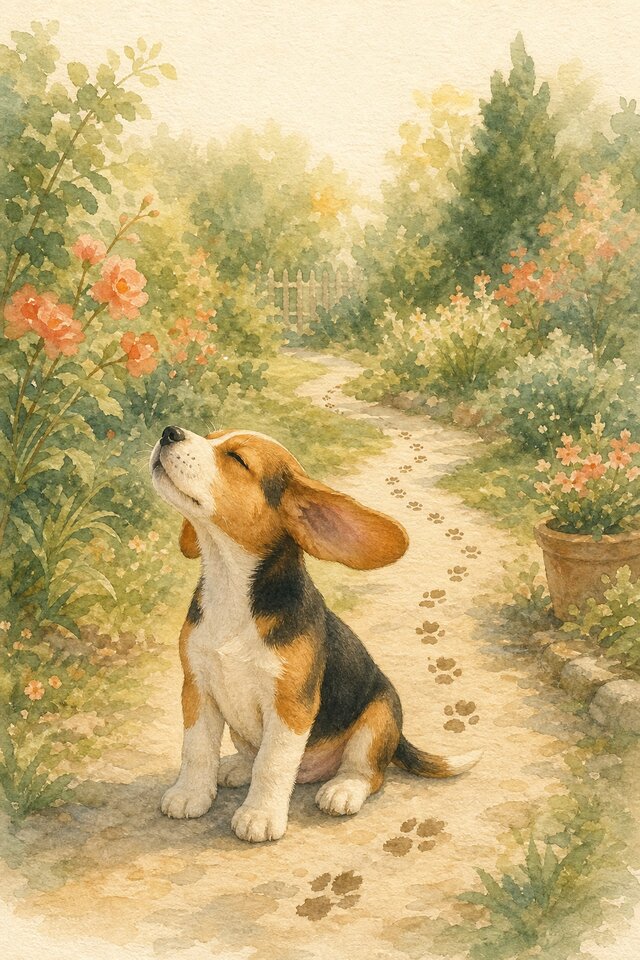
Sniffing and problem-solving create a different kind of effort from walking.
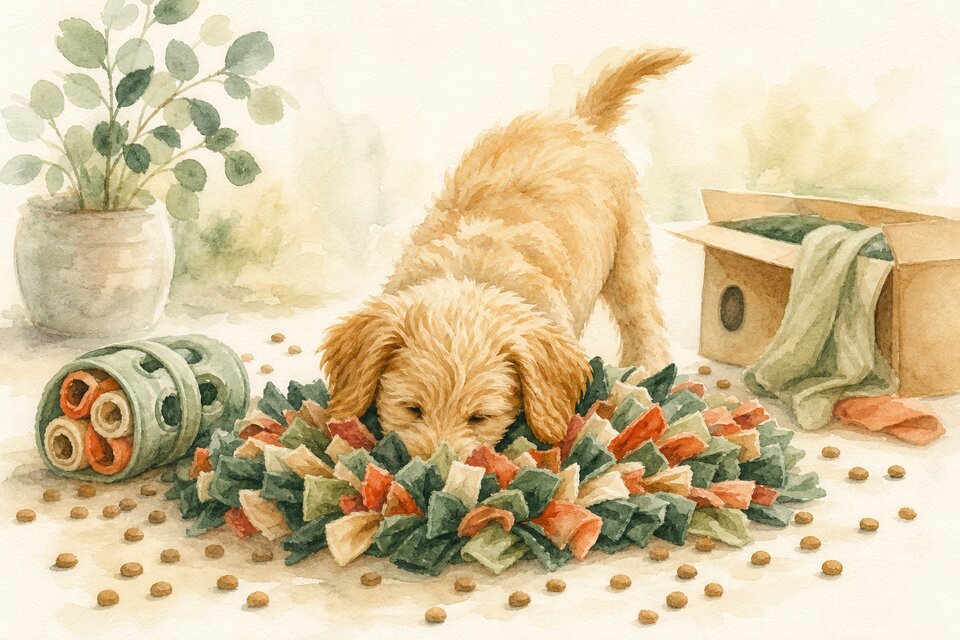
Build nose work in a visible ladder: begin with Find it on an open floor, progress to a small cardboard-box array, then lay a short scent trail, and schedule one formal search day each week. Measure the daily ration first and deliver most of it through food puzzles, scatter searches and training rewards rather than adding uncounted treats.
Enrichment and outlet menu
| Type | Examples | Duration | Notes |
|---|---|---|---|
| Sniffing | Scatter feeding on grass, snuffle mat, food hidden in boxes, indoor treat search | About 5–15 minutes | Let the nose set the pace; easy searches should finish successfully. |
| Problem-solving | Treat ball, frozen stuffed toy, folded paper tube, food rolled in a towel | About 5–15 minutes | Begin easy enough to prevent frustration; frozen toys are especially useful during teething. |
| Shaping and tricks | Nose-to-hand touch, spin, weave through legs, toys into a box, switch a light on or off | Up to 10 minutes per session, with breaks | Use shaping and split the skill into tiny, winnable steps. |
| Structured scent ladder | Find it, box array, short trail | Three to ten minutes, self-paced | Deduct every food find from the measured daily ration. |
| Progressive scent-trail work | Progress from “find it” to a box array, then a short laid trail and a weekly search day. | One 5–10 minute search block with a quiet finish. | Increase only one variable—trail age, distance or turns—while using a harness and long line. |
| Measured scatter feeding | Scatter part of a meal across short grass or a snuffle mat in a clear area. | 3–5 minutes, replacing part of the meal. | Count every piece in the daily allowance; do not scatter near rubbish, hazards or other dogs. |
| Cardboard-box search | Arrange six open boxes and place food in two, changing the winning boxes each round. | Three short rounds with a pause between searches. | Supervise cardboard chewing and end before searching turns into frantic food grabbing. |
| Dedicated sniffing walk | Follow a quiet route where the dog can choose safe sniff stops on a long line. | 10–20 minutes at the dog’s exploratory pace. | Treat sniffing as the activity and reward; do not pull the dog along to chase distance. |
| Chewing | Veterinarian-approved chew, a small amount of frozen carrot | Puppy-led and supervised | Ask your veterinarian which chews suit your puppy; remove damaged pieces. |
One-week enrichment rotation
| Day | Main block | Recovery block |
|---|---|---|
| Mon / Thu | Easy sniffing search, then one group outlet at the dog's current stage. | Quiet chew and protected sleep. |
| Tue / Fri | Food puzzle plus two minutes of shaping or cooperative handling. | Scatter feed or slow sniffing. |
| Wed / Sat | Signature protocol at easy criteria; stop while cues still work. | Mat settling and uninterrupted rest. |
| Sun | Recovery audit: repeat only an easy favourite if the dog is ready. | Plan the next week from recovery, not exhaustion. |
Teething
Prepare cold outlets before four to six months
Chewing demand rises sharply at about 4–6 months. Prepare frozen stuffed toys in advance; increased chewing at this age is a developmental need, not a training regression.
Independent ability
Let the dog solve ten minutes alone
Offer a safe puzzle or chew and let the dog work independently for ten minutes. Without opportunities to practise independent settling, some dogs may find alone time harder.