
FluffyWA

Positive training · From eight weeks

Beagle Puppy Training Manual

From 8 Weeks

Beagle: let the nose work, then build check-ins and recall around scent.

29 chapters · English / 中文

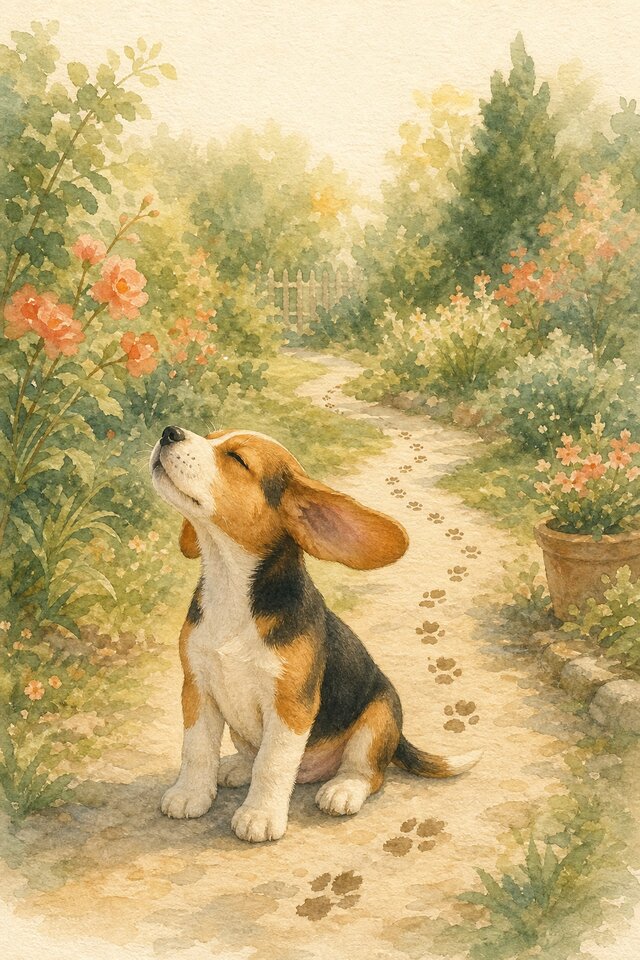
Watercolour illustration of a Beagle puppy scenting flowers beside a paw-print trail along a garden path
Beagle: let the nose work, then build check-ins and recall around scent.

Breed profile

Training group
Scenthounds
Origin
The Beagle originated in England as a pack scenthound used for hunting by scent.
Shoulder height
33–40 cm
Weight
9–14 kg
Coat
Short coat
Coat care
Condition calm acceptance of brushing, whole-body checks, paw handling and gentle ear checks in small voluntary steps.
Drive keywords
Scent · Food · Group activity
Handling practice
Calm, gradual brushing, whole-body checks and paw handling for the short coat, especially after ground-level scent work. · Voluntary ear handling: brief touch, gentle lift or look, marker, reward and release before the puppy moves away.

General reference range only; individual dogs vary considerably.

Teach safe mouth skills

Mouthing, scent trails & food finds

Puppy mouthing, picking up a food-scented item and committing to an outdoor trail need different responses. Teach bite inhibition and trading, while using management so the nose never has to compete with unsafe access.
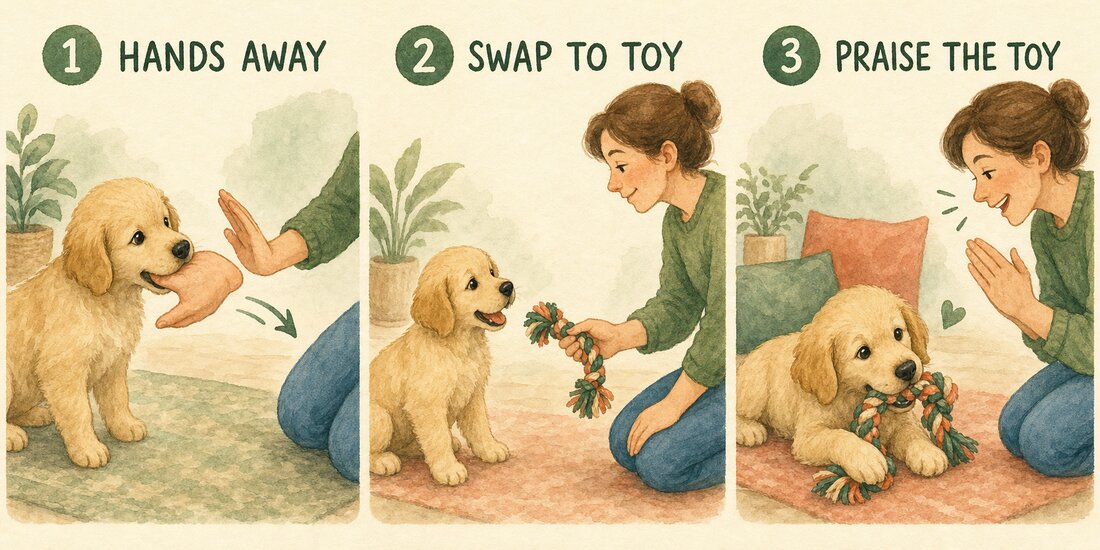
Watercolour three-step diagram showing hands moving away and puppy mouthing redirected to a toy
HANDS AWAY = make hands still and unavailable; SWAP TO TOY = offer an appropriate toy; PRAISE THE TOY = reinforce chewing the toy.

Identify the pattern before responding

Teach the mouth, trade the find and manage the trail
PatternWhat it looks likeWhat it needs
Exploratory mouthingA loose puppy samples hands, clothing or safe objects with the mouth.Teach bite-force control and redirect to an appropriate object.
Food find or scavengingThe puppy lowers the nose, locates an item and grabs or swallows quickly.Prevent access and use a calm trade; do not chase or force the mouth.
Scent commitmentThe nose stays down, travel becomes purposeful and spoken cues lose value.Use the line, create distance and return to an easier recall setup.

Teach bite inhibition in three stages

8–12 weeks First: reduce force After a painful bite, give one brief “Ouch” and stop interaction for 3–5 seconds; resume only when the puppy is settled.
12–16 weeks Then: reduce frequency Reinforce play that stays on safe toys and interrupt repeated contact with skin or clothing before arousal rises.
After 16 weeks Finally: keep teeth off people Keep mouth play on safe objects and preserve the same calm start-and-stop rules.

Do not skip force control by demanding zero mouthing immediately. Trading a found item is a separate skill and must not become a chase.

A scent-and-trade routine

  1. Prevent the unsafe find Clear food and rubbish, scan the route and keep physical management where discarded items or strong trails may appear.
  2. Trade without pursuit Offer a worthwhile reward at the nose, mark release, secure the item and sometimes return a safe object so Drop does not always end access.
  3. Use sniffing as reinforcement Ask for one achievable check-in or loose-lead step, then release the puppy back to the safe scent on a consistent cue.

Training with FluffyWA

Day school, board & train and private sessions are quoted after a chat, and boarding or daycare can be booked online with live prices.