
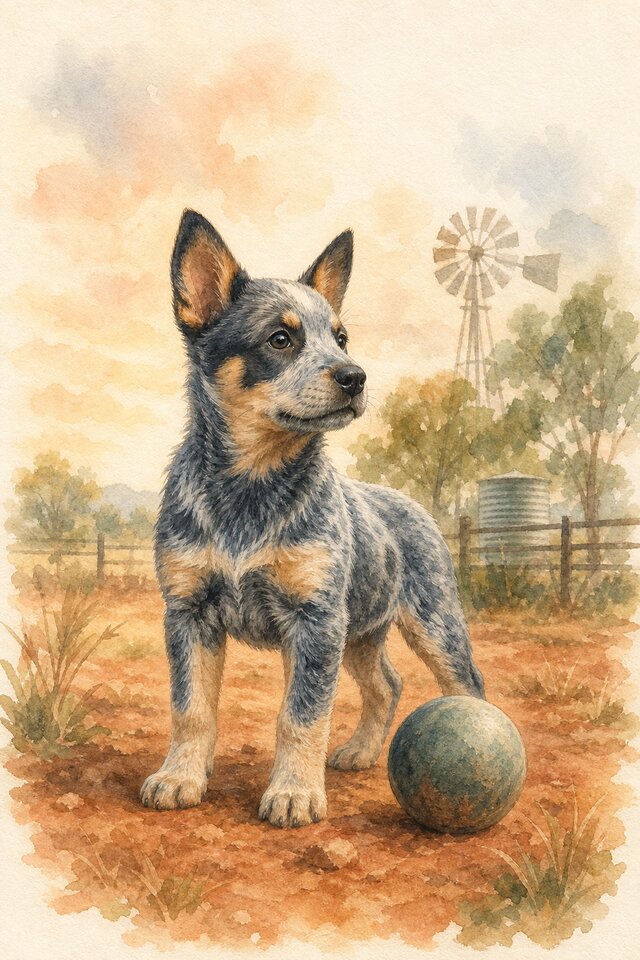
The Australian Cattle Dog originated in Australia to move cattle. Its inherited working pattern combines control of movement, endurance and a stronger heel grip than the lighter nipping seen in many herding dogs.
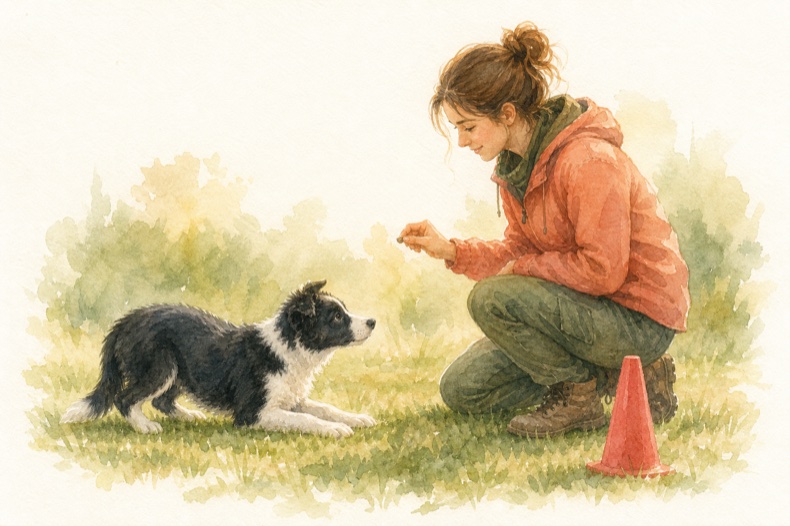
Breed at a glance
A quick profile, not a scorecard
Shedding: High
Grooming frequency: Low
Energy: Very high
Trainability: Low
- Approx. weight
- Weight15–22 kg
- Approx. shoulder height
- Shoulder height43–51 cm
- Approx. life expectancy
- Reference range12–16 years
The same dog can be deeply attached to family and reserved with unfamiliar people. Training therefore needs two deliberate projects: broad, choice-based socialisation and daily cooperation with more than one family member.
What this means at home
Reality 01
The grip is part of the old job
Heel contact is not solved by labelling the puppy stubborn or bad. Prevent rehearsal, teach pressure control and provide a legal object for gripping.
Reality 02
Socialisation is not forced contact
A reserved puppy learns best when unfamiliar people predict safety and reinforcement without reaching, crowding or compulsory greetings.
Reality 03
One-person attachment must be broadened
If one person controls every valuable resource, cooperation can narrow onto that handler. Shared cues and rotated care make the whole family relevant and predictable.
Reality 04
Endurance still needs a stopping point
A willing puppy is not evidence that more running is safe or useful. Adults set the limit and balance low-impact movement with mental work and recovery.
Breed reference data
| Reference | Value |
|---|---|
| Origin and original work | Australia; cattle-droving working dog |
| Shoulder height | 43–51 cm |
| Weight | 15–22 kg |
| Coat | Short double coat |
| Drive keywords | Controlling movement · endurance · strong family attachment and guarding tendency |
Suitability
Suited for
- A household that will manage moving feet and children proactively rather than waiting for heel gripping to occur.
- Families prepared to share feeding, training and calm handling among consistent adults.
- People who can provide broad socialisation without forcing the puppy to greet or be touched.
- A home ready to provide short structured jobs, legal gripping outlets and deliberate recovery.
Not suited for
- Anyone intending to use bare-hand roughhousing or strength contests as play.
- A household unable to supervise every puppy interaction with running children.
- People who expect compulsory greetings to remove wariness of unfamiliar people.
- A plan in which one person must supply all training and daily care.