
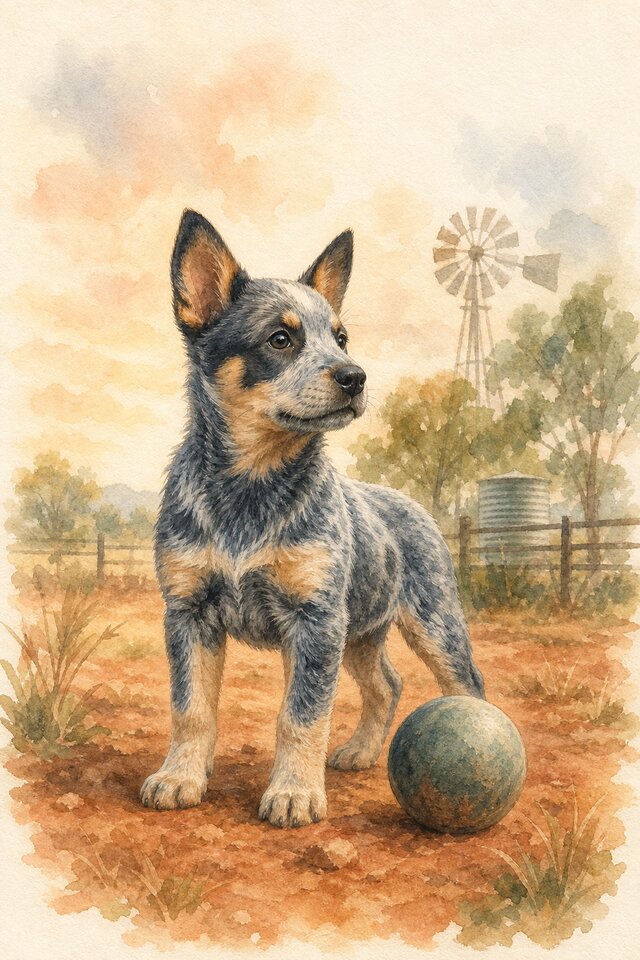
Australian Cattle Dog risks grow through rehearsal: moving ankles reward gripping, forced greetings reward defensive distance-making, and one-person routines narrow cooperation. Change access first, then reinforce the alternative you want.
Prevention card 01
Forceful heel gripping
Why it happens
The breed's cattle work retained a strong grip after movement activates the control-and-chase sequence. Fast feet can therefore reward immediate, forceful contact.
Early signals
The puppy lowers toward moving feet, fixes on ankles or trouser legs, speeds up as a person moves, ignores the available toy or applies increasing jaw pressure.
Prevent it now
Manage fast movement with a lead or barrier, start legal gripping games below threshold, reinforce choosing the toy and keep every child interaction under adult control.
If it has started
Stop movement, create separation without grabbing the muzzle, lower arousal and redesign the next setup so the puppy reaches the designated toy before an ankle.
When to get professional help
Seek qualified reward-based help if gripping repeatedly breaks skin, cannot be interrupted safely, escalates around children or continues despite consistent management.
Prevention card 02
Wariness of unfamiliar people
Why it happens
A strong family attachment and guarding tendency can make unfamiliar people important to monitor. Crowding or forced touch can confirm that the puppy needs to create distance.
Early signals
The mouth closes, weight shifts away or forward, the body becomes still, food is refused, recovery slows, or barking begins as a person approaches.
Prevent it now
Work at a distance where the puppy can observe and eat, pair the person's presence with good outcomes, and let all approach or retreat remain voluntary.
If it has started
Stop the greeting, ask the person to turn away and give space, move behind a barrier or increase distance, then reinforce calm observation without requiring contact.
When to get professional help
Seek qualified behaviour help for persistent freezing, lunging, growling, snapping, biting or inability to recover; sudden behaviour change should be assessed by a veterinarian first.
Prevention card 03
Cooperation narrows onto one person
Why it happens
Very strong family attachment can focus on the person who consistently supplies food, cues, access and comfort, leaving other family members outside the learned routine.
Early signals
The puppy follows one person constantly, waits for that person's cue while ignoring the same cue from others, or refuses familiar rewards and handling from family members.
Prevent it now
Rotate feeding, easy training, calm play and routine care among family members, keeping cue words, criteria and boundaries consistent.
If it has started
Have the preferred person step out of easy, low-pressure routines while another family member delivers familiar cues and valuable outcomes without forcing contact.
When to get professional help
Get qualified help if the puppy cannot function safely with another carer, shows intense distress when the preferred person is absent, or threatens family members around access to that person.