
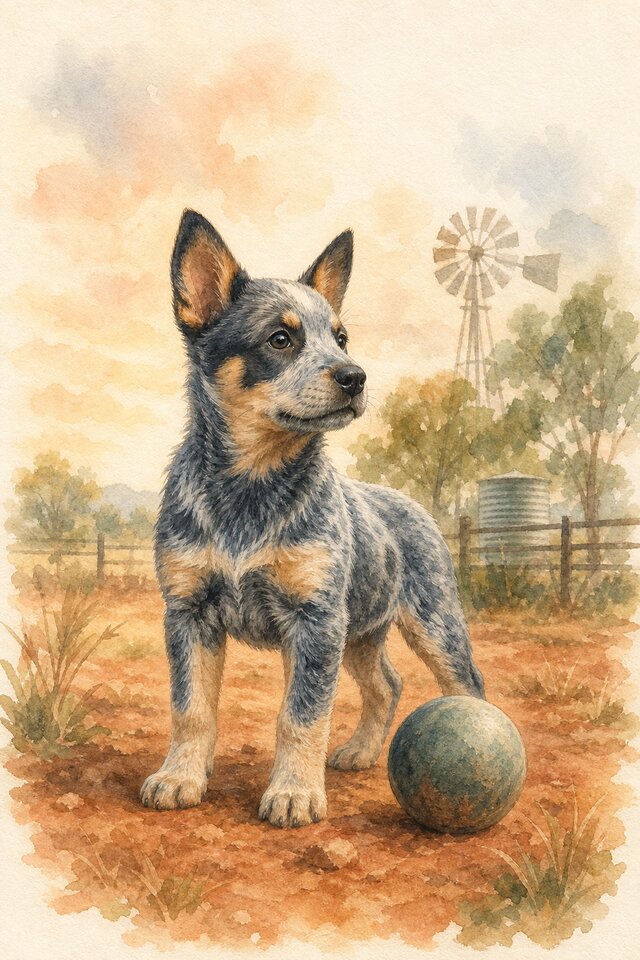
An Australian Cattle Dog puppy must learn both jaw-pressure control and a lawful destination for an inherited strong heel grip. Management comes first around moving ankles and children; punishment or bare-hand play makes neither lesson clearer.
Identify the mouth pattern before responding
| Type | What it looks like | What it needs |
|---|---|---|
| Exploratory mouthing | A loose-bodied puppy samples hands, clothing or household objects with its mouth. | Supervise, manage access and provide safe chewing while teaching pressure control. |
| Rule-based gripping play | The puppy grips a designated toy, releases on Drop and remains connected to the handler. | This is a legal outlet when hands stay clear and start, exchange and finish rules remain consistent. |
| Cattle-dog heel grip | Movement triggers low pursuit and fast, forceful contact at ankles, trouser legs or a running child. | Stop access with a barrier or lead, reduce movement and redirect before another repetition occurs. |
Teach bite inhibition in stages
Do not demand zero mouthing before the puppy learns pressure control. At the same time, do not permit heel gripping on people to become the practice field.
A four-part grip-management plan
- Control movement before contact Use a lead, gate or pen before children run or household movement becomes fast. Management prevents the inherited sequence from being rewarded.
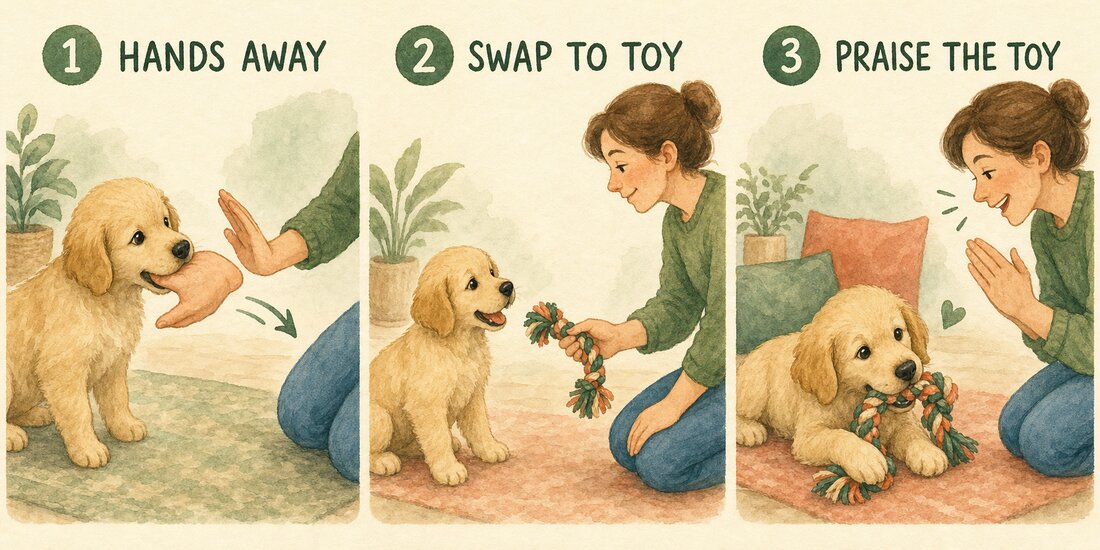
- Put the legal toy under cues Present the designated toy after the start cue, keep hands outside the grip zone, trade on Drop and finish while the puppy can still respond.
- Reward release and reorientation Mark the release, deliver the trade clearly and reinforce the puppy for returning attention to the handler rather than immediately seeking another ankle.
- Move into recovery After gripping play, lower movement and use calm sniffing, chewing or mat settling so the puppy practises coming down as well as switching on.