
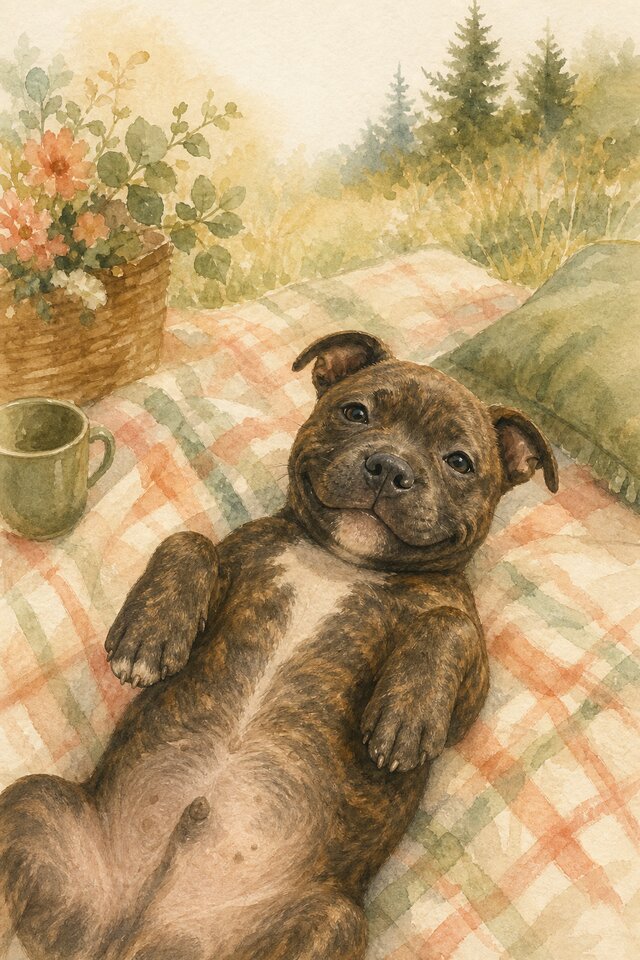
The Staffordshire Bull Terrier originated in England as a powerfully built terrier and is notably affectionate towards people. Tearing toys, physical games and interaction with people are useful training levers when the family makes the start, Drop and finish rules consistent.
Breed at a glance
A quick profile, not a scorecard
Shedding: Moderately low
Grooming frequency: Moderately low
Energy: High
Trainability: Low
- Approx. weight
- Weight11–17 kg
- Approx. shoulder height
- Shoulder height35–40 cm
- Approx. life expectancy
- Reference range12–14 years
A compact body can generate substantial pulling and gripping force. The practical response is early loose-lead practice, equipment that fits and game rules taught below the arousal threshold—not a contest over who is stronger.
What this means at home
Reality 01
Strength needs early mechanics
Loose-lead skills and tug rules are easiest to build before pulling and gripping have a long reinforcement history. Reward position, release and recovery early in training.
Reality 02
People are a major training channel
Affection towards people and interest in interaction make access to the person, play and attention valuable reinforcement. Use them for four-paws-down greetings and responsive play.
Reality 03
Dog tolerance is individual
Comfort with one carefully chosen dog does not guarantee comfort with every dog. Socialisation means calm observation, choice and recovery—not compulsory contact.
Reality 04
The stop is trained before excitement
Drop, the finish cue and mat settling must first work in easy moments. Active games then end while those responses are still available and transition into recovery.
Breed reference data
| Reference | Value |
|---|---|
| Origin and type | England; powerfully built terrier, notably affectionate towards people |
| Shoulder height | 35–40 cm |
| Weight | 11–17 kg |
| Coat | Short coat |
| Drive keywords | Tearing toys · physical games · interaction with people |
Suitability
Suited for
- Families willing to teach loose-lead movement and clear tug rules from the outset.
- People who enjoy interactive training and can end physical games before responsiveness drops.
- Homes prepared to select dog partners carefully and manage distance without forcing greetings.
- People ready to practise an off switch and protect recovery after exciting activity.
Not suited for
- Anyone intending to solve pulling or gripping by physically overpowering the puppy.
- A household unwilling to use the same start, Drop and finish cues in every tug game.
- People who measure socialisation by compulsory greetings with many unfamiliar dogs.
- A home that answers escalating arousal with still more intense physical play.