
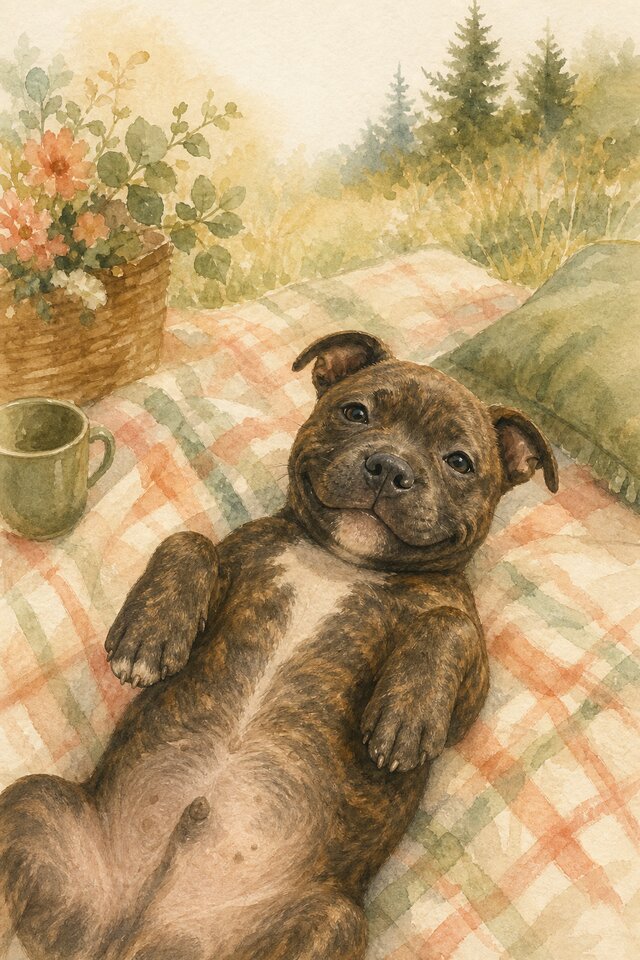
Strength, toy drive and social choices become manageable when the family teaches mechanics early, selects dog contact carefully and ends exciting activity before responsiveness disappears.
Prevention card 01
Pulling and tug without clear rules
Why it happens
Strength is out of proportion to body weight. Every successful pull towards access and every tug that continues through failed cues can reinforce using force instead of checking in.
Early signals
The lead tightens as soon as movement begins, the puppy braces into the harness, grip tightens through Drop, teeth shift towards hands, or the game can end only by taking hold of the puppy.
Prevent it now
Reward loose-lead position before access, use a designated tug toy and keep every game inside the same start, Drop and finish sequence while the puppy remains responsive.
If it has started
Reduce distance or game intensity, stop rehearsing access through pulling and rebuild one easy release or loose-lead step without turning it into a physical contest.
When to get professional help
Seek qualified positive-reinforcement help if the family cannot handle the lead safely, release repeatedly fails below threshold, or gripping causes injury.
Prevention card 02
Indiscriminate dog greetings
Why it happens
Tolerance of other dogs varies substantially between individuals. Repeated compulsory contact removes choice and can teach pulling, freezing or escalation around approaching dogs.
Early signals
Body stiffens, mouth closes, weight shifts forward or back, staring persists, food is refused, the puppy hides behind the handler, or cannot disengage from an approaching dog.
Prevent it now
Choose calm, suitable partners, begin with parallel movement or observation at a workable distance and reinforce turning away, checking in and leaving calmly.
If it has started
Stop automatic greetings, increase distance before the next exposure and use physical separation so the puppy can observe, eat and leave without contact.
When to get professional help
Get qualified reward-based help if dog encounters repeatedly produce sustained freezing, growling, lunging, snapping, biting or an inability to recover after distance is added.
Prevention card 03
High arousal without an off switch
Why it happens
Physical games and toy tearing can produce a high arousal peak with slow recovery. Continuing until cues fail rehearses activation without teaching how to come back down.
Early signals
Movement becomes frantic, grip tightens, Drop slows or fails, barking sharpens, food loses value, grabbing shifts to hands or clothing, or the puppy cannot settle after the toy is gone.
Prevent it now
Practise mat settling and cue interruption in easy moments, keep active games short enough for cues to remain available and always follow them with a familiar lower-arousal activity.
If it has started
Remove the trigger, reduce movement and sound, create space behind a barrier and offer a familiar calm activity only if the puppy can use it; resume teaching after recovery.
When to get professional help
Seek professional help if the puppy repeatedly cannot recover in a quiet setup, cannot sleep, injures people or itself, or arousal changes suddenly; sudden changes should be assessed by a veterinarian first.