
FluffyWA

Positive training · From eight weeks

Staffordshire Bull Terrier Puppy Training Manual

From 8 Weeks

Staffordshire Bull Terrier: relaxed social connection supports calm greetings and cooperative handling.

29 chapters · English / 中文

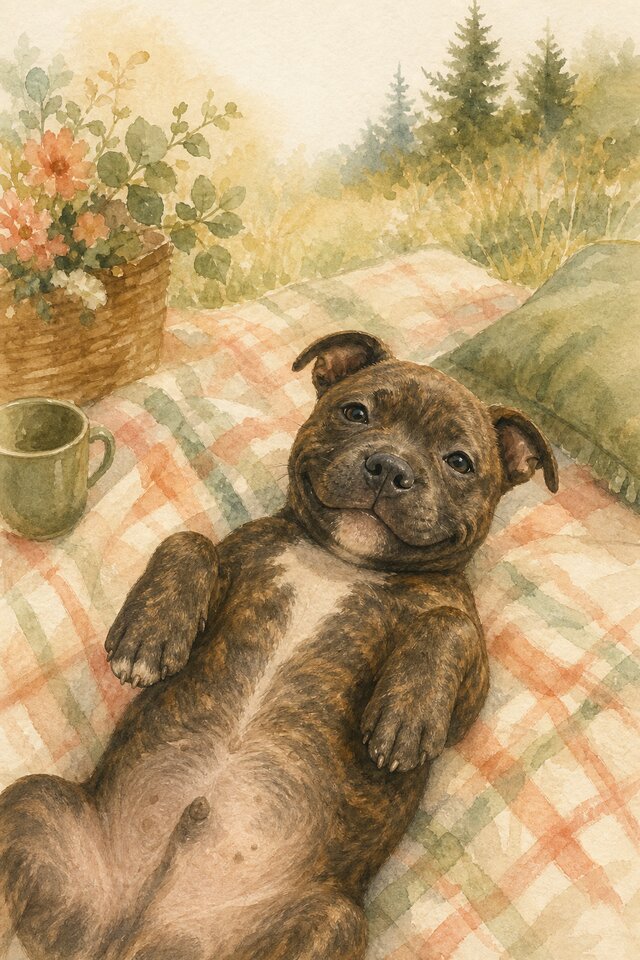
Watercolour illustration of a friendly brindle Staffordshire Bull Terrier lying relaxed and belly-up on a picnic blanket in the garden
Staffordshire Bull Terrier: relaxed social connection supports calm greetings and cooperative handling.

Breed profile

Training group
Terriers
Origin
The Staffordshire Bull Terrier originated in England as a powerfully built terrier and is notably affectionate towards people.
Shoulder height
35–40 cm
Weight
11–17 kg
Coat
Short coat
Coat care
Use calm, voluntary practice for brief brushing, whole-body checks, paw handling and putting on the harness.
Drive keywords
Tearing toys · Physical games · Interaction with people
Handling practice
Voluntary short-coat brushing, whole-body checks, ear and paw handling, with reinforcement for standing calmly rather than being held in place. · Calm cooperation while the harness is fitted, checked and removed, so daily equipment handling does not become a strength contest.

General reference ranges only; individual dogs vary considerably.

Teach safe mouth skills

Tug rules, mouthing & self-control

Toy gripping and physical play are useful outlets when the puppy learns that the person starts the game, Drop releases the toy and the finish cue leads into recovery. Bite inhibition is taught alongside those rules; strength is guided through mechanics, not met with more force.
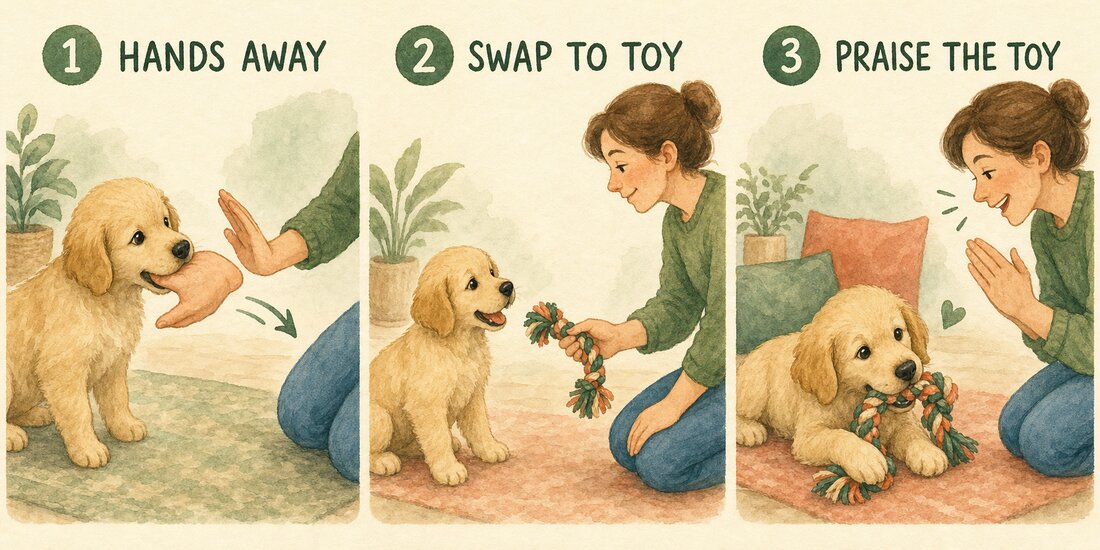
Watercolour three-step diagram showing hands moving away and puppy mouthing redirected to a toy
HANDS AWAY = make hands still and unavailable; SWAP TO TOY = offer an appropriate toy; PRAISE THE TOY = reinforce chewing the toy.

Identify the pattern before responding

Exploration, structured tug and over-aroused gripping need different responses
TypeWhat it looks likeWhat it needs
Exploratory mouthingA loose-bodied puppy samples hands, clothing or household objects.Supervise, provide safe objects and teach bite inhibition without turning hands into toys.
Rule-governed tugThe puppy grips the designated toy after the start cue, plays while responsive and releases on Drop.This is a useful legal outlet when start, release and finish remain predictable.
Over-aroused grippingGrip tightens, movement becomes frantic, teeth shift towards hands or clothing, and Drop no longer works.The game went on too long; reduce stimulation, create space and resume training only after recovery.

Teach bite inhibition in three stages

8–12 weeks First: reduce force After a painful bite, end interaction calmly for 3–5 seconds, then resume only when the puppy is settled.
12–16 weeks Then: reduce frequency Reinforce play that stays on the designated toy and interrupt repeated contact with skin or clothing before arousal rises.
After 16 weeks Finally: keep teeth off people Tug and shaking stay on designated toys, and contact with skin or clothing no longer continues the game.

Do not skip force control by demanding zero mouthing immediately. Teach a softer mouth first, then reduce frequency while preserving clear toy rules.

A clear tug and recovery routine

  1. Start on one cue Keep the toy still until the start cue, then offer the designated handhold while keeping fingers away from the grip area.
  2. Reinforce Drop clearly Stop toy movement, cue Drop once, mark the release and reinforce it; the safe toy can restart so release does not always end the fun.
  3. Finish while responsive Use the finish cue before grip and movement escalate, put the toy away and move calmly to the recovery area.
  4. Practise the off switch separately Build mat settling, sniffing and chewing during easy periods so those responses are familiar after an exciting game.

Training with FluffyWA

Day school, board & train and private sessions are quoted after a chat, and boarding or daycare can be booked online with live prices.