
FluffyWA

Positive training · From eight weeks

Siberian Husky Puppy Training Manual

From 8 Weeks

Siberian Husky: secure high fencing and managed outlets protect recall training from escape risk.

29 chapters · English / 中文

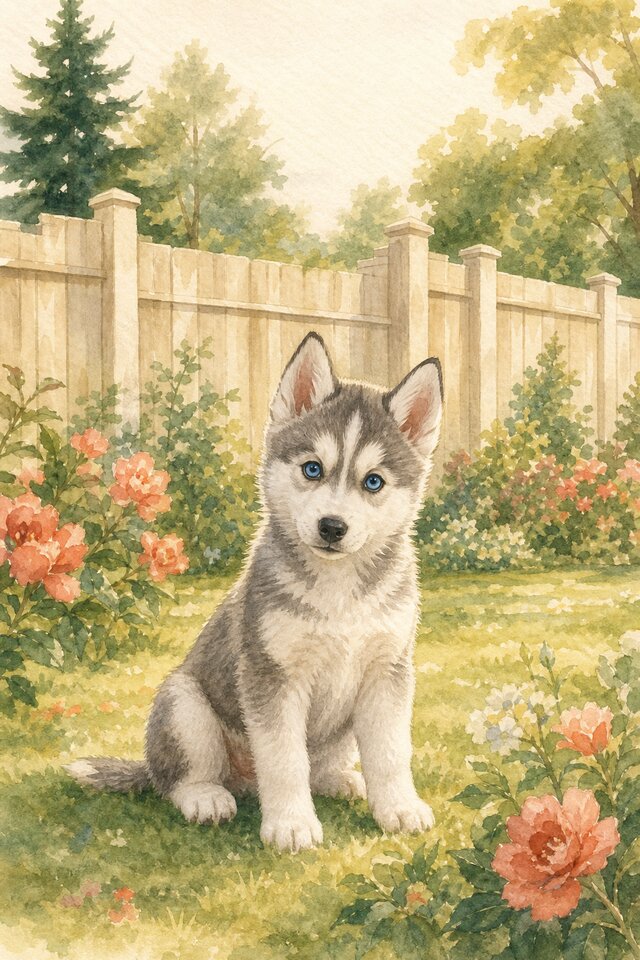
Watercolour illustration of a Siberian Husky puppy sitting in a garden enclosed by a tall wooden fence
Siberian Husky: secure high fencing and managed outlets protect recall training from escape risk.

Breed profile

Training group
Sled and spitz dogs
Origin
The Siberian Husky originated in Siberia as a sled dog.
Shoulder height
50–60 cm
Weight
16–27 kg
Coat
Thick double coat
Coat care
Build voluntary acceptance of brushing, coat separation, paw checks and dryer sound in gradual steps. The double coat must never be shaved as a cooling method.
Drive keywords
Running · Independent decision-making · Group howling
Handling practice
Introduce brushing, separating the dense coat and dryer sound from an easy distance, then progress only while the puppy remains willing to participate. · Generalise calm paw, ear, tail and whole-body checks across non-slip surfaces, different rooms and familiar handlers rather than assuming success in one station transfers automatically.

General reference range only; individual dogs vary considerably.

Attention is the first cue

Name response & focus

Your puppy’s name has one meaning: “Look at me.” It does not mean “come,” it does not mean “stop,” and it must never become a reprimand.

The name game

  1. Say the name once Choose a random calm moment when the puppy is near you but looking elsewhere.
  2. Mark the turn The instant the puppy turns towards you, mark. Do not wait for a sit or a full approach.
  3. Reward and move on Deliver the reward, then return to normal life. Complete 20 repetitions each day, spread across the whole day.
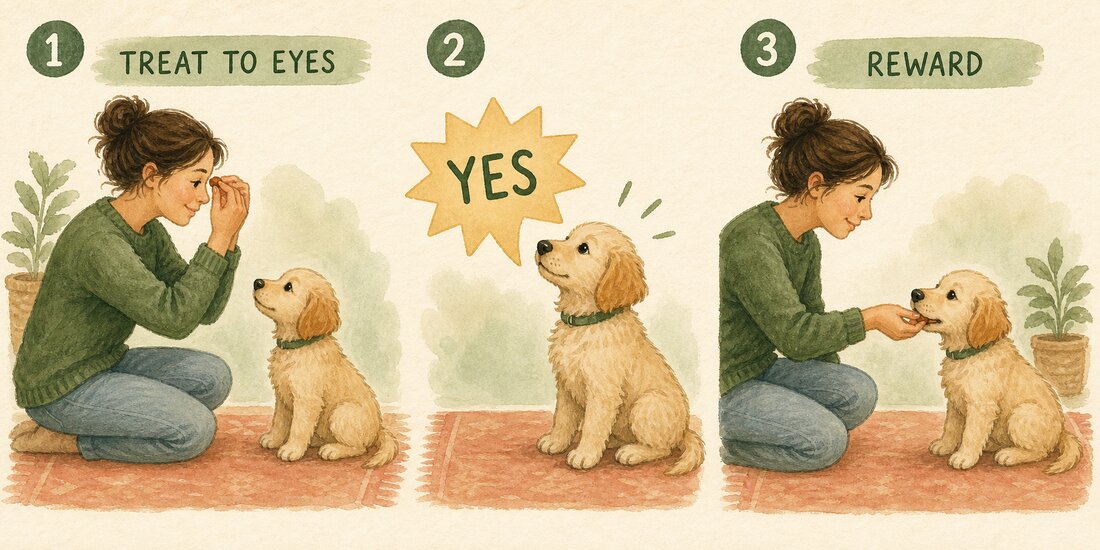
Watercolour three-step eye-contact exercise using a food lure, marker word and reward
TREAT TO EYES = bring the reward beside your eyes; YES = mark the instant the dog looks; REWARD = deliver the food promptly.

Build voluntary attention

Engage–Disengage

Reward the look you did not ask for

Voluntary attention is more valuable than attention that appears only after a cue. Mark whenever the puppy chooses to glance at you, then gradually practise around a view through the window, another dog or children.

Look at that

Looking is allowed; returning attention pays

Let the puppy look at the trigger. When it finishes looking and turns back, mark and reward. This foundation later helps the puppy disengage from movement, unfamiliar people and social excitement.

Training with FluffyWA

Day school, board & train and private sessions are quoted after a chat, and boarding or daycare can be booked online with live prices.