
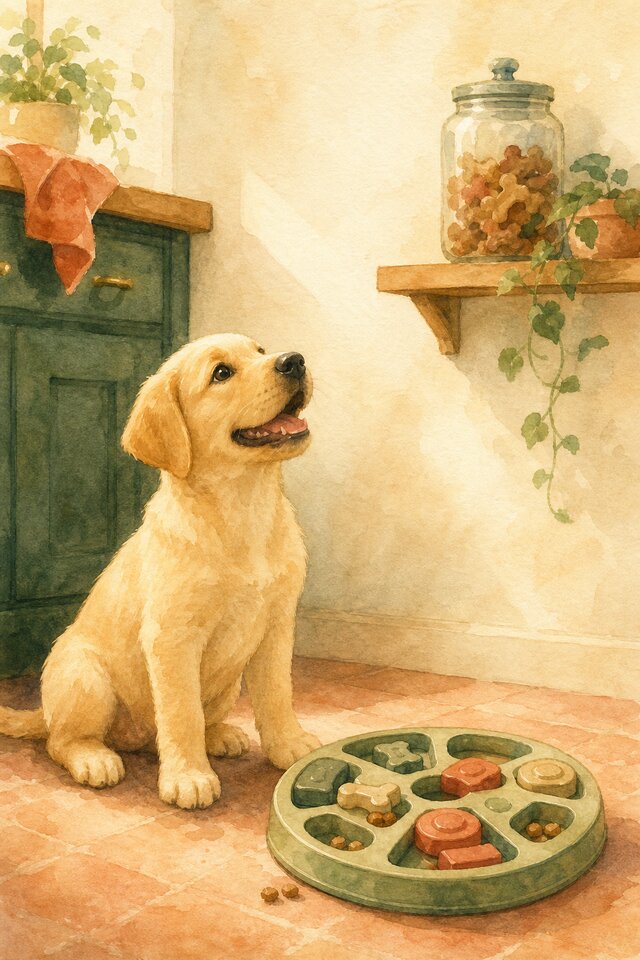
Food, retrieving and social contact are powerful Labrador training levers. The same drives can also produce swallowing, scavenging and uncontrolled greetings unless the environment and reinforcement rules are clear from the start.
Breed at a glance
A quick profile, not a scorecard
Shedding: High
Grooming frequency: Moderately low
Energy: Very high
Trainability: Very high
- Approx. weight
- Weight25–36 kg
- Approx. shoulder height
- Shoulder height55–62 cm
- Approx. life expectancy
- Reference range10–12 years
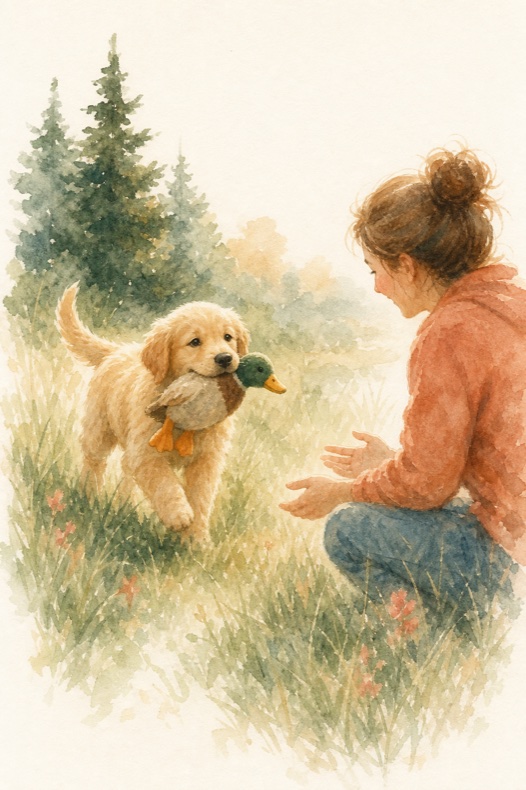
The breed originated from Newfoundland fishing dogs and was developed for retrieving work. Picking up and carrying are therefore behaviours to channel into delivery, release and safe return—not behaviours to punish out of the puppy.
What this means at home
Reality 01
The mouth reaches the object before training does
A Labrador puppy may rapidly pick up whatever is accessible. Clear the environment first, then make Leave it, Drop and calm trading part of daily life; suspected ingestion is an immediate veterinary matter.
Reality 02
Food is leverage and a management test
Food can make marker training efficient, but successful stealing and rubbish raids reinforce themselves. Secure access before asking cues to compete with an available meal.
Reality 03
Friendly excitement still needs a greeting rule
Social interest can turn arrival into pulling and jumping when attention follows those behaviours. Greetings begin only while all four paws are down, and distance increases when the puppy cannot respond.
Reality 04
Willingness to retrieve is not physical clearance
Puppy weight and joint load matter even when the dog remains enthusiastic. Track food used in training, protect the growing body and replace repetitive impact with sniffing and problem-solving.
Breed reference data
| Reference | Value |
|---|---|
| Origin and original work | Newfoundland fishing dogs; retrieving work |
| Shoulder height | 55–62 cm; general reference range, individual dogs vary |
| Weight | 25–36 kg; general reference range, individual dogs vary |
| Coat | Short double coat |
| Drive keywords | Food · retrieving · social contact |
Suitability
Suited for
- Households prepared to secure food, rubbish and swallowable objects before problems occur.
- Families willing to practise structured exchange, loose-lead walking and calm greetings consistently.
- Homes that will protect the growing body and manage training food as part of the feeding plan.
Not suited for
- Homes expecting a friendly temperament to make foundation training unnecessary.
- Households unable to prevent routine access to food, rubbish or small objects.
- Plans that rely on unlimited retrieving or other repetitive impact during puppy growth.