
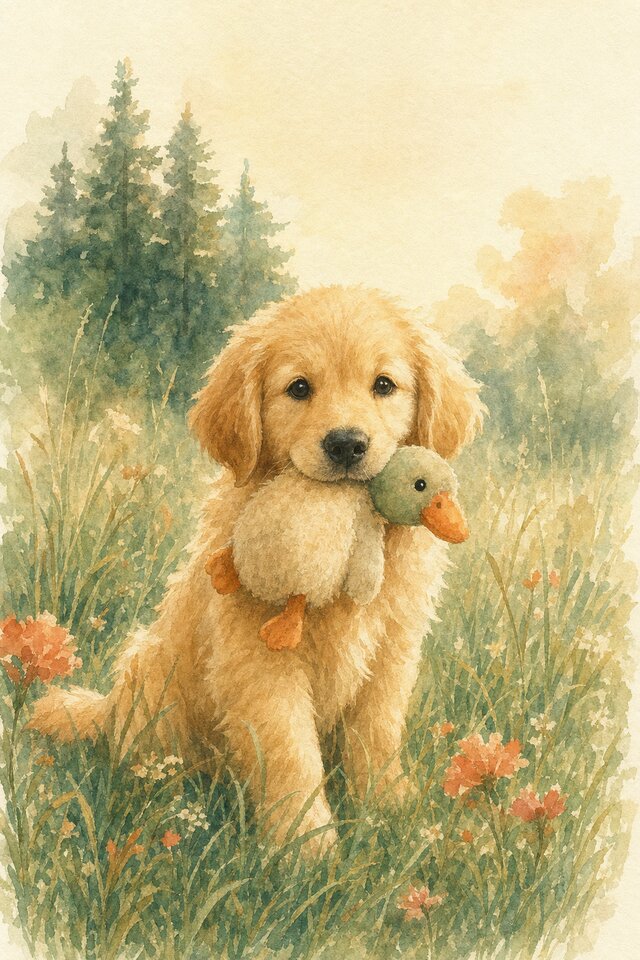
The Golden Retriever originated in Scotland as a retrieving dog. Retrieving, pleasing people and social contact provide strong training leverage, but they also make carrying objects and over-excited greetings easy to rehearse.
Breed at a glance
A quick profile, not a scorecard
Shedding: Moderate
Grooming frequency: Moderately low
Energy: Very high
Trainability: Very high
- Approx. weight
- Weight25–34 kg
- Approx. shoulder height
- Shoulder height51–61 cm
- Approx. life expectancy
- Reference range10–12 years
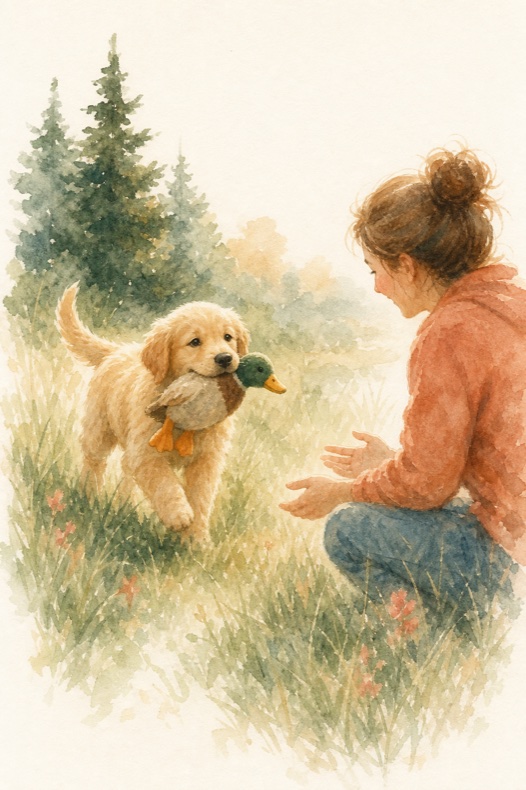
Retrieving work depended on cooperation with a person and carrying an object back without damaging it. In a home, teach the complete loop—pick up, return, release and either receive the safe object again or finish calmly.
What this means at home
Reality 01
Carrying can become an attention strategy
If taking a sock reliably starts a chase, the puppy has learned an efficient social game. Secure unsafe objects and make calm return and release more rewarding than running away.
Reality 02
Friendly is not the same as controlled
A puppy can be entirely friendly and still knock into people, pull hard or ignore familiar cues when greeting. Access to the person must depend on four paws down and an ability to reorient.
Reality 03
Coat care is a trained skill
Long-coat care cannot begin with restraint when tangles have already formed. Early cooperative practice with brush, comb, dryer sound and airflow prevents routine handling from becoming a struggle.
Reality 04
A good temperament does not train itself
Social cooperation makes reinforcement easier to deliver, but adolescence still exposes every greeting, lead and settling skill that was not practised early.
Breed reference data
| Reference | Value |
|---|---|
| Origin and original work | Scotland; retrieving dog |
| Shoulder height | 51–61 cm |
| Weight | 25–34 kg |
| Coat | Long double coat |
| Core drives | Retrieving · pleasing people · social contact |
Suitability
Suited for
- Families prepared to teach calm greetings instead of allowing every friendly approach.
- People willing to build structured retrieving and calm trades instead of chasing carried objects.
- Homes able to make long-coat handling a cooperative skill from puppyhood.
Not suited for
- Anyone assuming a friendly puppy needs little training or social boundaries.
- A household that will chase the puppy or force objects from its mouth.
- Anyone unable to practise brushing, combing and dryer handling gradually and consistently.