

Exploratory mouthing, carrying an object for attention and a structured retrieve are different patterns. Teach bite inhibition and object safety while preserving the useful pick-up, return and release sequence.
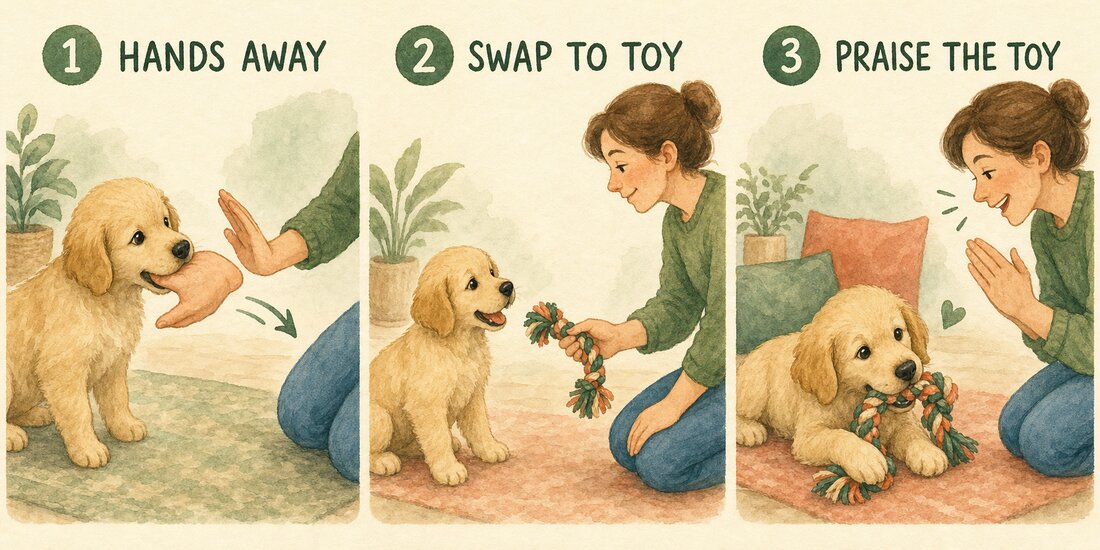
Identify the mouth behaviour first
| Type | What it looks like | What it needs |
|---|---|---|
| Exploratory mouthing | The puppy samples hands, clothing and accessible objects with a loose body. | Supervise, manage object access and teach bite inhibition with safe alternatives. |
| Attention-seeking carry | The puppy picks up a household object, watches the person and moves away when approached. | Do not chase. Reduce access and reinforce a calm return and trade. |
| Structured retrieve | On a cue, the puppy picks up a safe object, returns, releases and stays connected to the handler. | This is the useful sequence to reinforce, with a clear start, trade and finish. |
Teach bite inhibition in three stages
A genetically soft grip does not mean the puppy already understands human skin, clothing or household-object rules.
Build a complete retrieve instead of a chase
- Manage first Secure unsafe carryable objects and keep safe trade items close enough to use before a chase begins.
- Cue the pick-up Present one designated object on a start cue and keep the movement low and controlled rather than repeatedly throwing it.
- Pay the return and release Move away enough to invite the return, mark arrival, cue Drop once and trade without pulling against the puppy's mouth.
- Return or finish clearly Often give the safe object back after the trade; when finishing, put it away on a cue and transition to sniffing, chewing or rest.