
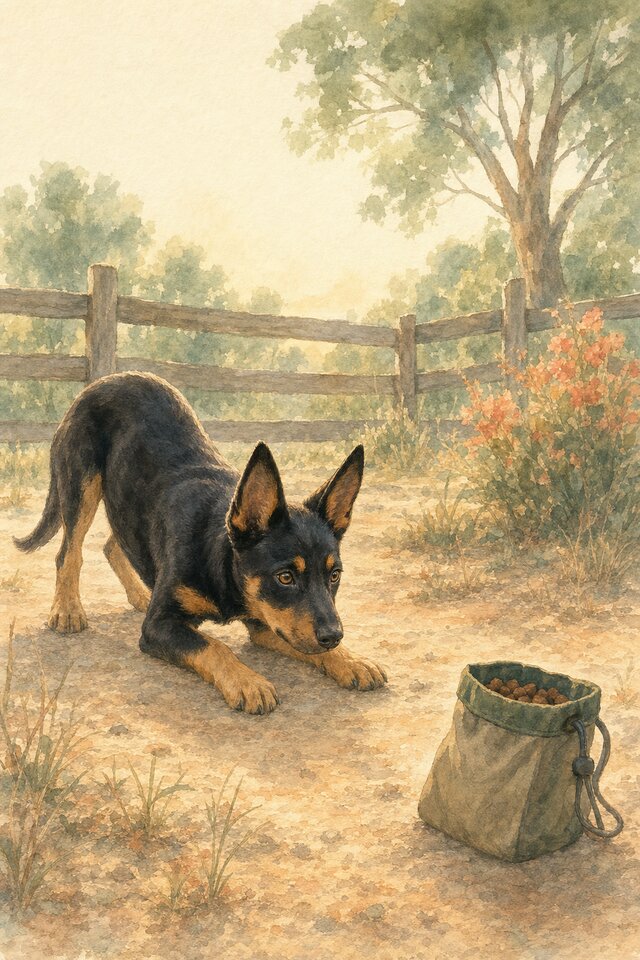
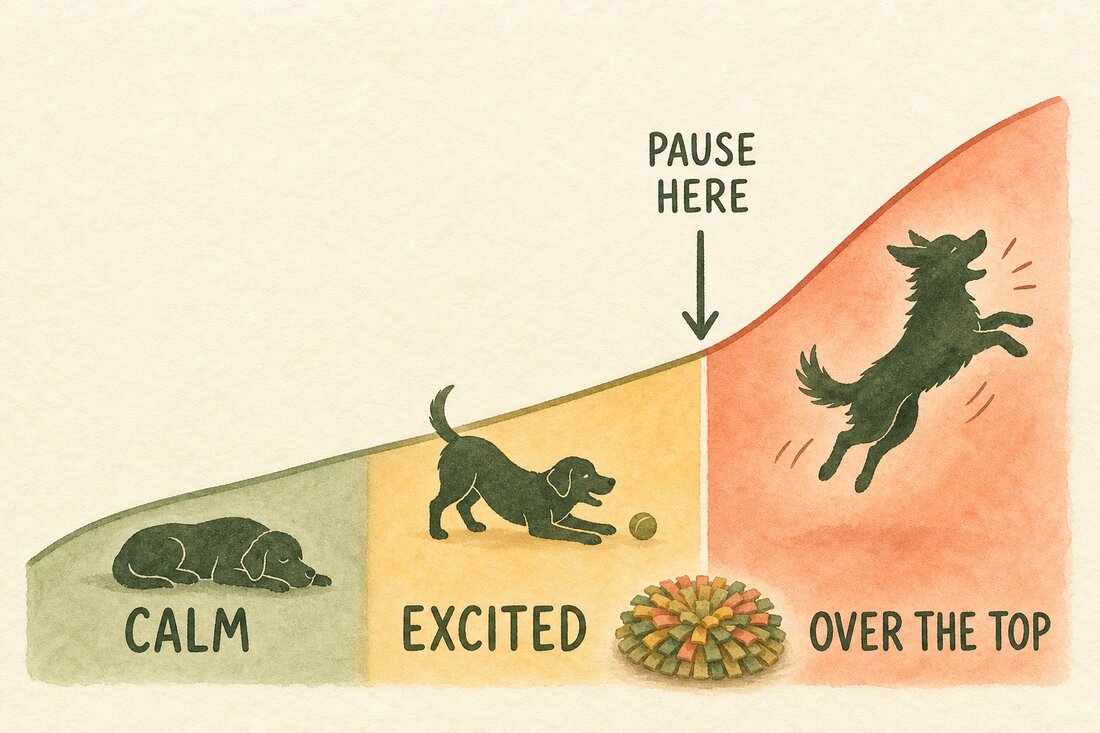
Arousal rises quickly and comes down slowly. An off switch must be taught deliberately, and high-arousal activity should be followed by sniffing to support recovery.
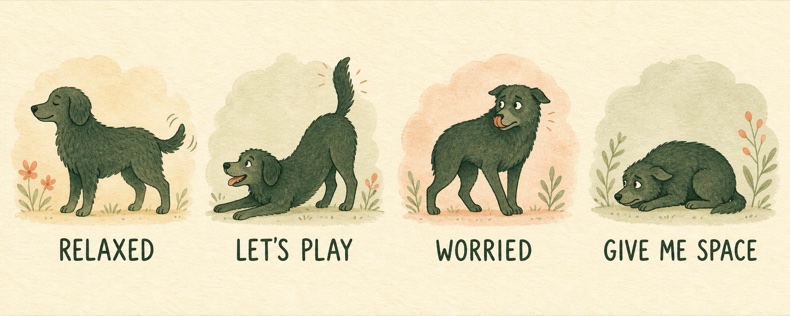
Signs of over-arousal
| What you see | Immediate interpretation |
|---|---|
| Dilated pupils | The nervous system is highly activated. |
| Persistent or unusual panting | Stop the activity, move to a cool calm setting and assess breathing and recovery. New signs at rest, visible effort or delayed recovery need veterinary advice. |
| Refusing normally loved food | The situation is too intense for useful learning. |
| Grabbing and biting hands | This often signals overload, not a need for harsher correction. |
| Aimless circling | The puppy is no longer making organised choices. |
| Higher, sharper vocalising | End the exciting activity and create distance. |
| Unable to hear familiar cues | This is over-arousal, not deliberate disobedience. |
Use this order when the dog is over threshold
- Lower the environment
Remove the trigger, increase distance or use a barrier. Stop the game rather than repeating cues.
- Lower the body
Move to a quiet space, reduce movement and offer an appropriate chew if the dog can use it calmly.
- Train only after recovery
Wait until the dog can eat again, respond to familiar cues and show soft body language before training; effective learning cannot happen while the dog is over threshold.
Teach the off switch
Mat, naps and chewing
Practise Settle on mat from Chapter 14, schedule two protected naps each day for an eight-week-old puppy in a crate or pen, and use chewing activities that naturally lower arousal.
The excitement sandwich
- Start low
Begin on the mat or with quiet engagement while the puppy can still think and eat.
- Add one brief, current-stage outlet
Choose an outlet from Chapter 18 that is appropriate for the dog's current developmental stage, then stop on cue while the dog can still respond and eat. Any menu item marked for adulthood or professional guidance remains a future plan, not a puppy exercise.
- Return low on cue
End on cue, then return to the mat, sniffing or quiet chewing. You are teaching recovery from excitement, not merely avoiding excitement.