
FluffyWA

Positive training · From eight weeks

Samoyed Puppy Training Manual

From 8 Weeks

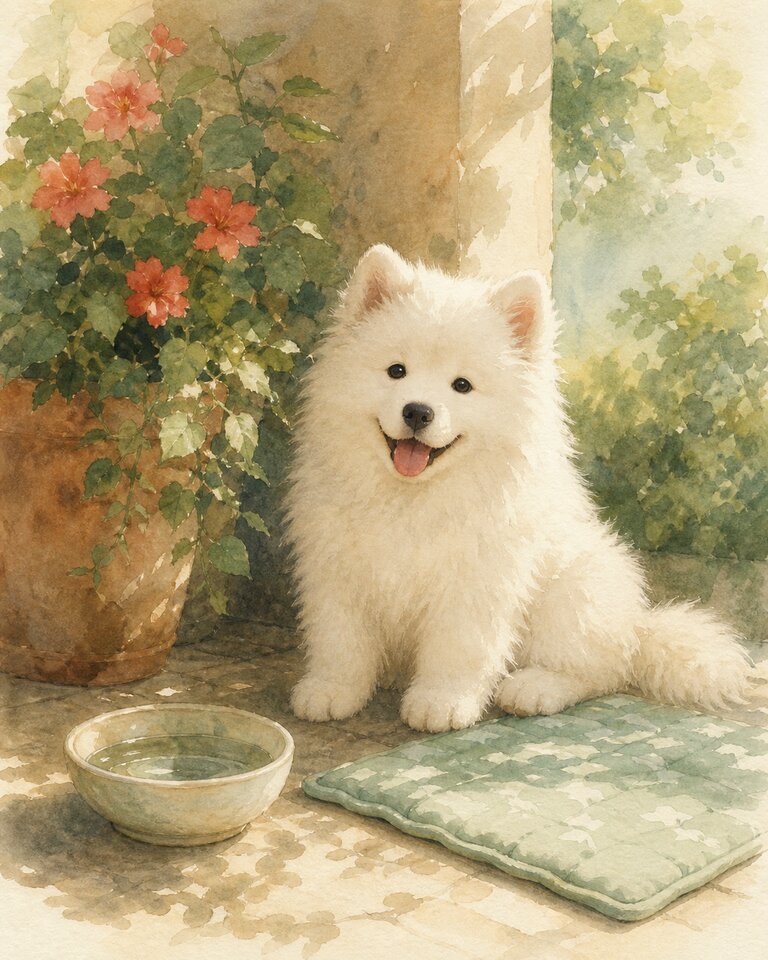
Samoyed: shade, water and a cool resting surface come before warm-weather activity.

29 chapters · English / 中文

Watercolour illustration of a Samoyed puppy cooling in a shady courtyard beside a water bowl and cooling mat
Samoyed: shade, water and a cool resting surface come before warm-weather activity.

Breed profile

Training group
Sled and spitz dogs
Origin
The Samoyed originated in Siberia, where it herded reindeer and pulled sleds.
Shoulder height
48–60 cm
Weight
16–30 kg
Coat
Thick double coat
Coat care
Cooperative grooming is a lifelong training project: introduce brushing through the coat, an undercoat rake and dryer sound gradually on a non-slip surface. Never shave the double coat as a cooling method.
Drive keywords
Living closely with people · Running · Pulling
Handling practice
On a non-slip surface, introduce brush contact, separating the coat, an undercoat rake and dryer sound from an easy distance; stop before struggle and progress only with voluntary participation. · Build calm paw, ear, tail, muzzle and whole-body checks, then generalise easy steps across rooms, familiar handlers and the grooming setting rather than relying on one practice station.

General reference range only; individual dogs vary considerably.

Prevent, escort, reward

Toilet training

Toilet training is a schedule and supervision task. Every outdoor success is information; every indoor accident means the schedule, supervision or health context needs review.

Person in a raincoat holding an umbrella while a small dog sniffs beside a red flag marking its outdoor toilet spot
One marked toilet place and the same calm sequence make wet-weather practice predictable.

Six times the puppy must go out

During the day, add a scheduled trip every 45–60 minutes.
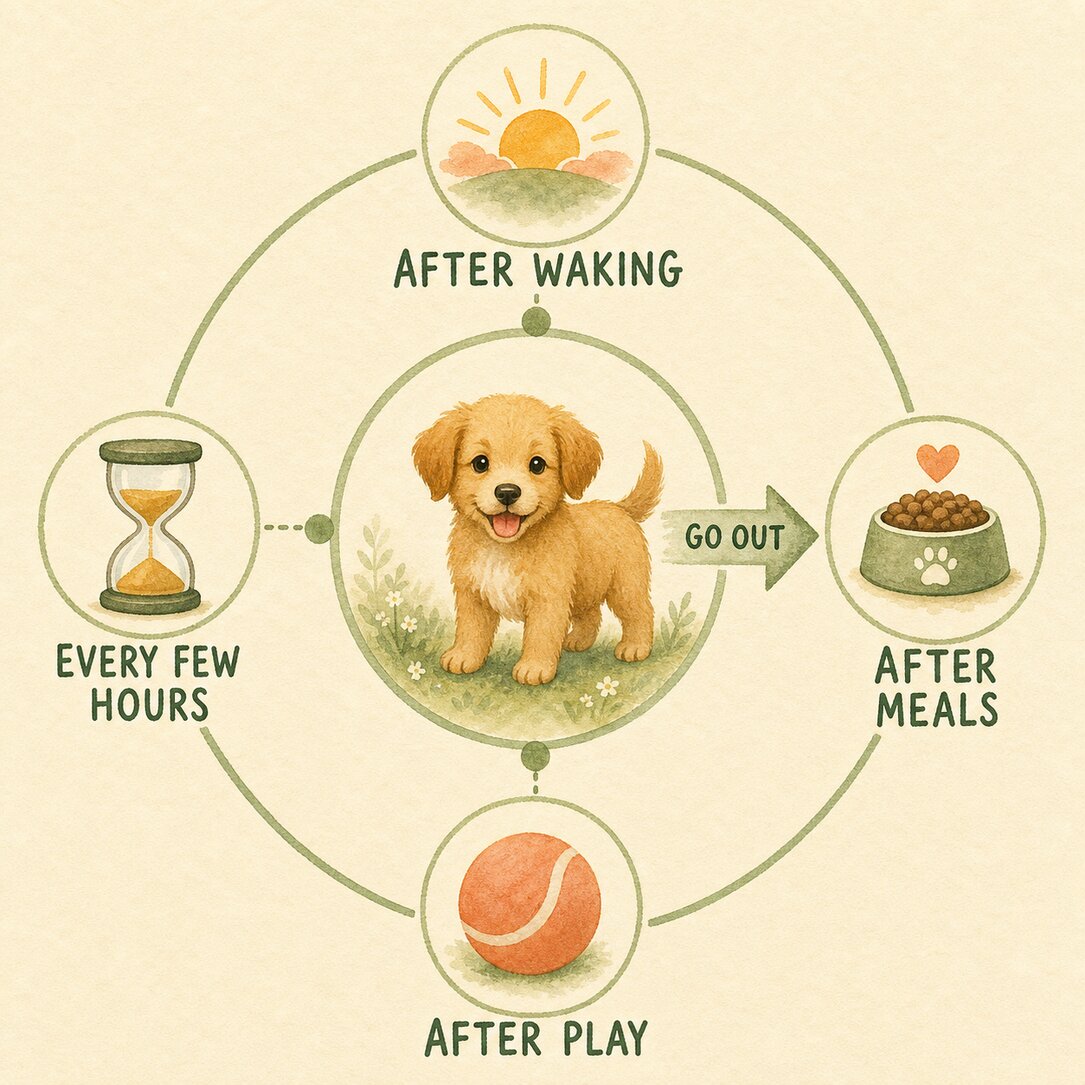
Watercolour toilet timing wheel showing a puppy going outside after waking, meals and play and every few hours
GO OUT after WAKING, after MEALS and after PLAY, plus EVERY FEW HOURS on the dog’s current schedule.

Use the same toilet-place sequence

  1. Take the same route Escort the dog on a secure lead directly to the toilet area without a tour of the yard.
  2. Use the same surface Consistency of place and surface helps the dog recognise the job.
  3. Wait quietly for 2–3 minutes No play, conversation or wandering while you wait.
  4. Mark the instant toileting happens Mark while the dog is still outside and completing the behaviour.
  5. Reward outside Deliver the reward at the toilet place. Do not wait until you are back indoors.
  6. Play only after success If toileting always ends outdoor time, the dog may learn to hold on to make the outing last longer.

Find the missing trip

Record three consecutive days

Chapter 27 provides fields for date, time, outdoor success, indoor accident and last meal time. Three consecutive days usually reveal where the schedule is late.

Regression is information

Expect a setback at 14–16 weeks and again in adolescence

Return to the previous stage’s outing frequency. Do not increase punishment.

Training with FluffyWA

Day school, board & train and private sessions are quoted after a chat, and boarding or daycare can be booked online with live prices.